Salt spray test NSS, ACSS, CASS difference
Abstract:
本文对盐雾试验中的三种常见方法——NSS、ACSS和CASS进行了比较。NSS试验使用氯化钠(NaCl)溶液,在35℃下进行,主要用于评估材料的基本耐腐蚀性能。ACSS试验在NSS基础上添加醋酸(CH3COOH),同样在35℃下进行,更能模拟城市和工业环境中的腐蚀情况。CASS试验则在ACSS的基础上加入氯化铜(CuCl2),在50℃下进行,适用于评估材料在快速腐蚀环境中的表现。选择适合的试验方法可以更准确地评估材料的耐腐蚀性能,满足不同的测试需求。
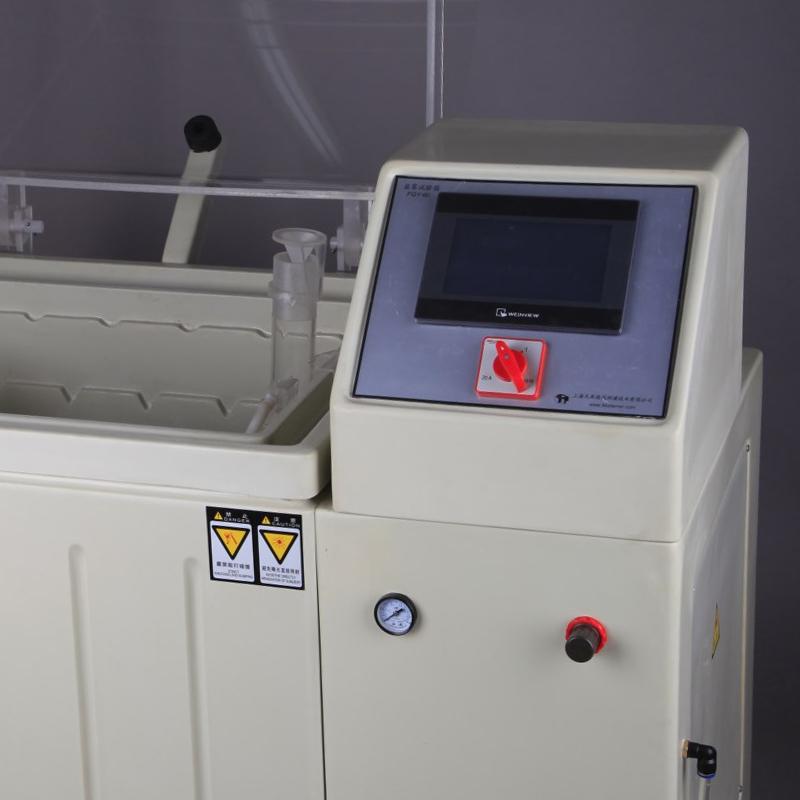
Salt spray test is a commonly used environmental test method for testing the corrosion resistance of metal and non-metal materials. It evaluates the corrosion resistance of materials by exposing them to a salt spray environment and observing the degree of surface corrosion. Usually, the salt spray solution composition of the salt spray test is sodium chloride (NaCl).
Introduction to different methods:
| experiment method | Salt spray solution composition | Test temperature | Test time |
|---|---|---|---|
| NSS test | Sodium chloride (NaCl) | 35°C | 24 hours, 48 hours, 72 hours, 96 hours and other different time periods |
| Main features: basic salt spray test method for evaluating the general performance of materials against corrosion, simulating corrosion in natural atmosphere | |||
| ACSS test | Sodium Chloride (NaCl) + Acetic Acid (CH3COOH) | 35°C | 24 hours, 48 hours, 72 hours, 96 hours and other different time periods |
| Main features: Acetic acid is added on the basis of NSS test, which can better simulate the corrosion conditions in urban and industrial environments | |||
| CASS test | Sodium Chloride (NaCl) + Acetic Acid (CH3COOH) + Copper Chloride (CuCl2) | 50℃ | 4 hours, 8 hours, 24 hours and other different time periods |
| Main features: Based on the ACSS test, copper chloride is added to accelerate the corrosion process. Used to evaluate the rapid performance of materials against corrosion, which can be used to screen materials or evaluate the effect of new protective coatings | |||
Although the three salt spray test methods are different, they are all common test methods for evaluating the corrosion resistance of materials. In practical application, the appropriate test method should be selected according to the specific test purpose and requirements.
Relevant knowledge
- 1Working Principle and Application Analysis of Ceiling Salt Spray Tester
- 2Principle, significance and method of salt spray test
- 3Different test methods and similarities and differences of salt spray test
- 4Salt Spray Tester in salt spray testing
- 5Hardware salt spray test method
- 6Cyclic corrosion test and its test procedures
- 7How Salt Spray Tests Improve the Quality of Metal Plating and Coatings
- 8How does the surface coating prevent corrosion?
- 9What surface treatment should be done for aluminum before salt spray test?