Difference between surface tension and contact angle
Surface tension and contact angle are both physical quantities that describe the properties of a liquid on a solid surface, but there are some differences between them.
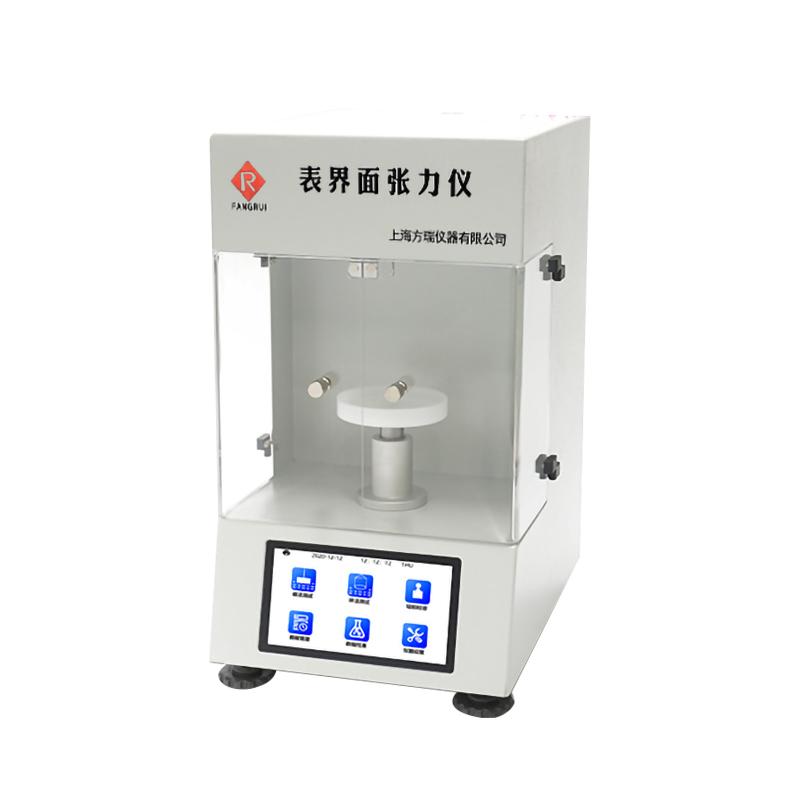
Surface tension refers to the interaction force between molecules on the surface of a liquid. These forces enable the molecules on the surface to form a tightly bound layer on the surface, so that the surface of the liquid forms a relatively stable interface. The amount of surface tension determines whether a liquid surface can form a concave shape, and also determines whether droplets can maintain their shape on the surface without being merged or broken up. Surface tension is usually measured in Newtons per meter (N/m).
The contact angle is the angle between the contact line between the liquid and the solid and the solid surface, which can be used to describe the wettability of the liquid on the solid surface. The smaller the contact angle, the better the wettability of the liquid on the solid surface, and the ability of the droplet to spread on the surface. And when the contact angle is greater than 90 degrees, the liquid cannot spread on the solid surface, forming a water drop shape. Therefore, the contact angle can be used to evaluate the hydrophilicity or hydrophobicity of the coating surface. Contact angle is measured in degrees (°).
In addition, the application and measurement methods of surface tension and contact angle vary.
Surface tension can be used in the formation and stabilization of droplets and foams, wettability of liquids, and separation techniques. The contact angle can be used to evaluate the hydrophilicity or hydrophobicity of the material surface, the wettability of coatings and inks, as well as surface cleaning and surface modification.
The measurement of surface tension can be carried out by methods such as pendant drop method, balance method, reflux method, etc., and the measurement of contact angle can be carried out by automatic contact angle meter or manual measuring instrument. In practical applications, these measurement methods need to select appropriate methods according to the needs of specific application fields.
In short, both surface tension and contact angle are physical quantities that describe the properties of a liquid on a solid surface, but surface tension describes the interaction force between molecules on the liquid surface, and contact angle describes the angle between the contact line between the liquid and the solid and the solid surface. Their properties and applications vary, but they are widely used and studied in industry and science.
- 1Water surface tension measurement based on Electronic Balance
- 2Comparison of Liquid Surface/Interfacial Tension Testing Methods: Plate vs. Ring Method
- 3Selection guide for Surface Tensiometers
- 4Application principle and precautions of platinum ring Surface Tensiometer
- 5Coating surface tension and its effects
- 6Coating process surface tension factor
- 7Three commonly used detection methods for surface tension
- 8Ceramic ink-jet surface tension, viscosity and solutions
- 9Determination of interfacial tension and surface tension