How to test the physical performance of paper?
When we test the physical properties of paper, it can traditionally be divided into the following four categories:
Mechanical and strength properties;
surface properties;
optical properties;
Fluid (eg water, oil, air) permeability.
In quantitative testing of paper, we measure by weighing a piece of paper of known area. Instead, thickness is measured by using a micrometer with a specific base area and pressure against the sheet. From the measurement of these two parameters, we can calculate the apparent density or bulk thickness.
Tensile strength is measured by determining the force required to break a narrow strip of paper. The elongation at break can also be determined at the same time. Some newer testing instruments provide a graph of the stress/strain curve and calculate the area under the curve, called tensile energy absorption, which is one way of measuring the "toughness" of paper. These testing instruments can also provide creep measurements under different tensile loads.
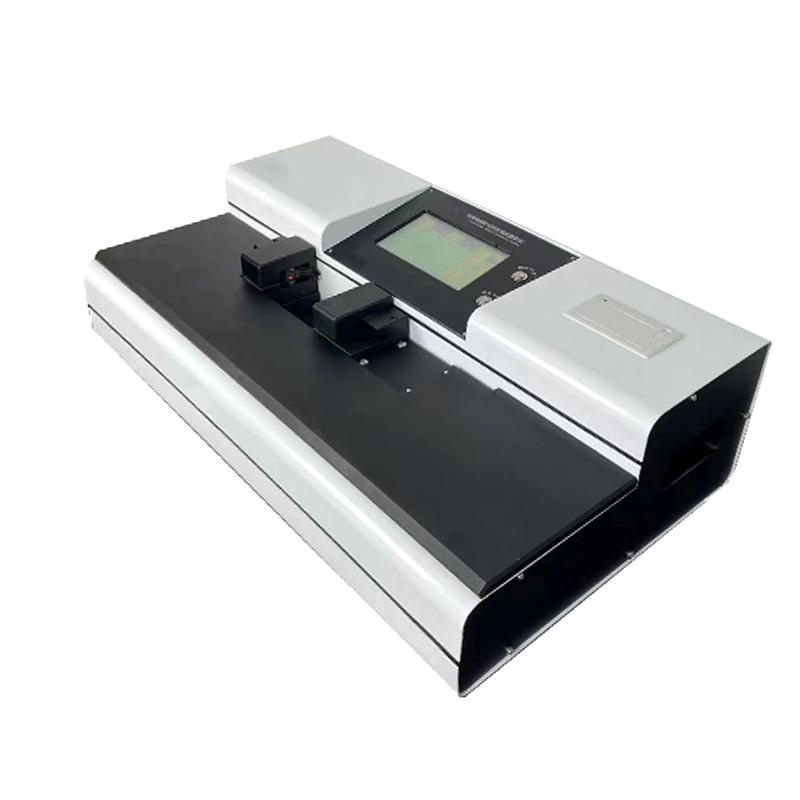
Bursting strength is measured by clamping a paper sample on a rubber drum, applying increasing pressure, and recording the pressure at burst. Fold endurance is measured by bending a paper sample at a defined angle under controlled tension and measuring the number of bends it withstands before failure occurs. Stiffness is a measure of the force required to bend a strip of paper to a specified angle.

Tear strength (or "internal tear resistance") is typically measured using an Elmendorf apparatus. In the Elmendorf apparatus, the force is applied perpendicular to the paper surface, and a slit in the paper sample is continuously torn by means of an energy measuring pendulum. The energy lost (measured by how high the pendulum swings) is related to the force required to continue tearing. The Elmendorf tear test is considered a good measure of fiber strength within a sheet, but the suitability of the test as a measure of pressroom runnability is often questioned. Because printing house problems often occur on the surface of the paper. Instruments that perform in-plane tear testing are available, but this method is not universally available.

The optical properties of paper refer to the reflectivity, clarity and chroma of the paper at specific wavelengths of light. Among them, whiteness refers to the reflectance value (relative to the standard value of magnesium oxide) in the blue region of the visible spectrum (especially at 457nm wavelength). Opacity is calculated by comparing the "contrast ratio" between the reflectance values of a single sheet backed with a non-reflective black side and a ply sheet of the same material. Chroma can be determined in terms of the relative amounts of the three primary shades reflected from the paper surface. Common optical performance testing methods include Whiteness Meter, Colorimeter and transmittance meter.
The permeability of paper refers to the permeability of paper to liquid or gas. Common test methods include water absorption test, air permeability test and ink permeability test, etc.
In conclusion, the physical properties of paper have an important influence on its application in various fields, so its comprehensive and accurate testing and evaluation is essential.
- 1Application of Glossmeter in paper surface gloss detection
- 2Application of Glossmeter in paper surface gloss detection
- 3What performance requirements should printing paper meet?
- 4What is the smoothness of paper?
- 5What is the folding resistance of paper and cardboard?
- 6What is the brightness of paper?
- 7What is the uniformity of paper? How to measure?
- 8How to measure the dimensional stability of paper?
- 9What are the components of paper and what are their properties?