Film thickness uniform film prepared by dipping method with automatic instrument
In order to prepare a paint film with uniform thickness by dip coating, the following simple equipment can be used.
This envoy (Fig. 92) is made of the metal bathtub 1 in the wooden box 2 used as a thermostat (related instrument: constant temperature Water Tank). The electric light 3 is installed in the wooden box; the required temperature can be easily adjusted by controlling the time of turning on the light and increasing or decreasing the number of turned on lights. Through the small hole in the box difference, lead 4 is introduced, and the lead 4 is vibrated and carried by the electric motor. The small shaft 6 driven by 7 is sent into the wooden box through the pulley 5, and there is a small fishing rod 8 on the end of the thread, which is used as the r hanging control test board 9. The rope is wound on different steps of the small shaft and the motor speed is controlled by the rheostat. , so that the test plate can be immersed evenly, so that a coating film with uniform thickness can be obtained.

The literature also describes a series of other automatic laboratory instruments for spreading paint materials.
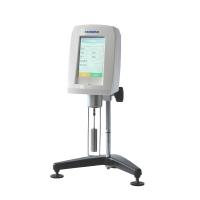
The thickness of the film obtained during dip coating is the quotient of the secondary length of the test plate, the viscosity of the paint material (viscometer), the specific gravity and the non-volatile content in it, and the solvent also has a great influence on the thickness of the paint film. (Related instrument: Thickness Gauge) The greater the solvent behavior, the thicker the prepared paint film.
All other things being equal, the film thickness depends on the elongation rate. However, this relationship only occurs at lower velocities. According to the data proposed by Gary Chenstein, the influence of the secondary elongation speed on the thickness of the paint film can only be shown when the speed is below 100 mm/min. When the speed is high, the thickness of the paint film has nothing to do with the elongation speed, and It all depends on the consistency of the varnish.
If the secondary elongation speed exceeds 100 mm/min, it will be difficult to coat the entire test panel with a uniform thickness of the paint film, so it is recommended to keep the rising speed within the limit of 100 mm/min during automatic dip coating so that Control the thickness of the paint film.



- 1Polyurethane-graphene composite prepative film
- 2The relationship between film with light, semi-light and no light and actual use
- 3Glossmeter for paints film gloss detection
- 4Performance Test and Characterization of Polyacrylate Mixed Suspension
杨庆臣 - 《北京化工大学》
- 5How can ultra-thin coating film ignore material fineness?
- 64 influencing factors of film precision control
南北潮商城 - 《www.nbchao.com》
- 7Preparation method of film with open brain of foreigners [Video]
- 8Film laminating FAQ and solution
- 9How to control the temperature of Spreader solution?