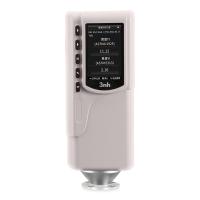
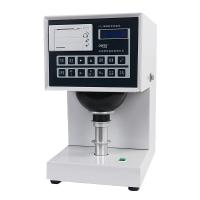
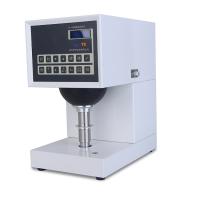
Application of whiteness Tester in Spinning & weaving products
The application of whiteness Tester in textiles is mainly used to evaluate the color and whiteness of textiles. In the process of textile production and quality control, whiteness Testers can help manufacturers ensure that the color and whiteness of textiles meet customer requirements, thereby improving product quality and market competitiveness.

application
The following are some practical application scenarios of Whiteness Meter in textile application:
Whiteness test of cotton yarn and cotton cloth. Cotton yarn and cotton cloth are important raw materials in textile production, and their whiteness has a great influence on the color and quality of the final product. Manufacturers can use whiteness Testers to test the whiteness of cotton yarn and cotton cloth to ensure that the produced textiles meet customer requirements and national standards.
Color measurement of fabrics before and after dyeing. Before and after textile dyeing, the whiteness Tester can be used to test the color of the fabric to determine the color change before and after dyeing, evaluate the dyeing effect and make adjustments. Through accurate measurement, manufacturers can reduce waste and increase production efficiency.
Measurement of fabric contrast. The whiteness Tester can also be used to measure the contrast of fabrics. By measuring the whiteness value of different parts, it is possible to determine the contrast of the fabric and thus evaluate its suitability and quality.
The whiteness Tester has a wide range of applications in textiles and can help manufacturers improve the quality and market competitiveness of textiles. Accurate measurement with a Whiteness Meter can help manufacturers ensure that the color and whiteness of products meet customer requirements and national standards, reduce waste and improve production efficiency.
How to choose a whiteness Tester
When choosing a Whiteness Meter, the following factors should be considered:
Measuring range and precision: The measuring range of the Whiteness Meter should cover the range of samples you need to test, and have enough precision to meet your testing requirements. The measurement range and accuracy of different models of Whiteness Meters may vary.
Measurement method: The measurement method of the Whiteness Meter is divided into two types: reflection type and transmission type. Reflective Whiteness Meters are used to measure the surface whiteness of solids and coatings, while transmission Whiteness Meters are used to measure the whiteness of transparent and translucent samples. You need to choose the measurement method that is appropriate for your sample type.
Additional functions and features: Whiteness meters may have different functions and features, such as automatic calibration, storage and transfer of data, multiple measurement modes, etc. You need to choose a suitable whiteness Tester according to your testing needs.
Brand and service: Different brands of whiteness Testers have different quality and reliability. You need to choose a supplier who is familiar with the brand and provides perfect after-sales service.
Budget: Different models and brands of whiteness Testers may have different prices. You need to consider your budget and actual needs and make an appropriate choice.
To sum up, when choosing a whiteness Tester, it is necessary to comprehensively consider factors such as measurement range, accuracy, measurement method, function and features, brand and service, and budget to choose an instrument that suits your testing needs.
- 1Application of whiteness Tester in talc powder
- 2What is the application value of whiteness Tester in cotton
- 3Application of Whiteness Meter in paper
- 4XT-48B/BN whiteness Tester operating instructions
- 5Factors Affecting Determination of Resin whiteness of PVC
-
![JINGWEN JW122-1 Whiteness Analyzer desktop Whiteness Meter]()
-
![CHENCHI BD-48 paper Whiteness meter measurement aperture Φ30mm]()
-
![3NH NR4520 whiteness Tester]() 3NH NR4520 whiteness Tester$ 776.00
3NH NR4520 whiteness Tester$ 776.00 -
![CHENCHI BD-48 whiteness Tester]() CHENCHI BD-48 whiteness Tester$ 1309.00
CHENCHI BD-48 whiteness Tester$ 1309.00 -
![YANTE XT-48BN Whiteness Analyzer desktop paper powder Whiteness Meter]()
-
![YANTE XT-48B Whiteness Analyzer fluorescence whiteness powder Whiteness Meter]()