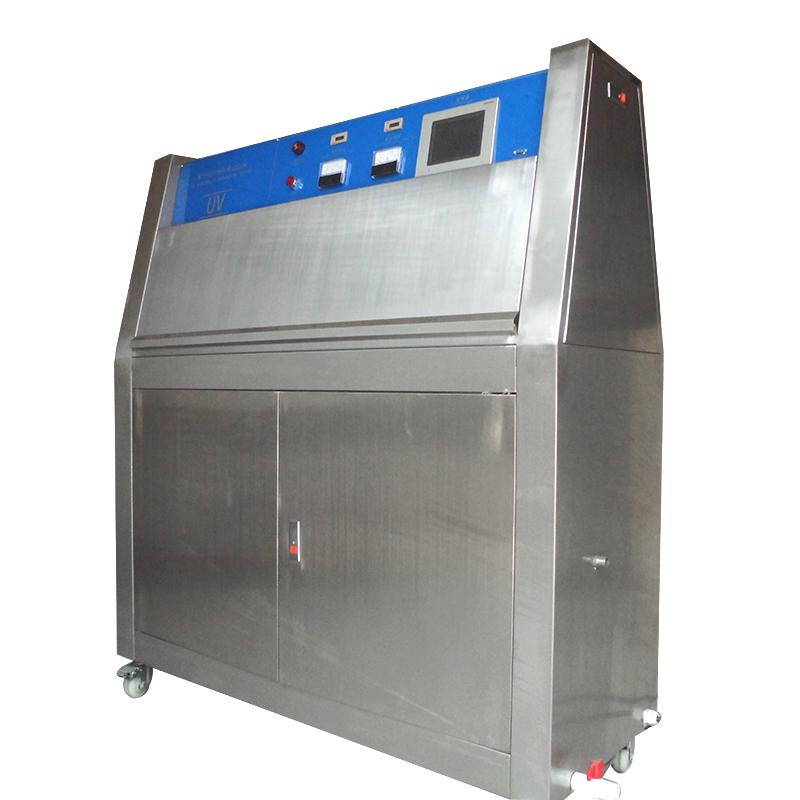
How does UV aging Test Chamber test the ageing resistance of exterior paints?
The main purpose of UV aging test for exterior paint is to evaluate its weather resistance and color stability, so as to determine its service life and appearance performance in the outdoor environment. The UV aging test can simulate the effect of ultraviolet radiation in sunlight on exterior paints.
Exterior paints are often exposed to the outdoors and are affected by factors such as UV rays, temperature changes, humidity and atmospheric chemicals. UV weathering tests can simulate these factors to evaluate the weatherability of exterior paints under actual service conditions, including fading resistance, peeling resistance and surface protection.
Furthermore, exterior paints can also be tested for color stability, which refers to whether they will fade, shade or change color when exposed to UV radiation and other environmental factors. Through the UV aging test, the color stability of exterior paint can be evaluated to understand whether it can maintain the expected color and appearance in long-term use. Through the results of UV aging test, we can understand the performance changes of exterior paints under ultraviolet radiation, so as to guide the selection, formulation optimization and improvement of coatings to improve their weather resistance and color stability.
Moreover, by evaluating the weather resistance and color stability of exterior paint, its service life and maintenance cycle can be determined, so as to formulate a reasonable maintenance plan, extend the maintenance cycle of the coating, and reduce maintenance costs.
The UV aging test can provide important information about the weather resistance and color stability of exterior paints in exposed environments, helping to ensure that exterior paints can maintain their appearance and protective functions for a long time under various climatic conditions, and provide durable and beautiful appearance.
Industry Standard
The UV aging test of exterior paint usually needs to refer to the following industry standards:
ASTM D4329: A standard test method issued by the American Society for Testing and Materials (ASTM) for evaluating the UV radiation aging performance of exterior materials. This standard mainly involves the setting and evaluation methods of ultraviolet radiation exposure conditions.
ISO 4892-3: The standard for UV radiation aging test of coatings and varnishes issued by the International Organization for Standardization (ISO), Part 3 of which is applicable to the UV aging test of exterior paints.
JIS K 5600-7-7: Japanese Industrial Standards (JIS) standards for UV radiation aging tests of paints and varnishes, Part 7-7 of which involves UV aging tests for exterior paints.
GB/T 14522: Standards for the lightfastness of paints and varnishes issued by the National Standardization Administration of CHINA, including requirements and methods for ultraviolet radiation aging tests.
EN 927-6: A standard on the weatherability of paints and varnishes issued by the European Organization for Standardization (CEN), which involves the requirements and methods of ultraviolet radiation aging tests.
These standards provide guidance and specifications on UV aging tests for exterior paints, including requirements for test equipment, test methods, test conditions and duration. Depending on the specific application and requirements, reference may also be made to other specific industry standards or internal company specifications.
Specific application cases
Automotive coatings: UV aging tests are performed on automotive exterior paints to evaluate their weather resistance, color stability and protection performance in outdoor environments. This helps determine the longevity and appearance retention of the car's paintwork.
Architectural Coatings: UV aging tests are performed on coatings for building exterior walls, roofs and other exterior components to evaluate their weather resistance, resistance to UV decay and color stability. This helps in choosing the right architectural coating and setting out maintenance and painting cycles.
Furniture coatings: UV aging tests are performed on interior and exterior furniture coatings to evaluate weather resistance and color stability. This helps ensure that the furniture will look and perform well over time.
Metal coating: UV aging test is performed on the exterior coating of metal products to evaluate its weather resistance, corrosion resistance and color stability. This aids in the selection of coating materials suitable for metal products and ensures their long-term performance in outdoor environments.
Aerospace coatings: UV aging tests are performed on exterior coatings of aerospace vehicles to evaluate their durability and color stability under atmospheric conditions and UV radiation. This helps ensure the aesthetic quality and performance of aerospace vehicles.
These application examples demonstrate the important role of UV weathering testing in evaluating the weatherability and color stability of exterior paints. By understanding the performance changes of exterior paints under ultraviolet radiation, appropriate coating strategies can be formulated, and coatings with good weather resistance and color stability can be selected to ensure that exterior paints can maintain their appearance and protective functions for a long time under various climatic conditions.
Steps
The following are the steps and precautions for testing the aging resistance of exterior paints in general using a UV aging Test Chamber:
Sample preparation: Select appropriate exterior paint samples for testing as required. Exterior painted test panels or other suitable substrates may be used.
Test condition setting: According to the required test conditions and standard requirements, set the parameters of the UV aging Test Chamber, including radiation intensity, temperature, humidity, etc. Ensure that the Test Chamber settings comply with relevant specifications and requirements.
Sample placement: Place the exterior paint sample on the sample holder in the Test Chamber to ensure that the sample is flat, free of bubbles and wrinkles, and avoid mutual interference between samples.
Test run: Start the UV aging Test Chamber and let the samples be exposed to UV radiation and other environmental factors under the set conditions. According to the standard requirements, set the appropriate test time, usually hundreds to thousands of hours.
Regular observation: Regularly observe the changes of exterior paint samples, including color changes, gloss changes, surface cracks, peeling, etc. Document any visible changes or damage.
End of Test and Evaluation: After the test is completed, samples are removed for evaluation and testing. The physical and chemical properties of exterior paint samples can be tested to determine their aging resistance.
When carrying out UV aging test, the following matters need to be paid attention to:
Make sure that the UV aging Test Chamber equipment is working properly, and operate in accordance with the operation manual and safety requirements.
Check and record the temperature, humidity, radiation intensity and other parameters of the Test Chamber to ensure its stability and accuracy.
Ensure that the selection, preparation and placement of samples comply with standards and requirements.
Regularly inspect and maintain Test Chamber equipment to ensure proper operation and accuracy.
Pay attention to observe and record any changes in the sample during the test for subsequent evaluation and analysis.
Note that exact test methods and procedures may vary according to standards and specific test requirements, as
- 1The working principle and application of rubber UV aging Test Chamber
- 2Application of UV aging Test Chamber in mobile phone shell
- 3UV aging Test Chamber for sealant aging test
- 4Application of UV aging Test Chamber in silica gel test
- 5UV UV aging Test Chamber for weathering test of exterior-wall latex paint coatings
- 6Correct calibration method and process for UV aging Test Chamber
- 7Is it possible to measure the hidden percentage of artificial heather, fences and hedges?
- 8Fabrics with UV radiation protection factor
- 9Measurement of the protection factor of sunscreen