The difference between laboratory Disperser and pilot Disperser
Laboratory disperser and pilot disperser are two kinds of equipment with different scales and uses.
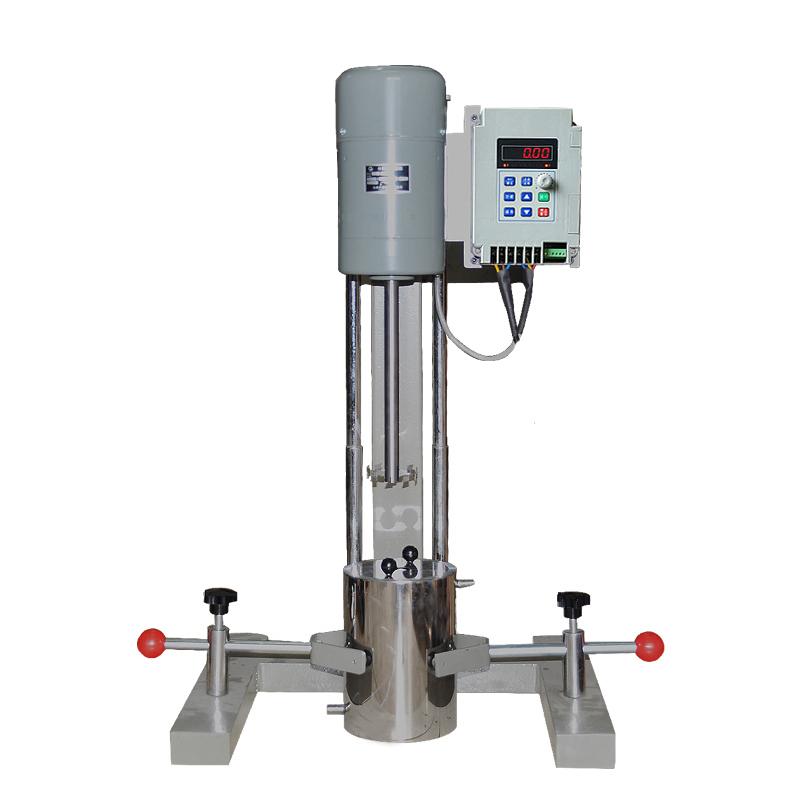
Laboratory disperser
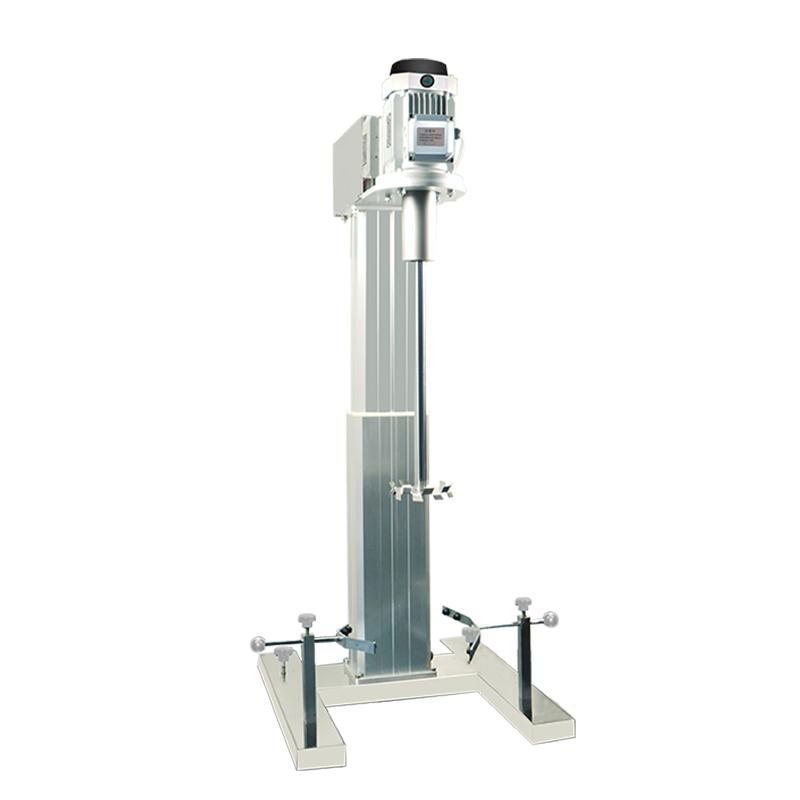
Pilot disperser
They differ in the following ways:
Scale and processing capacity:
Laboratory dispersers are usually small and suitable for small batch experimental and R & D work. Its processing capacity is low, generally in the range of a few milliliters to a few liters.
Pilot dispersers usually have a large processing capacity and can handle larger batches of samples, suitable for pilot and small-scale production stages. Its processing capacity is generally in the range of tens to hundreds of liters.
Equipment structure and function:
Laboratory dispersers usually have simplified structures and basic functions such as stirring, dispersing and mixing. Its design pays more attention to experimental flexibility and sample handling accuracy.
Pilot dispersers are more complex, with more functions and operating options, such as different stirring blades, heating or cooling functions, automatic control systems, etc., to meet more complex process requirements and mass production needs.
Control and Monitoring Systems:
Laboratory dispersers are usually equipped with basic control and monitoring systems, such as speed regulation, temperature display, etc., to meet basic experimental needs.
The control and monitoring system of the pilot disperser is more complete, which can realize more accurate parameter adjustment and process monitoring to ensure product quality and production stability.
Degree of automation:
Laboratory dispersers are generally relatively simple, and the operation mainly relies on manual control, and rarely has automation functions.
The pilot disperser is more advanced in the degree of automation, which can realize automated process control and data recording, and improve production efficiency and operation convenience.
Cost and investment:
The cost of laboratory dispersers is relatively low and fits the budget of laboratories and small-scale R & D institutions.
The cost of the pilot disperser is high and requires greater investment, which is suitable for pilot and small batch production environments.
In general, laboratory dispersers are mainly used in laboratories and R & D stages for sample testing and process verification; while pilot dispersers are more suitable for pilot and small-scale production stages for optimization of production processes and preparation for large-scale production. Choosing the right disperser should be comprehensively considered according to factors such as actual demand, sample throughput and budget.
- 1How to use the Lab Disperser
- 2Disperser Precautions for use
- 3How to choose the right laboratory disperser?
- 4SFJ-400 Sanding, Dispersion, Stirring Multipurpose Machine Instruction Manual
- 5Instructions for use of KS-370 Oscillation Dispersion Testing Machine
- 6GFJ-0.4 High Speed Disperser Operation Manual
- 7The Role of High Speed Disperser in Raw Material Performance Dispersion
- 8Design Structure and Operation of High Speed Disperser
付冬梅 - 《黑龙江造纸》