What is the difference between Mulser and Disperser?
Emulsifier and disperser are two common mixing equipment, they are different in the working principle and application field:
How it works:
Emulsifier: The emulsifier disperses two or more insoluble liquids or solids into tiny particles through a high-speed rotating cutting knife or high-pressure jet to form a stable emulsified liquid.
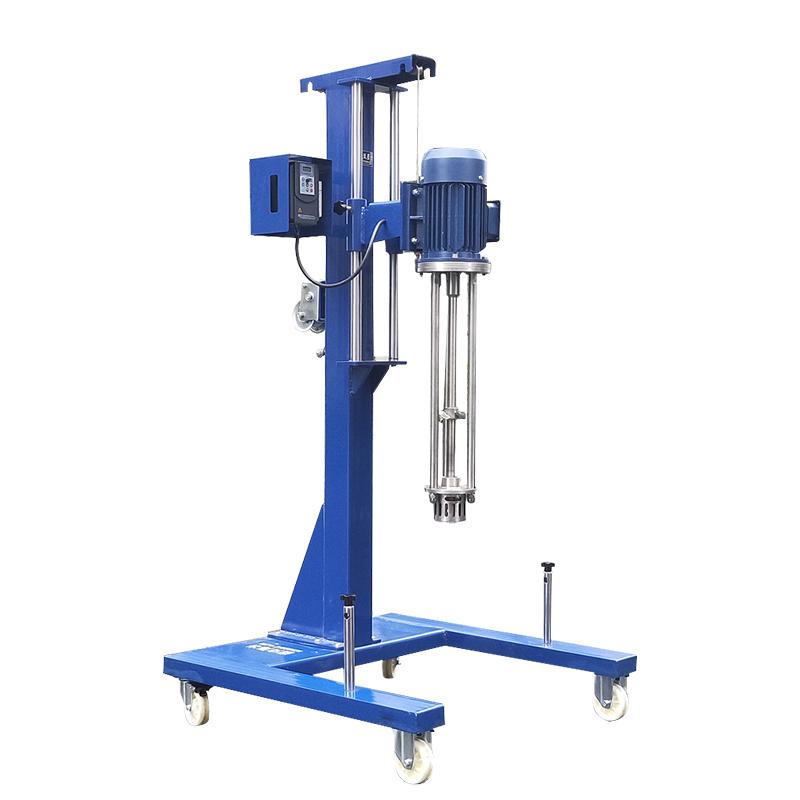
Disperser: The disperser disperses solid particles or liquids into the liquid medium through a rotating agitator or dispersion plate, etc., so that they are evenly distributed and form a suspended liquid.
Application field:
Emulsifiers: Emulsifiers are mainly used to emulsify, mix and stabilize liquid systems. Common applications include food industry (such as dairy products, beverages), cosmetic industry (such as creams, lotions), pharmaceutical industry (such as pharmaceutical emulsification), paint industry, etc.
Disperser: Disperser is mainly used for wet dispersion, mixing and homogenization of particles. Common applications include pigments, dyes, coatings, inks, cosmetics, fine chemicals and other fields.
Equipment structure:
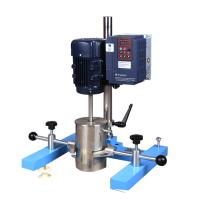
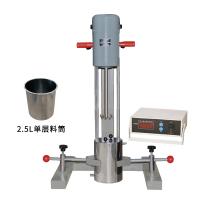
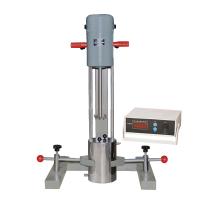
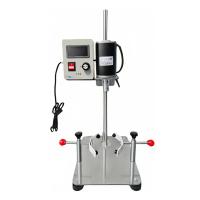
Emulsifier: An emulsifier usually consists of a container and a rotary cutting knife or high pressure nozzle through which the blade or nozzle shears, cuts and mixes with the liquid inside the container.
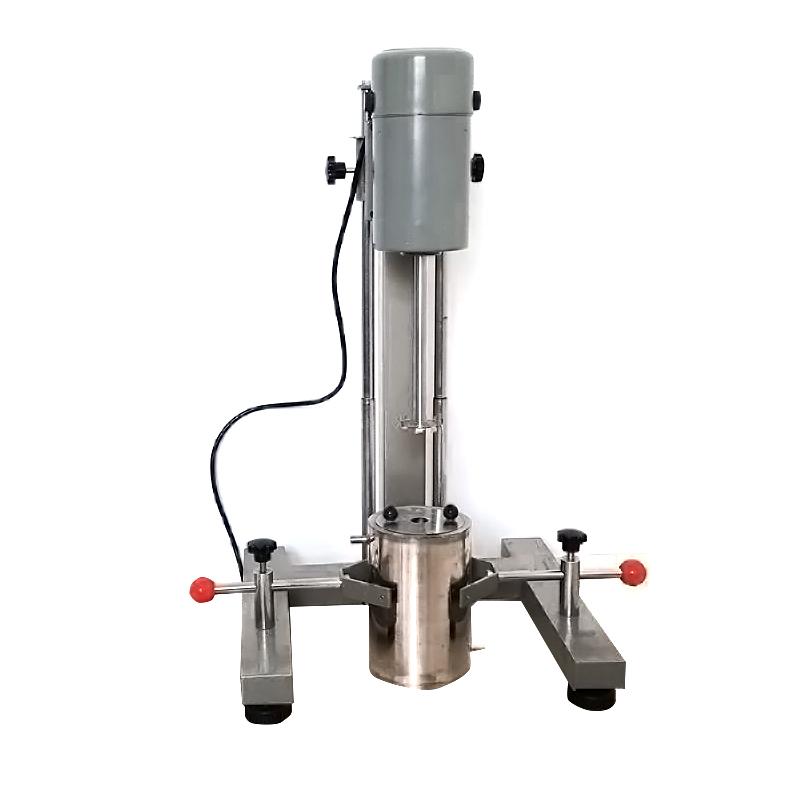
Disperser: Disperser usually includes a container and a rotating agitator or disperser plate, by stirring or high-speed rotation of the disperser plate to evenly disperse the material into the liquid medium.
In general, emulsifiers focus more on dispersing two or more immiscible liquids or solids into tiny particles to form a stable emulsified liquid; while dispersers focus more on dispersing solid particles or liquids into liquid media, so that they are evenly distributed and form suspended liquids. They differ in working principles and field applications, but they also have some things in common, such as they can be used in the production process of coatings and cosmetics. The specific choice of equipment depends on actual needs and process requirements.
- 1A Brief Discussion on the Difference between Disperser and Stirrer
- 2How high-speed shearing Mulser works
- 3Several Common Coating Dispersers
- 4Inspection Contents of Chemical Plant Disperser
- 5The difference between Disperser ordinary and explosion-proof type
- 6Disperser stirring speed formula
- 7What's wrong with Disperser stirring?
- 8Main Structure of Vacuum Defoaming Disperser
- 9What oil is used in Latex paint Disperser?