High Speed Disperser shear force formula
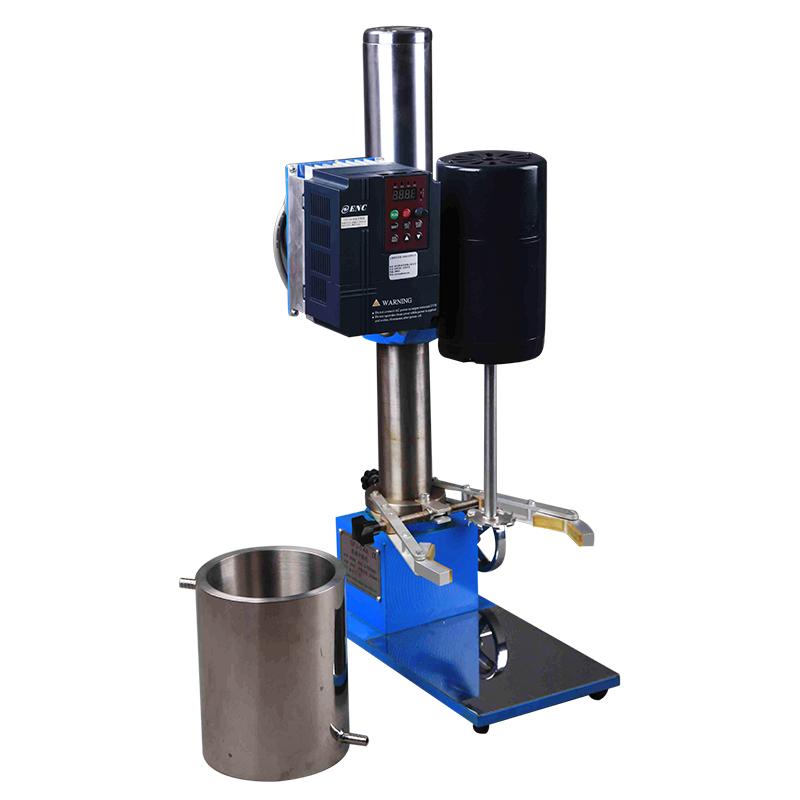
The shear force calculation of a high-speed disperser involves many factors, and there is no general formula for accurately calculating the shear force. The size of the shear force depends on many factors such as the design, configuration, and material properties of the disperser, so it is necessary to determine the specific value of the shear force through experiments and experiments.
In practice, the following methods can be used to estimate or adjust the shear force:
Utilize power measurement: Infer the shear force by measuring the power consumption of the disperser motor. Generally speaking, when the shear force is large, the power consumption of the motor will also increase.
According to the design parameters of the disperser: The manufacturer of the disperser usually provides information about its design parameters and performance, such as maximum shear force, maximum speed, etc. Based on these parameters, the shear force range of the disperser can be initially estimated.
Experience adjustment: In actual operation, through test and experience, the speed, tool configuration, etc. of the disperser can be gradually adjusted to achieve the required shear force effect.
It should be noted that the size of the shear force depends not only on the disperser itself, but also closely related to factors such as the tools used, material properties and operating conditions. Therefore, in specific applications, it is best to test and adjust according to the actual situation to obtain the best shear force effect.
- 1Briefly describe the difference between High Speed Disperser and Homogenizer
- 2Several Common Coating Dispersers
- 3Difference Between High Speed Disperser Single and Double Axis
- 4What should I do if the High Speed Disperser cannot slow down?
- 5How much hydraulic oil is added to the High Speed Disperser?
- 6What is the reason why the High Speed Disperser can only go up but not down?
- 7How to change the sealing pad for High Speed Disperser?
- 8High Speed Disperser Oil Change Tutorial Steps
- 9How to solve the High Speed Disperser Rotation speed deviation?