Determination of rheological performance of ceramic slurry
The rheological properties of ceramic slurries are determined to evaluate their flow behavior and deformation properties during processing, construction and application. Ceramic slurries are usually composed of ceramic powders and liquids (such as water or organic solvents), and their rheological properties have an important impact on the properties and quality of ceramic products.
rheological properties
The following are some commonly used methods and equipment for determining the rheological properties of ceramic slurries:
Viscosity determination:
Viscosity is an important indicator of slurry fluidity. Common methods include rotary viscometers and cone-disk viscometers. Rotary viscometers calculate viscosity by measuring the relationship between the shear stress and shear rate that the slurry develops around a rotating cylinder or sphere. Cone-disk viscometers use a conical disk and fixed-spaced disks to measure the viscosity of the slurry.
Rheological curve analysis:
A rheological curve can be drawn by measuring the flow behavior of the slurry as the shear stress or shear rate changes. This can be done using a rotary rheometer or a shear shear meter. The rheological curve provides information about the shear stress, shear rate and viscosity of the slurry over time and shear conditions.
Dynamic shear test:
Dynamic shear testing is used to study the dynamic rheological behavior of slurries, including elastic modulus, storage modulus, and loss modulus. This can be done using a Dynamic Mechanical Analyzer (DMA) or frequency scan testing.
Temperature dependence of rheological properties:
Similar to polymer slurries, the rheological properties of ceramic slurries may also change with temperature. The effect of temperature on slurry fluidity can be investigated by performing rheological testing at different temperatures.
These methods and equipment can help evaluate key rheological properties such as viscosity, fluidity, shear dilution, shear thinning, and thixotropy of ceramic slurries. Depending on specific needs and applications, an appropriate method can be selected to determine the rheological properties of ceramic slurries.
Rheometer
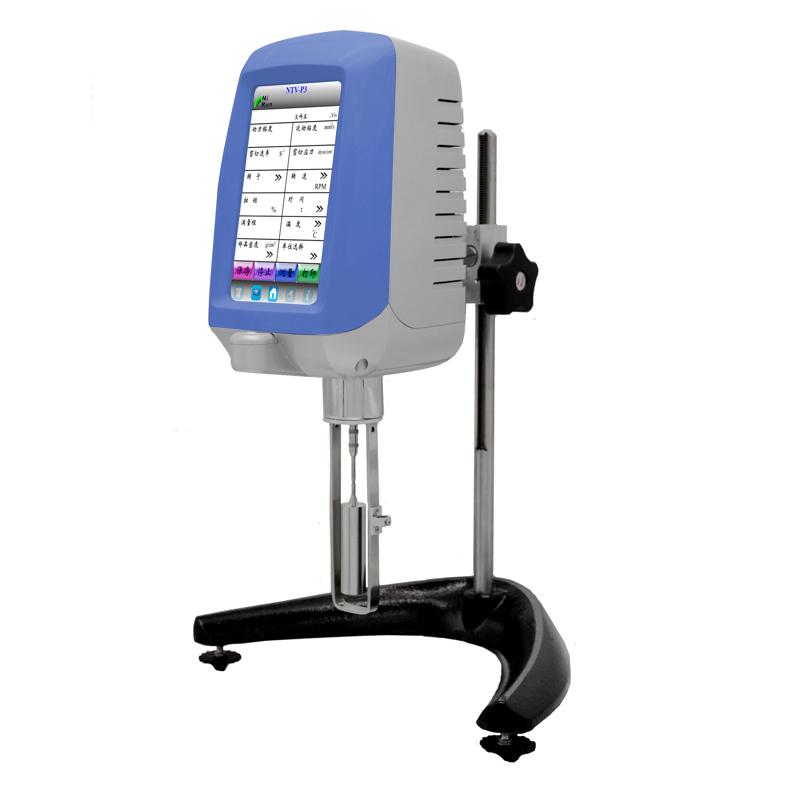
A rheometer is an optional instrument for the rheological determination of ceramic slurries. Choosing a suitable rheometer requires consideration of several factors, including application field, testing needs, budget, and laboratory conditions. Here are a few key considerations for choosing the right rheometer:
Test types and application fields:
The first thing to do is to determine what type of rheological performance test you will be conducting and what the application field is. Different rheometers may focus on different test types, such as viscosity determination, dynamic shear testing, temperature dependence testing, etc. Depending on your needs, choose a rheometer with the test capabilities that suit your application field.
Rheological parameter range:
Determine the range of rheological parameters you need to test, such as shear rate, shear stress, frequency, etc. Make sure the rheometer has sufficient range and sensitivity to meet your test requirements.
Sample capacity and adaptability:
Consider the sample volume you typically use and the adaptability of the rheometer to sample volume and type. Some rheometers may require large sample volumes for large sample batch testing, while others may be suitable for small sample volumes or samples that require special shapes.
Test accuracy and repeatability:
Understand the test accuracy and repeatability of a rheometer. Check the rheometer's spec sheet and user reviews to understand its performance and data accuracy. Especially for applications that require high precision and repeatability, it is important to choose a rheometer with high precision.
Operation and Software:
Consider the ease of use of the rheometer's operation and software interface. The functionality and data processing capabilities of the rheometer software are also factors to consider.
Budget:
Determine the range of funds available based on laboratory budget constraints and choose a rheometer that fits your budget. Also take care not just to focus on price, but also to consider the balance of performance and quality.
- 1Coating rheology
- 2Coating rheology and thixotropic
- 3Influencing factors of asphalt rheological performance
- 4The relationship between viscosity and rheology
- 5How to test rheological properties of colloidal materials
- 6How do these common paints test their rheological properties?
- 7A set of tall Qin white pulp rheological performance testing equipment list
俞峰 - 《华东理工大学》
- 8Rheology of Qin white pulp
俞峰 - 《华东理工大学》
- 9Coating rheology