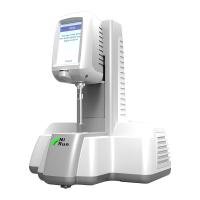
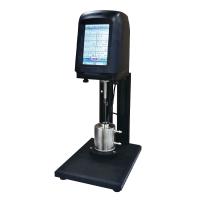
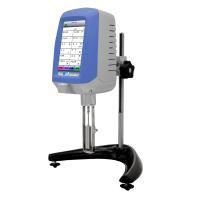
Rheometer polymer rheological performance
The rheological properties of polymers are determined to evaluate their deformation properties and flow behavior in terms of processing, application and performance. The rheological properties of polymers are critical for process optimization, product design and performance prediction of polymer products.
A rheometer is a commonly used experimental device used to measure the rheological properties of materials, including polymers. The rheological properties of polymers refer to their deformation and flow behavior under the action of external forces.
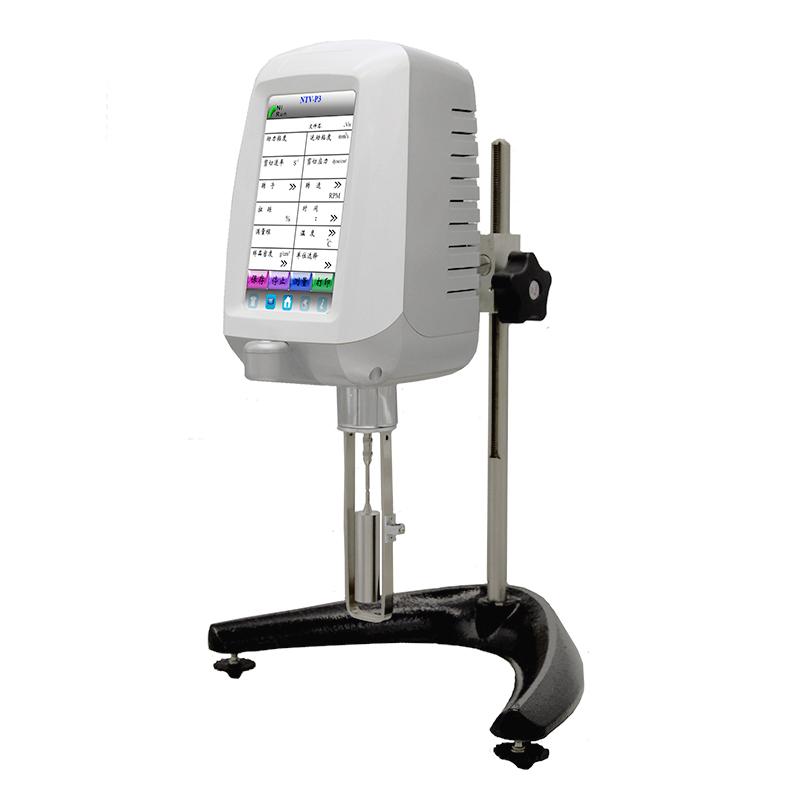
A variety of rheological properties of polymers can be tested using a rheometer, including:
Shear stress and shear rate relationship:
Rheometers can apply different shear stresses or shear rates to measure the stress-strain behavior of polymers. This can be used to assess polymer viscosity, shear dilution effects, shear thinning effects, etc.
Dynamic Shear Testing:
The rheometer can perform dynamic shear testing to study the response of polymers at different frequencies and amplitudes. This helps to understand the dynamic rheological behavior of polymers such as elastic modulus, storage modulus, and loss modulus.
Temperature dependence of rheological properties:
Rheometers can be tested at different temperatures to study the temperature dependence of polymer rheological properties. This can be used to understand polymer melting behavior, glass transition temperature, etc.
Thixotropy Testing:
Rheometers can perform thixotropy testing to study the viscosity changes of polymers at rest and after applying shear forces. This can assess the thixotropy and recovery of polymers.
Testing the rheological properties of polymers through rheometers provides information on the important properties and behavior of polymer materials, helping to optimize material formulations, improve process and application field design.
- 1Application of Rheometer in Viscosity Test of Tomato Paste
- 2Understanding Rheometers in One Article - Principle, Application, Selection & Maintenance
- 3Influencing factors of asphalt rheological performance
- 4How to calibrate the Rheometer? With calibrating steps
- 5Difference between Rheo-meter and Rotational Viscometer
- 6How to test rheological properties of colloidal materials
- 7Paint rheology phenomenon: What is the effect of viscosity change after coating?
- 8Influence of Leveling on Rheological Phenomena of Coatings
- 9Wetting, coalescing and hanging of paint rheological phenomena