The difference between left-handed and right-handed optical rotation
Left-handed and right-handed are descriptions of optical rotation phenomena in optics. Optical rotation refers to the phenomenon that the vibration direction of light rotates when linearly polarized light passes through certain substances.
The difference between left-handed and right-handed is the direction of rotation of the vibration direction of the light. When linearly polarized light passes through certain substances, if the vibration direction of the light rotates clockwise, it is called right-handed light; if the vibration direction of the light rotates counterclockwise, it is called left-handed light.
Optical rotation is usually associated with chiral molecules. Chiral molecules are mirror enantiomers of molecules that have the same chemical composition but are spatially asymmetric. When chiral molecules dissolve in a liquid or pass light through them, they rotate in the direction of light's vibration.
Optical rotation is a physical quantity used to quantify the phenomenon of optical rotation. It represents the angle of rotation in the direction of vibration of light, and is usually expressed in degrees or radians. Optical rotation can be positive or negative, depending on the direction of rotation of the light (left or right) and the angle of rotation.
Therefore, the difference between left-handed and right-handed optical rotation is that the direction of rotation of light is different. Left-handed luminosity represents the angle at which the vibration direction of the light rotates counterclockwise, while right-handed optical rotation represents the angle at which the vibration direction of the light rotates clockwise.
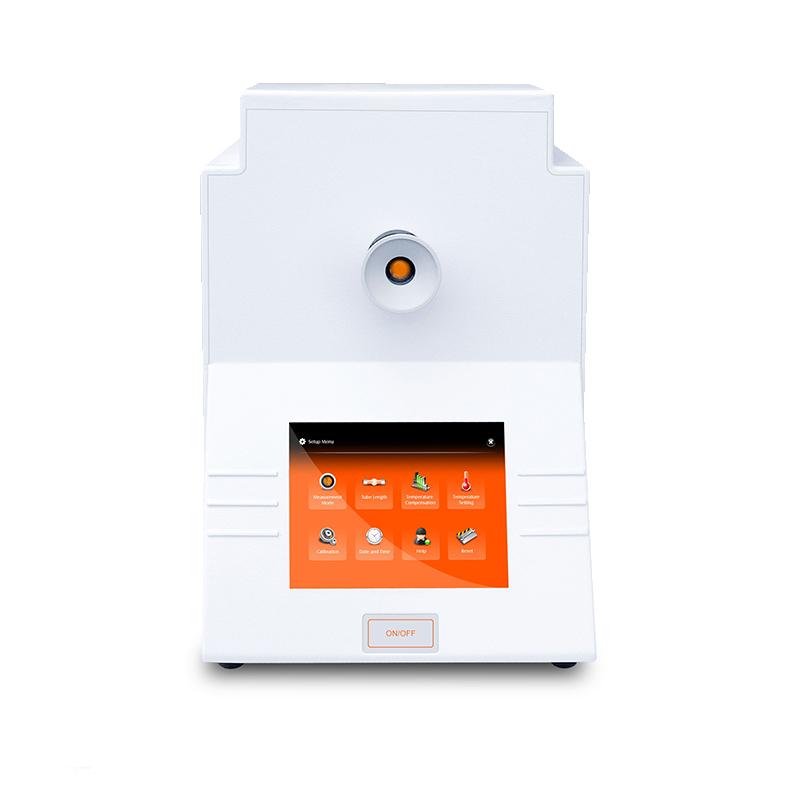
The difference between left-handed and right-handed optical rotation can be further discussed from the following aspects:
Rotation Direction: The most obvious difference between left-handed and right-handed optical rotation is the direction of rotation. Left-handed photometry represents the angle at which the direction of vibration of the light rotates counterclockwise, while right-handed photometry represents the angle at which the direction of vibration of the light rotates clockwise.
Properties of substances: The size and direction of rotation of the optical rotation depend on the properties of the substances. Certain substances are selective for the direction of rotation of light and are called polarizers. Polarizers can be natural substances such as sucrose and natural orange peel oil, or synthetic substances such as certain organic compounds. The size and direction of rotation of different substances vary.
Measurement method: Measuring optical rotation usually uses a polarizer or polarizer. A polarizer determines optical rotation by measuring the change in the direction of vibration of light as it passes through the sample. The measurement method for left-handed and right-handed optical rotation is the same, but the sign of the rotation direction is different.
Application field: Optical rotation has important applications in chemistry, biology, medicine and other fields. The chiral properties of substances can be determined by measuring optical rotation, which can help identify and analyze chemical substances. In the field of pharmacy, optical rotation is often used to detect the purity of drugs and identify chiral drugs.
To sum up, in a word, the difference between left-handed and right-handed optical rotation is the direction of rotation. Left-handed luminosity means counterclockwise rotation, and right-handed optical rotation means clockwise rotation. This optical rotation phenomenon is the result of the influence of certain substances on the vibration direction of light, and is widely used in chemistry, biology and other fields.