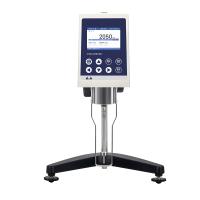
How do Rotational Viscometer measurement results compare to Miscellaneous viscosity measurement methods?
To compare the measurement results of a rotary viscometer with other viscosity measurement methods, it is necessary to consider the differences in the principles, conditions, and units of different measurement methods. Here are some common comparison methods:
Flat Viscometer: A flat viscometer is another commonly used method of viscosity measurement. It uses a measuring head in the form of a flat plate or disc to measure the viscosity of a fluid between planes. Unlike a rotary viscometer, a flat viscometer measures shear stress rather than torque. For comparison, measurements can be made by calibrating or using a standard sample while using a rotary viscometer and a flat viscometer under the same conditions and the results are compared.
Pressure drop viscometers: Pressure drop viscometers calculate viscosity by measuring the pressure drop of a fluid as it passes through a fine aperture or pipe. They may be suitable for different fluid types and application fields compared to rotary viscometers. To make a comparison, it is necessary to use both methods at the same temperature and fluid conditions to make a measurement and compare the resulting viscosity values.
Ball Viscometer: A ball viscometer uses the motion of a sphere in a fluid to measure viscosity. It is usually based on Stokes' Law and calculates viscosity by measuring the rate at which a sphere falls under the action of gravity. A ball viscometer is suitable for a lower viscosity range compared to a rotary viscometer. To make a comparison, it is possible to use both methods to make a measurement at the same temperature and fluid conditions and compare the resulting viscosity values.
Direct Comparison and Calibration: Making direct comparisons and calibrations is the most accurate and reliable method. By using a standard sample of known viscosity, measurements are made using different viscosity measurement methods under the same conditions, and comparisons and calibrations are made. This ensures consistency and comparability of results.

Different viscosity measurement methods may have differences in measurement principles, conditions and units. Therefore, when making comparisons, make sure to use the same units and similar measurement conditions. In addition, the accuracy, calibration and calibration of the instrument also have an important influence on the comparison of results. In order to obtain reliable and consistent comparison results, it is recommended to make comparisons under standardized conditions and refer to relevant international or industry standards.

- 1Rotational viscometer - principle, classification, application and calibrating
- 2Application of NDJ-8S digital Rotational Viscometer in viscosity measurement of cosmetic raw materials
- 3NDJ-5S digital Rotational Viscometer accurate measurement of natural oil viscosity
- 4Viscosity of polypropylene (PP) amide measured by NDJ Viscometer
- 5Application of HBDV-1H swirl/spin High Temperature Viscometer in Viscosity Determination of Plastic Particles
- 6Rotational viscometer selection guide: How to choose the right viscosity equipment for you?
- 7Principle, type and accuracy control of Rotational Viscometer
- 8Which Viscometer to Choose for Licorice Extract Viscosity Testing? How to Test?
- 9Application of Rotational viscometer in Waterborne Polyurethane Adhesive