Analysis of the difference between contact angle meter and Surface Tensiometer
Contact angle meters and Surface Tensiometers are two different concepts involving surface properties. They both relate to the interaction between liquids and solids, but describe different aspects.
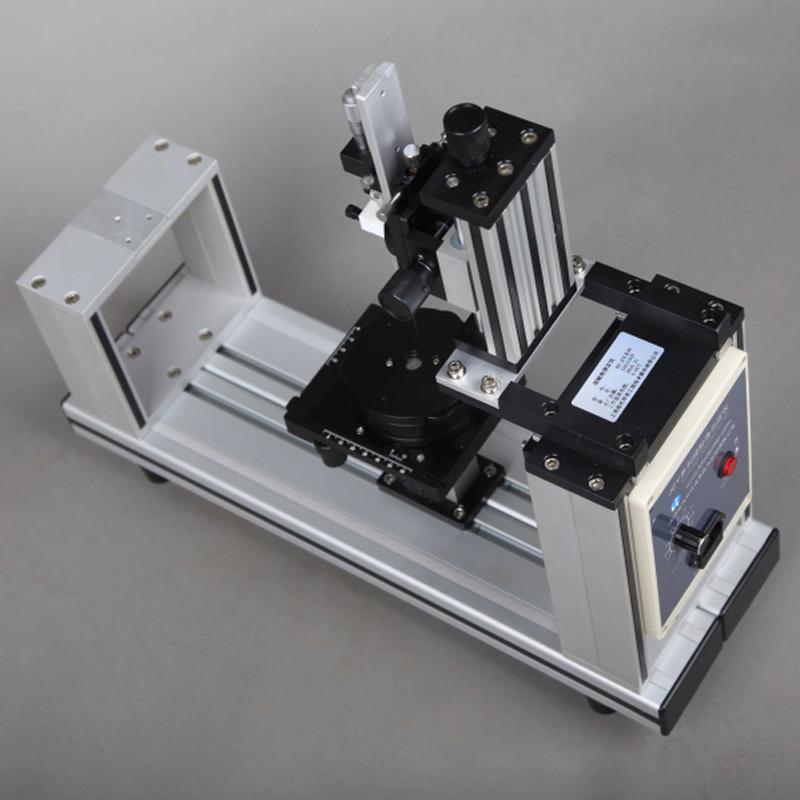
Contact angle meter
Contact Angle: Contact Angle refers to the angle formed at the interface between the liquid and the solid surface. Specifically, when a drop of liquid drops on a solid surface, the liquid surface will form an intersection with the solid surface, and the angle formed by the intersection with the solid surface is the contact angle. Contact angles can be divided into three types:
A situation equal to 0 degrees is called complete wetting, and the liquid expands on the solid surface to form a thin liquid film, such as the case of water on glass.
Greater than 0 degrees but less than 90 degrees is called partial wetting, where the liquid forms a contact line but does not completely cover the solid surface.
A situation equal to 90 degrees is called non-wetting, and the liquid forms a complete spherical drop on a solid surface, as in the case of water on some hydrophobic surface.
The contact angle can provide information about the wettability of the solid surface and the interaction between the liquid and the solid.
Surface tensiometer
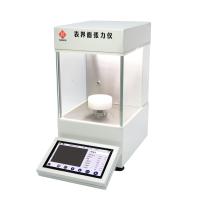
Surface Tensiometer: A Surface Tensiometer is a scientific instrument used to measure the surface tension of liquids. It studies the interaction between liquids and gases by measuring the tension of the surface film of liquids. Liquid surface tension is the result of cohesion between liquid molecules causing a tight film to form on the surface of a liquid.
A Surface Tensiometer measures the surface tension of a liquid by immersing a suspended ring or flat plate in a liquid and then measuring the force required to stretch the surface film of the liquid.
While both contact angle and Surface Tensiometers relate to the properties of liquid and solid surfaces, they focus on different aspects. Contact angle describes the wetting properties of liquids on solid surfaces, while Surface Tensiometers are used to measure cohesion between liquid molecules to assess the properties of the liquid itself.



- 1Water surface tension measurement based on Electronic Balance
- 2Working principle of mechanical liquid meter interfacial tensIon Meter
- 3Comparison of Liquid Surface/Interfacial Tension Testing Methods: Plate vs. Ring Method
- 4Selection guide for Surface Tensiometers
- 5Application principle and precautions of platinum ring Surface Tensiometer
- 6Coating surface tension and its effects
- 7Coating process surface tension factor
- 8Three commonly used detection methods for surface tension
- 9Ceramic ink-jet surface tension, viscosity and solutions