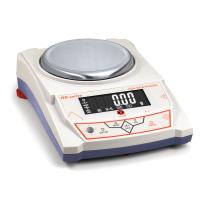
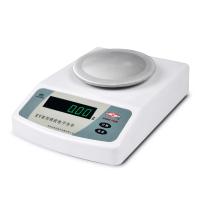
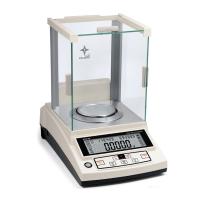
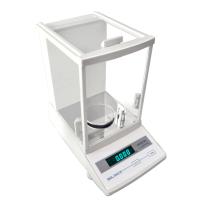
What is the difference between 10,000-level and 100,000-level Electronic Balance?
The 10,000-grade and 100,000-grade electronic balances are two electronic balances with different precision grades. The difference mainly lies in the minimum resolution of measurement and the accuracy of weighing. The following is a detailed comparison of the two electronic balances:
Minimum resolution
10,000-Grade Electronic Balance: The minimum resolution is 0.0001 grams, or 1 milligram. This means that the balance is able to distinguish the smallest unit of mass into 1 milligram. It is suitable for laboratory, scientific research and industrial applications that require high-precision measurements, especially when measuring trace and ultra-trace substances.
100,000 Graded Electronic Balance: The minimum resolution is 0.00001 grams, or 0.1 mg. This makes the 100,000 Graded Electronic Balance more accurate than the 10,000 Graded Balance, especially suitable for scenarios where trace and ultra-trace substances are measured with higher precision.
Accuracy
10,000-Grade Electronic Balance: Its accuracy is usually stated in the technical specification, generally around ± 0.1%. This means that when the true mass of the measured object is 1 gram, the balance may read between 0.999 grams and 1.001 grams.
One hundred thousand graded electronic balance: Due to higher resolution and accuracy, its accuracy is usually around ± 0.05%, which can be closer to the true value, making the measurement results more accurate.
Application field
10,000-Grade Electronic Balance: Widely used in laboratory, scientific research and industry to measure the quality of trace and ultra-trace substances. Common applications include pharmacy, chemistry, food science, environmental monitoring, etc.
100,000 Graded Electronic Balance: Mainly used for higher-precision measurement of trace substances, especially for the weighing of high-value items such as jewelry, gemstones, and medicines, as well as some research and experimental scenarios that require higher measurement accuracy.
In a word, there are obvious differences in minimum resolution and accuracy between 10,000-grade and 100,000-grade electronic balances. When choosing an electronic balance, users should choose a suitable accuracy level according to actual needs and application scenarios to obtain accurate and reliable measurement results.

- 1Proper Use of Electronic Balance
- 2Selection scheme of solar cell slurry performance testing instrument
- 3Offset printing ink laboratory performance testing instrument scheme
- 4Method of using electronic balance and its structure
- 5How should the calibration weights of precision balances be handled and maintained?
- 6How to choose and use precision electronic balance test weights?
- 7How to choose a precision digital electronic balance?
- 8Edham Adam SAB & SPB Electronic Balance Structure
- 9Effect of Epoxy Emulsion Types on Properties of Paint Film
陈深填 - 《华南理工大学 化学与化工学院 》