Microscope: a weapon to reveal the mysteries of microscopic life
Biological microscopy is a difficult or lacking tool in the field of modern science. It provides us with the opportunity to spy on the microscopic world, helping scientists to deeply study biological slices, biological cells, bacteria, tissue culture, fluid precipitation and other life phenomena. It can also be used to observe other transparent or translucent objects, such as powders, fine particles, etc. This article will discuss the working principle, application field and optical technical parameters of biological microscopy.
Forward and Inverted:
Biological microscopes are divided into two types: upright and inverted, and they exert their respective advantages in different observation tasks.
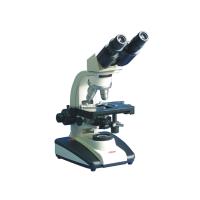
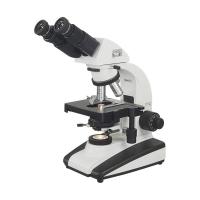
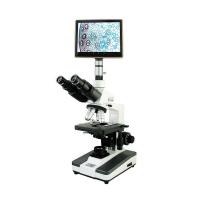
Upright biological microscope: Mainly used to observe biological sections, it can provide clear two-dimensional images. This microscope is suitable for histological and cytological observations common in biological research.
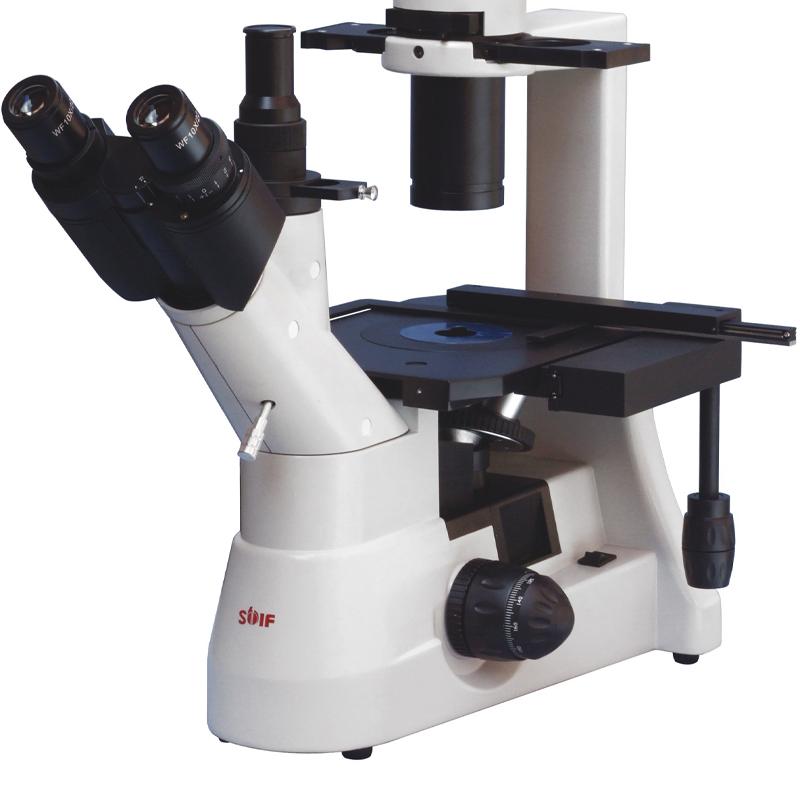
Inverted biological microscope: In addition to observing biological sections, inverted biological microscopes can also be used to observe biological bacteria in petri dishes or culture bottles. It is characterized by the objective lens located above the stage and is suitable for observing three-dimensional structures and dynamic biological processes such as living tissue culture and cell division.
Application field:
Biological microscopy has a wide range of applications in various scientific fields, including but not limited to:
Medical and health unit
Used in microbiology, pathology and clinical diagnostics to help physicians and pathologists observe tissue sections and cells.
Institutions of higher learning
For education and research to help students and researchers gain an in-depth understanding of biology and microbiology.
Research Institute
For scientific research projects, such as research in the fields of cytology, parasitology, oncology, immunology, genetic engineering, etc.
Industrial Microbiology
Used to observe the growth and division of microorganisms, helping to improve industrial fermentation and production processes.
Botany
Used to study plant cell structure, tissue growth and disease diagnosis.
Optical technical parameters:
The performance of biological microscopes is affected by several optical technical parameters, including:
Numerical aperture
It affects the collection ability and resolution of light. The larger the numerical aperture, the higher the resolution.
Resolution
Decide whether the details of the object can be distinguished. The higher the resolution, the clearer the details observed.
Magnification
The magnification of the sample is determined, and the higher the magnification, the easier it is to observe the fine structure.
Depth of focus
Refers to the focal range, and a larger focal depth facilitates viewing of three-dimensional structures.
Field width
Indicates the size of the area that can be seen in the field of view.
Poor coverage
Measure whether different colors of light can be focused at the same time.
Working distance
The distance from the objective lens to the sample determines the space of the stage.
These parameters are interrelated, and their values are adjusted according to the specific research purpose and actual needs to obtain the best observation effect.
In conclusion, biological microscopes are a difficult or lacking tool in modern life science research, which enables scientists to deeply explore the microscopic world and reveal the mysteries of life. Different types of biological microscopes play key roles in different fields, and the selection and adjustment of optical technical parameters are the key factors to ensure the observation effect. With the continuous advancement of science and technology, biological microscopes will continue to provide more possibilities for scientific research and medical diagnosis, and contribute to the improvement of human health and quality of life.