Metallurgical Microscopy: Precision tools to reveal the inner mysteries of metals
Metallographic microscope is a microscope used to observe the surface metallographic structure of metal samples, which plays an important role in the fields of materials research and engineering. This article will discuss in depth the working principle, application fields, and differences between upright and inverted metallographic microscopes, as well as its characteristics with simple polarization.
How it works:
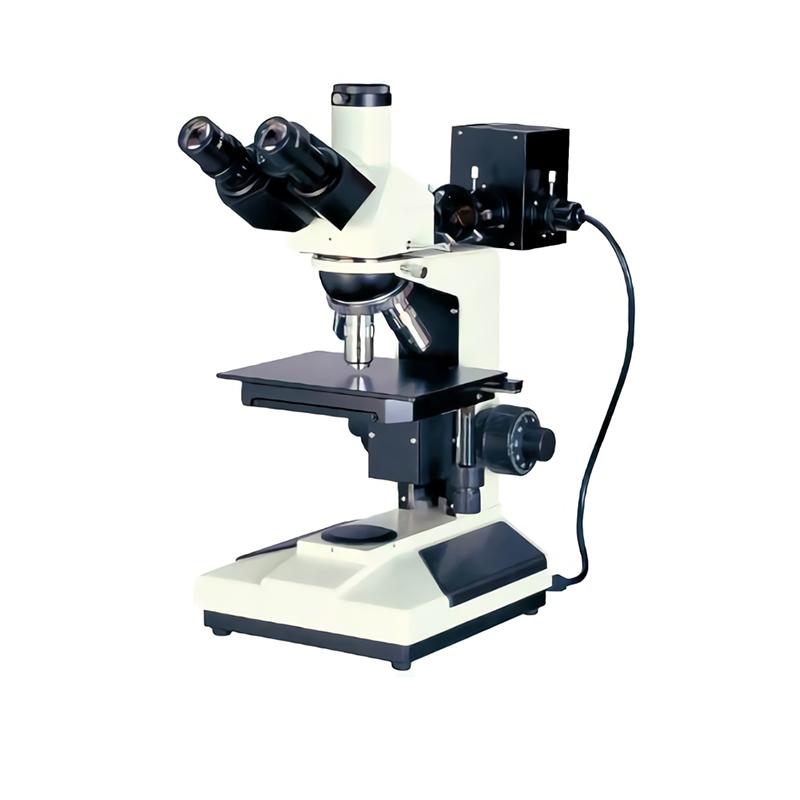
Metallographic microscopy works by using incident illumination to observe the metallographic structure on the surface of a metal sample. Metallographic structure refers to the grain arrangement and composition structure inside a metal or alloy, which has an important impact on the properties and properties of the material. Metallographic microscopy works by placing the sample under the microscope, illuminating the sample with a transmitted light source, and observing the microstructure of the sample surface through an optical system. This technique enables researchers to observe the microstructure of a metal sample in detail, including grain size, distribution, orientation, and phase content, among others.
Application field:
Metallographic microscopes are widely used in many fields, including but not limited to:
Metallurgy
Used to analyze the grain structure of metallic materials to optimize the heat treatment and processing of materials.
Casting
Help assess the quality of castings, detect defects and tissue heterogeneity.
Quality inspection
Used to inspect the material quality of manufactured components and products to ensure they meet standards.
Schools and laboratories
For education and research to help students and researchers understand the microstructure of metallic materials.
Industrial and mining enterprises
For materials research and engineering applications to improve product performance and material selection.
Forward and Inverted:
Upright metallographic microscopes and inverted metallographic microscopes are two different types of metallographic microscopes that have some differences when viewing samples:
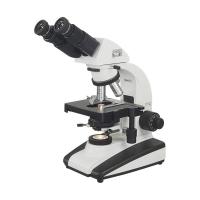
Upright metallographic microscope: The optical path of an upright metallographic microscope is straight, and the sample is placed on the stage, which is suitable for observing the surface of the metallographic tissue. This type of microscope is often used for tissue observation on the surface of materials.
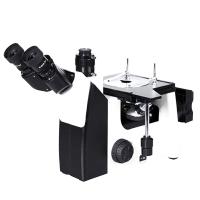
Inverted Metallographic Microscope: The optical path of an inverted metallographic microscope is inverted and the sample is placed under the stage. This type of microscope is suitable for viewing samples immersed in liquids, such as metal samples in etching fluids, or for viewing biological samples.
With easy polarization:
Many metallographic microscopes are also equipped with simple polarizing devices, which allow researchers to observe the polarized light properties of samples. Polarizing microscopes can help analyze grain orientation, residual stress, and tissue heterogeneity in materials. This is important for materials research and quality control as it provides important information about material properties and behavior.
In conclusion, metallographic microscopes are a hard-to-find tool in the fields of materials research and engineering. They help scientists delve into the microstructure of metallic materials and provide important data for optimizing material properties and quality. Upright and inverted metallographic microscopes and simple polarization functions make them suitable for different types of samples and observation tasks, supporting a wide range of applications. Metallographic microscopes, like a window that opens the door to the mysteries inside metals, reveal the infinite possibilities in the world of materials.