How to measure Coating viscosity with ISO cup
In the Coating industry, viscosity is a key parameter, which directly affects the flowability and Spreader performance of Coatings. In order to accurately measure the viscosity of Coatings, ISO cups are often used, also known as ISO Flow Cups. This article will introduce how to use ISO cups to measure the viscosity of Coatings, and describe the related instruments, materials and measurement methods in detail.
1. Scope and description
This method is suitable for Coating products with Newtonian or approximate Newtonian flow characteristics. The flow characteristics of the Coating refer to the ability of the Coating to flow under the condition of externally applied force. This method specifies four ISO cups with different outflow aperture sizes, namely 3mm, 4mm, 5mm and 6mm. The outflow time of the tested sample should not exceed 100 seconds, otherwise the flow breakpoint will be difficult to determine due to the delay effect, and repeatability errors will increase.
2. Instruments and materials
Coating viscosity measurements require the following instruments and materials:
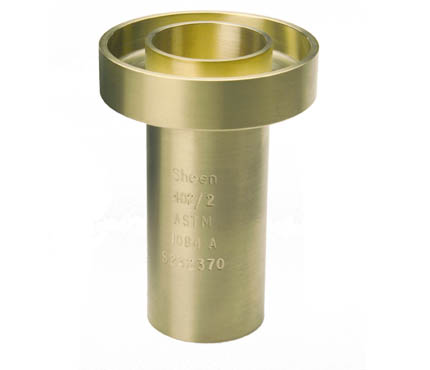
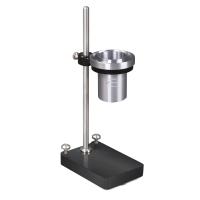
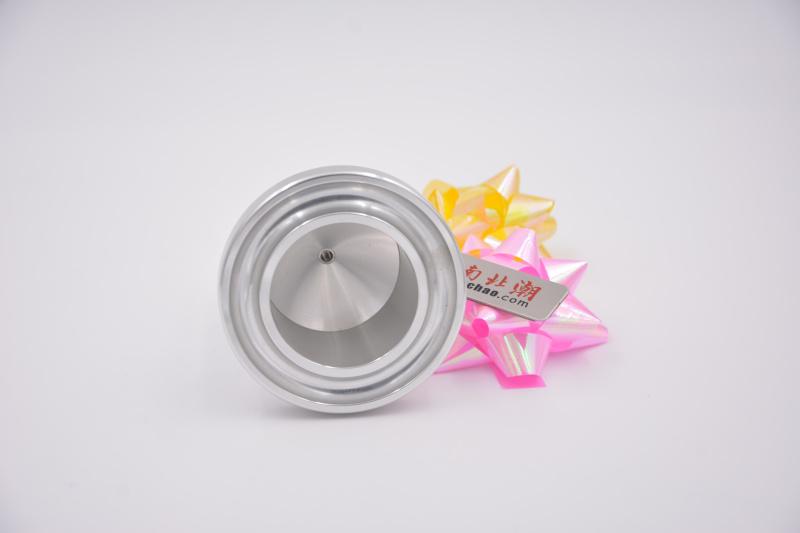
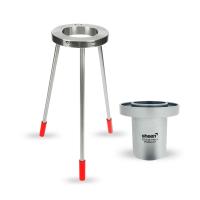
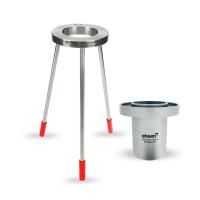
ISO Flow Cup: A container with a cylindrical upper part and a conical lower part, with a small cylindrical leak at the bottom of the cone and a protective cover on the outside to prevent damage.
Thermometer: Accurate to 0.2 ℃ with indexing intervals of 0.2 ℃ or finer.
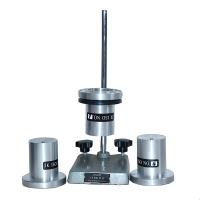
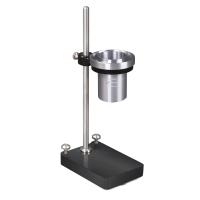
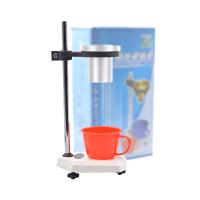
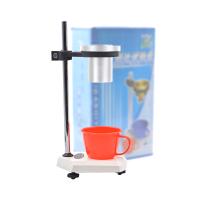
Bracket: Used to support the ISO cup with horizontal adjustment screws.
Stopwatch: The division is 0.2 seconds.
Glass plate or straight edge scraper.
Bear the cup.
3. Determination method
Here are the steps for measuring Coating viscosity using ISO cups:
(1) Preliminary test
After stirring the sample well, pour it into the ISO cup of your choice. Fill the ISO cup and release your finger within 5 seconds, using a stopwatch to measure the outflow time.
The repeability is measured once, so that the sample stays in the ISO cup for 60 seconds before releasing the finger.
If the difference between the two measurement results is greater than 10% of their average value, the sample does not have Newtonian flow characteristics and is not suitable for viscosity determination using this method.
(2) Measurement of outflow time
Choose the outflow aperture of an ISO cup to ensure that the sample outflow time in the ISO cup is between 30 and 100 seconds.
Adjust the temperature of the specimen and ISO cup to (23 +/- 0.5) ℃ or according to the agreed temperature.
Place the ISO cup on the stand and adjust the horizontal screws on the stand to make sure the ISO cup is in the horizontal position.
Plug the opening of the ISO cup with one finger and pour the sample slowly into the ISO cup to avoid bubbles. Use a flat Glass plate or drawdown blade to scrape off excess samples or bubbles flat along the upper edge of the ISO cup.
Place the bearing cup under the ISO cup, no less than 100mm away from the outflow orifice. Quickly remove your finger and start the stopwatch timing at the same time. When the flow out of the outflow hole is interrupted for the first time, stop the timing immediately. The time displayed by the stopwatch is the outflow time, accurate to 0.5 seconds.
4. Presentation of results
The average value of the two measurements is the final measurement result. The difference between the two measurements should not be greater than 5% of the average value.
5. Reference standard
National standard GB/T 6753.4 "Paints and varnishes with Flow Cup to determine the outflow time".
International standard ISO 2431 "Paints and varnishes - Determination of outflow time by Flow Cup (4th edition) ".
Coating viscosity measurement using ISO cups is a commonly used method for viscosity control and mass assessment in the Coating industry. By accurately measuring the viscosity of Coatings, manufacturers can ensure product conformity and performance, thereby increasing Coating production efficiency and mass.



- 1Coating viscosity determination by Flow Cup method
- 2Viscosity cup introduction and selection guide
- 3Paints and varnishes Flow Cup measurement
- 4How to measure the viscosity of paints with zahn Flow Cup?
- 5Flow cup Viscometer Reference material selection Reference range
- 6Viscosity cup standard outflow time calculation formula
- 7Coating viscosity determination method and related standards
- 8Selection and comparison of several desktop ISO Flow Cups
- 9Viscosity cup operation application instructions