Coated steel coatings - Determination of dry-film thickness
Accurate measurement of coating dry-film thickness is essential for quality control and evaluation of coating performance. Four different methods, including magnetic Thickness Gauge method, Micrometer method, Metallurgical Microscopy method and borehole failure microscopic observation method, are introduced for the determination of Coated steel coating thickness.
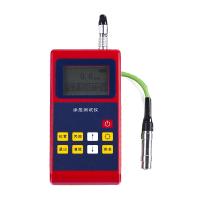
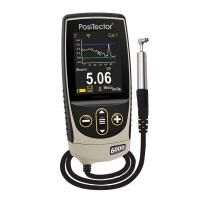
Magnetic Thickness Gauge method
Scope of application: This method is suitable for the determination of Coated steel coating thickness of substrates such as cold-rolled sheet and galvanized sheet, but not suitable for coating thickness below 3μm.

Micrometering
Scope of application and description: This method is suitable for the determination of Coated steel coating thickness of various materials as substrates, but it is not suitable for coatings that are easily deformed under the load of Micrometer measurement devices, nor is it suitable for coatings whose thickness is too thin. According to the US ASTM D 1005 standard, the film thickness shall not be less than 12.7 μm.
Instruments and Materials:
Micrometer: including micromeler with dial comprator or digital display handheld Micrometer, the error of indication should be within the range of +/- 0.001mm.
Solvent or paint remover (for coating removal).
Marker.
Determination method:
Zero calibrate and operate according to the instrument instructions.
In the area not less than 10mm from the edge of the template, select 3 different parts for marking.
Micrometer measurement of the coating thickness and recording the value of the marking site.
Use an appropriate solvent or paint remover to remove the coating from the marked area to ensure that the specimen is not deformed, scratched or scratched during the stripping process.
Micrometer measurement of the thickness of the substrate after removal of the coating again, and recording the value.
The results show that the difference in coating thickness of each measurement site is calculated, and this value is the coating thickness of the site. Then, take the arithmetic average of the film thickness of three different measurement sites and express it in microns (μm).
Metallurgical Microscopy
Scope of application and description: This method is suitable for the determination of Coated steel coating thickness of various materials as substrates, and can also be used for arbitration tests. This method utilizes the different light reflectances of coatings and metal substrates on sections to measure coating thickness.
Instruments and Materials:
Metallurgical Microscopy, measurement accuracy should be better than 2 μm.
Appropriate grade of metallographic sandpaper.
The material used to fix the test plate should have no harmful effect on the coating, and the Color is clearly distinguished from the coating.
Determination method:
Secure the panel with appropriate material, making sure the panel is perpendicular to the viewing surface.
Polish the test plate so that the surface is smooth enough to observe the coating section under the Microscope, taking care to keep the test plate at right angles to the sandpaper surface.
Metallurgical Microscopy measuring the coating thickness of 5 different parts of the sample section, and recording values.
The results show that the arithmetic average of the coating thickness at five different positions is calculated, and this value is the coating thickness of the test plate, which is expressed in microns (μm).
Drilling failure microscopic observation method
Scope of application and description: This method is suitable for the determination of the thickness of Coated steel coatings with various materials as substrates, and can also be used for the determination of the thickness of different coatings (primer, topcoat).
Instruments and Materials:
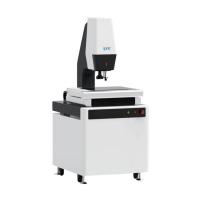
Microscopic Thickness Gauges, including automatic drilling devices and microscopic video image systems, should have a measurement accuracy better than 10% of coating thickness.
Marker.
Determination method:
The sample is placed on the drilling table, and the drilling depth control wheel of the automatic drilling device is adjusted so that the drill bit just penetrates the substrate and drills a circular shallow-angle shrinkage hole on the sample.
The sample is placed on the measurement table, and the microscopic video image system is adjusted so that each interface of the coating at the shrinkage hole can be clearly imagery on the video.
The coating thickness is directly read by the scale of the microscopic video image system.
The results show that the arithmetic average value of at least 3 different measurement sites is taken in the measured shrinkage pores, which is the coating thickness of the sample, expressed in microns (μm).
These four methods provide different ways to measure the thickness of coating Dry-Film, and the appropriate method can be selected according to the specific situation to ensure the control of coating mass and performance. In practical applications, choosing the appropriate Measuring method will help ensure that the product meets the specifications and improves the performance and durability of the coating.


- 1Nondestructive measurement of dry coating thickness
- 2Determination method of dry and wet paint film thickness
- 3Dry-film thickness measurement: an important step before Coating mass evaluation
- 4Application scheme of coating thickness test on wood board [with test video]
- 5Curved plastic coating thickness test application scheme [with test video]
- 6PosiTector200C ultrasonic coating Thickness Gauge on concrete coating thickness measurement application
- 7Coating Metering rodsFAQ
- 8Measuring method of nondestructive heat spray-on lining thickness
- 9How to convert Dry-Film and wet film thickness of concrete structure paintings?