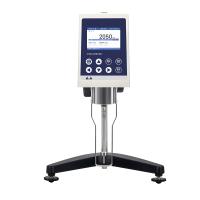
National Standard for Coating Viscosity Determination [Rotational Viscometer method]
The viscosity measured by the Flow Cup method for thixotropic coatings is too large, and a Rotational Viscometer is required. There are rotary paddle viscometers, coaxial drum Rotational Viscometers, conical plate viscometers, etc.
In the national standard, the method standard for measuring the viscosity of coatings by Rotational Viscometer is commonly used in GB/T 9269---1988 Determination of viscosity of architectural coatingsStoner viscometer method and GB/T 975 1-1988 Determination of viscosity of coatings at high shear rates.
GB/T 9269-1988 is suitable for the determination of the viscosity of architectural coatings, and can also be used for the determination of the viscosity of suitable coatings. It is expressed in terms of the load required to generate a speed of 200 r/min in grams (g) and can also be obtained by checking the table in GB/T 9269---1988 and the load required to generate a speed of 200 r/min and Krebs units (KU) conversion. Krebs units (KU) are a logarithmic function of the load required to generate a speed of 200 r/min and are generally used to express the viscosity used for brush and roll coatings.
In GB/T 9751-1988, the kinetic viscosity of coatings is determined at a shear rate of 5 000-20 000 s, and the shear rate should be roughly the same when comparing the viscosity of various coatings. This standard applies to all brush paints, regardless of whether they are of Newtonian nature. Rotational viscometers and conical plate viscometers can be used in this standard. For the same experimenter, the relative error between two measured values obtained by using one device in the same laboratory should not be greater than 5%.
Comparison of 4 methods for determining the viscosity of coatings
Standard number | GB/T1723-1993 | GB/T6753.4-1988 | GB/T9269-1988 | GB/T9751-1988 |
Test environmental conditions | 23±1°C or 25±l°C | 23±0.5℃ | 23±0.5℃ | 23±0.5℃ |
Main instruments | Paint 1 cup, apply _4 cups | ISO Flow Cup | Stomo Viscometer | Rotational viscometer cone plate viscometer |
Scope of application | Apply 1 cup of paint products for the determination of outflow time of not less than 20 s, and apply _4 cups for the determination of paint with outflow time of less than 150 s | Determination of the viscosity of Newtonian or approximately Newtonian liquid coatings | Suitable for the determination of viscosity of architectural coatings. It can also be used for the determination of viscosity of suitable coatings | Suitable for all brush coatings, regardless of whether they are incense or Newtonian properties |
Result unit | S | S | Ku/g | mPa.s |
Pros and cons | It is convenient to operate and clean. Easy to obtain. But for thixotropic coatings, The viscosity measured by the Flow Cup method is too large. Viscosity values cannot be determined accurately | It has a wide range of applications, but has high requirements for temperature control in the test environment | ||
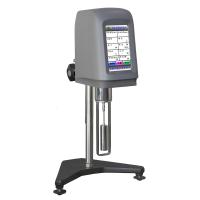

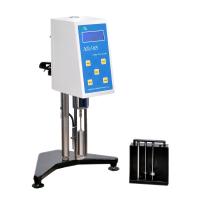
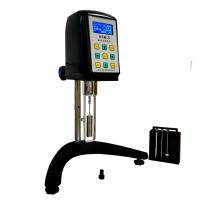
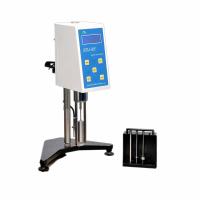

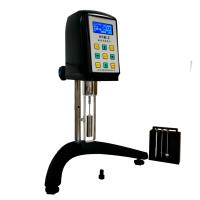
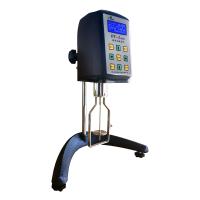

- 1Rotational viscometer - principle, classification, application and calibrating
- 2Application of NDJ-8S digital Rotational Viscometer in viscosity measurement of cosmetic raw materials
- 3NDJ-5S digital Rotational Viscometer accurate measurement of natural oil viscosity
- 4Application of HBDV-1H swirl/spin High Temperature Viscometer in Viscosity Determination of Plastic Particles
- 5Rotational viscometer selection guide: How to choose the right viscosity equipment for you?
- 6Principle, type and accuracy control of Rotational Viscometer
- 7Which Viscometer to Choose for Licorice Extract Viscosity Testing? How to Test?
- 8Application of Rotational viscometer in Waterborne Polyurethane Adhesive
- 9Application of Rotational Viscometer in cellulose material