Several Determination Methods of Coating drying time
Drying time plays a vital role in the Coating industry. The liquid-to-solid drying process of Coating is divided into three stages: surface drying, actual drying and through drying. The control and measurement of this process is essential to ensure the mass and performance of coatings. In this article, we will delve into the concept of drying time, the different measurement methods, and its importance in the Coating industry.
Concept
Coating drying refers to the process from Spreader liquid Coating to the formation of a solid film. This process can be divided into three key stages: surface drying, actual drying and through drying. Surface drying means that the surface of the Coating begins to dry, usually manifested as the outer layer of the Coating film begins to dry, but the interior is still wet. Actual drying means that the entire Coating film has dried, including the interior. Through drying means that all solvents in the Coating film have evaporated and the film has been completely cured.
In order to measure the drying time of Coating, only the two stages of surface drying and actual drying are usually measured. This is because the time required for through drying is relatively long and it is difficult to measure quickly. There are various measurement methods for surface drying and actual drying, and different methods can be selected according to different standards and needs.
Determination method
A common surface drying method is the blown cotton ball method. According to the GB/T 1728-79 standard, the operation method is to place an absorbentcottonph ball on the surface of the paint film and blow the cotton ball with the mouth. If the cotton ball can be blown away without leaving the cotton silk, then the surface can be considered to have dried. The maximum time required to achieve surface drying needs to be recorded, or the specified surface drying time is used to determine whether the coating is qualified.
The blown cotton ball method is a simple and effective method, especially suitable for the rapid determination of Coating surface drying. It can help Coating manufacturers ensure that after Coating application, the surface is sufficiently dried to allow for the next step of treatment or operation.
Determination of actual drying
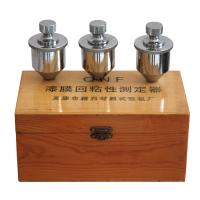
There are many options for measuring actual drying, one of the common methods is the pressure filter paper method. According to the GB/T 1728 standard, the method of operation is to place a piece of filter paper or an absorbentcottonph ball on the paint film, and then use a Drying Tester (drying weight, 200g) to press it on the paint film. After 30 seconds, remove the Tester and turn the sample over. If the filter paper can fall freely or there are no cotton ball marks and loss of light on the paint film, then the actual drying can be considered to have been achieved. The maximum time required to achieve the actual drying needs to be recorded, or the specified actual drying time is used to determine whether the coating is qualified.
The pressure filter paper method is a commonly used practical drying assay that can help ensure that the entire Coating film has been dried to meet specific mass requirements. This is critical for Coatings to be used in different environment conditions, as coatings that have not passed through dry can cause mass problems.
Instrumental determination
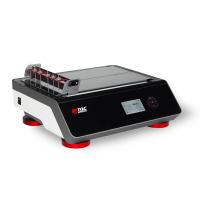
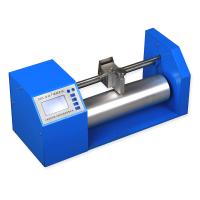
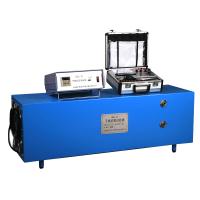
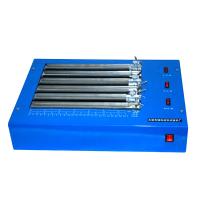
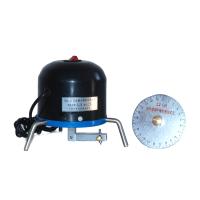
In addition to blowing cotton balls and pressing filter paper, various automatic drying time measuring instruments can also be used to determine the drying time of Coatings. These instruments can help observe changes in different stages of the drying process, so as to determine the drying time more accurately.
Taking the scribing method as an example, it uses a clock motor to drive a swirl/spin arm with a scribing needle to draw a circular track with a fixed diameter on the paint film. When the paint film is cut by the scribing needle into a rhombus shape, the surface drying begins; when the cracked paint film terminates and the scribing needle track remains on the film surface, the actual drying begins. Eventually, when the track disappears, the Coating film can be considered through drying.
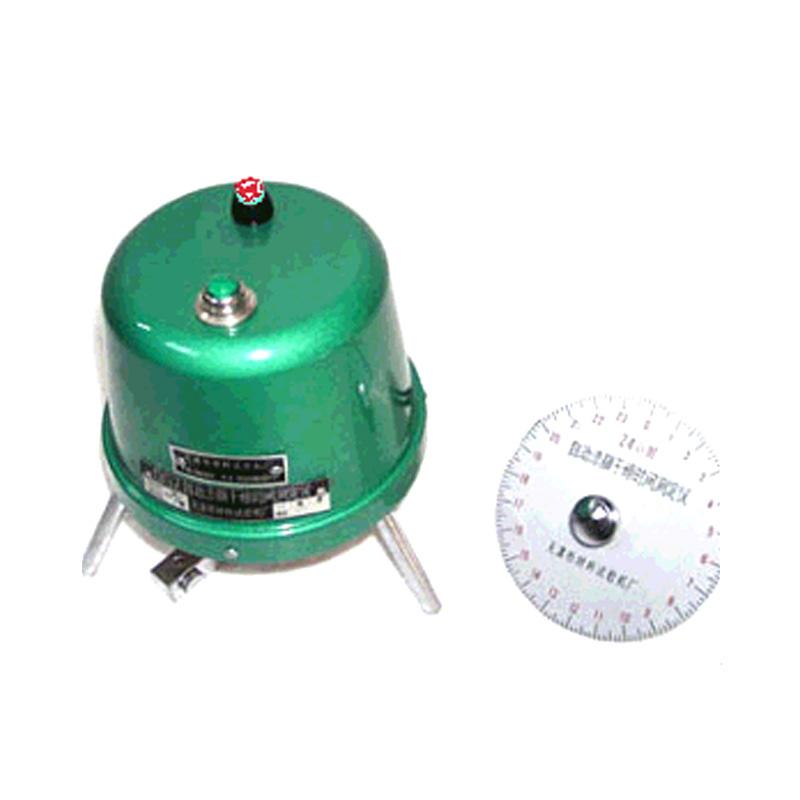
These instrumental assays provide greater accuracy and repeatability for coating manufacturers, especially in applications where coatings need to meet stringent mass requirements, such as automotive manufacturing and the aerospace industry.
Importance of drying time
Drying time is crucial for the Coating industry. It can affect not only the mass and performance of coatings, but also production efficiency and cost control. Here are a few important aspects of drying time:
Accurate determination of drying time ensures that the Coating film has the desired performance when used, such as adhesion, hardness and abrasion resistance. Insufficient drying time may result in insufficient viscosity of the Coating film, which is prone to flaking or damage.
Knowing the drying time of Coatings can help manufacturers better plan the production process, reduce waiting time and improve production efficiency. This is especially important for mass production of Coatings.
Coatings drying times may vary under different environment conditions. Understanding drying times can help you choose the right coating for your specific application.
Accurate determination of drying time can help control energy consumption during Coating production, thereby reducing production costs.
In general, drying time is a key parameter in the Coating industry and has an important impact on Coating mass, production efficiency and cost control. Therefore, Coating manufacturers need to carefully select appropriate measurement methods and ensure that drying time is accurately measured and controlled to meet market demand and mass standards.
- 1Basic Principle and Application Analysis of Paints drying time Tester
- 2Waterborne architectural coatings detection method
- 3Summary of drying time determination method for paint film and putty film
- 4Coating performance testing: ensuring the efficiency and mass of the painting process
- 5Film drying method: natural drying, heating drying, irradiation curing and gas phase curing
- 6How to detect the drying time of architectural coatings (surface drying)?
- 7How to test architectural coatings workability?
- 8List of water-based paints testing laboratory equipment
- 9Analysis of ASTM D5010 Printing ink and related material performance testing standards
-
![TQC sheen AB3600 Drying Time Recorder BK method, six-track -20 ℃ to 70 ℃ test]()
-
![MODERNER ZGY automatic drying Tester for determining inks drying time QB562-83 standard]()
-
![MODERNER GKL-II drying anti-crack Tester, determination of initial drying anti-crack of laminated architectural coatings]()
-
![JINGKELIAN QGZ-A Drying Time Recorder GB/T1728-89 Standard, Scribing stroke 305mm]()
-
![JINGKELIAN QNF Backtack Tester 3 pcs]() JINGKELIAN QNF Backtack Tester 3 pcs$ 190.00
JINGKELIAN QNF Backtack Tester 3 pcs$ 190.00 -
![JINGKELIAN QGZ-6 12 24 Film Drying Time Recorder Scribing radius: 0.25/0 5/1.0/1.5mm]()