Concept, influencing factors and determination method of Coating hiding power
Coating is not just for beautifying the surface of an object, it also has a magical ability, which is hiding power. Hiding power is the ability of a Coating to evenly brush on the surface of an object so that its base color no longer appears. This article will delve into the concept, influencing factors, and measurement methods of hiding power to reveal the magic of this Coating property.
Concept
Hiding power is a key feature of Coatings, which describes the ability of a Coating to cover the surface of a substrate so that its original Color or pattern is no longer visible. This coverage is achieved by the scattering and absorption of light by the pigment in the Coating. The level of hiding power depends on a number of factors, including the type of pigment, particle size, how dispersed the pigment is in the Coating, and the difference between the refractive index of the pigment and the Coating.
In the Coating industry, hiding power is a crucial performance indicator. Coatings with high hiding power can effectively cover the substrate, making it impervious to the base color, which is very important in painting applications. For example, when painting a car, the Coating must have excellent hiding power to ensure that the underlying Color does not pass through the Coating.
Factors affecting hiding power
Coating's hiding power is affected by many factors, here are some key ones:
1. Type of pigment: Different types of pigments have different hiding power. Some pigments can effectively absorb rays of light, thereby increasing hiding power, while Miscellaneous pigments may scatter more rays of light and reduce hiding power.
2. Pigment particle size: The size of pigment particles also has an important impact on hiding power. Larger particles can cover the substrate more effectively and improve hiding power.
3. Degree of pigment dispersion: The degree of pigment dispersion in Coating determines its uniform distribution in Coating. Uniformly dispersed pigments can provide better hiding power.
4. Difference in refractive index between pigment and Coating: The greater the difference in refractive index between pigment and Coating, the better the hiding power. This is because the difference in refractive index will cause the rays of light to be refracted, thereby enhancing the scattering and absorption of rays of light by pigment.
Determination of hiding power
The measurement of hiding power is achieved by quantifying the minimum amount of Coating required to cover the substrate. The following is an example of a commonly used hiding power measurement method:
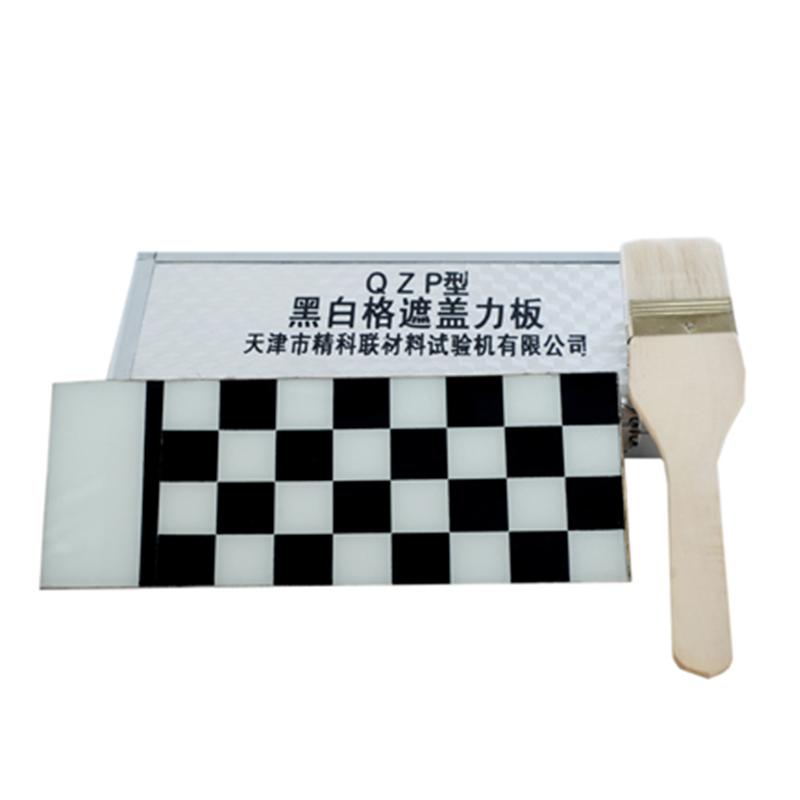
Checkerboard Glass Method:
According to the GB/T 1726 standard, the test operation consists of evenly and quickly applying the Coating to the Checkerboard Glass plate with a paint brush until the Checkerboard is no longer visible. The amount of Coating used is then weighed and the hiding power is calculated according to the formula, and the result is expressed in g/m ². This method is a fast and effective method for measuring hiding power and can be used for the evaluation of Coating quality.
The measurement of hiding power helps Coating manufacturers understand the performance of their products in different applications. Coatings with high hiding power are very valuable in painting applications because they reduce Coating usage, improve painting efficiency, and ensure that the substrate is completely covered. Whether it is automotive manufacturing, building construction or home decoration, hiding power is one of the key factors in ensuring Coating mass and performance.
Hiding power is a magical ability of Coating that enables us to change the Appearance and Color of objects, while also providing practical and aesthetic advantages for painting applications. By gaining an in-depth understanding of the concept, influencing factors and measurement methods of hiding power, we are able to better understand this magic and better apply it in a variety of fields. Whether in artistic creation or industrial production, hiding power is an important quality of Coating that shapes the world around us.
- 1Summary of determination methods for hiding power of coatings
- 2Pigment hiding power
- 3Determination of Coating hiding power
- 4GB/T 23981.2-2023: Paints and varnishes - Determination of hiding power - Part 2: Checkerboard method - Interpretation
- 5Mayer Rods: The right-hand man for hiding power tests
- 6Coating performance testing: ensuring the efficiency and mass of the painting process
- 7Coating hiding power measurement
- 8Application of paint film Applicator in hiding power test
- 9List of water-based paints testing laboratory equipment