Determination of porosity of coatings
In coating technology, the integrity and uniformity of coatings are key factors in determining their performance. Especially when coatings are used in electrical insulation or anti-corrosion applications, tiny pinholings and defects can lead to serious problems such as current leakage or corrosion. Therefore, it becomes crucial to quantitatively evaluate and understand the porosity of coatings. This article will delve into the method of determining the porosity of coatings, its importance and how to ensure the mass of coatings.
1. Definition and importance of coating porosity
Coating porosity refers to the number of pinholings and defects in a coating. Pinholings and defects not only affect the overall performance of the coating, but can also be the starting point for coating failure, especially in electrical coatings and anti-corrosion coatings. Defects can lead to current leakage, intrusion of corrosive media, or early destruction of coatings.

2. Materials and instruments required for coating porosity testing
Test baseplate: Choose a clean A-type Cold rolled steel plate to ensure that its size conforms to the regulations.
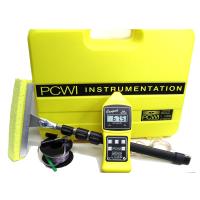
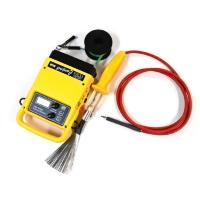
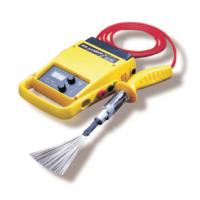
High voltage generator: It can produce an adjustable range of DC output voltage and ensure that its steady-state short-circuit current and current MAX Maximum meet the specified range.
High voltage test head: with protection resistor inside, used to limit the current during high voltage flashover, and a conductive sheath.
Electrodes: Made with a soft metal brush to ensure that the bristles are in close contact with the coating without leaks. In addition, conductive rubber electrodes are also a viable option.
3. Determination method and procedure of coating porosity
Coating prepative: It is recommended to use the fluidized bed coating process to prepare five samples to ensure that the coating has undergone appropriate curing time and conditions.
Measurement steps: Adjust the test voltage to the specified value, use the test electrode to sweep the coating surface, and the traverse speed does not exceed the specified speed. During this process, the test voltage needs to be closely monitored to ensure that its drop is within the acceptable range. When the electrode detects pinholing or defects, a spark discharge is generated, accompanied by a light or sound signal.
4. Analysis of results
The number of pinholings or defects per specimen will be recorded. These data are important for evaluating the mass and uniformity of the coating.
5. Standard reference for coating porosity
In order to ensure the accuracy and Reliability of coating porosity measurement, we refer to the national standard GB/T 6554. This standard provides us with detailed test methods and guidance.
6. Conclusion
The uniformity and integrity of coatings are critical to their performance and service life. Through rigorous assay methods and high-mass testing instruments, we can accurately assess the porosity of coatings, ensuring high efficiency and long-term stability of coatings. In practical applications, appropriate coating prepative methods and quality control processes will ensure optimal coating performance for electrical or corrosion protection needs.