Extender performance inspection and whiteness measurement
This article will explore the performance inspection of fillers, with special attention to the measurement of whiteness, as one of the key parameters for evaluating the quality of fillers. Fillers are widely used materials in various industrial applications. Different types of fillers have different performance characteristics, so specific inspection methods are required to ensure their quality and performance. We will introduce in detail the measurement method of whiteness, the required instruments and materials, and the relevant national standards.
Section 1: The importance and performance differences of fillers
Fillers refer to granules or granular substances used to fill and reinforce materials, and are widely used in various industrial fields, including construction, manufacturing, and chemical industry. Different kinds of fillers have different performance characteristics, such as color, whiteness, particle size, adsorption properties, etc. Therefore, testing the performance of fillers is a key step to ensure product quality and performance.
Section 2: Determination of whiteness
Whiteness is a key performance parameter for fillers, especially where white or highly white fillers are required in application fields such as coatings, plastics and paper manufacturing. The determination of whiteness typically involves the following steps:
The whiteness measurement is based on the absolute reflection ratio of the standard whiteboard of the instrument to the monochromatic light of a specific wavelength, and the absolute reflection ratio of the sample surface is measured at the corresponding wavelength, thereby measuring the whiteness value of the sample.
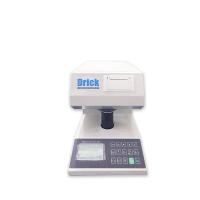
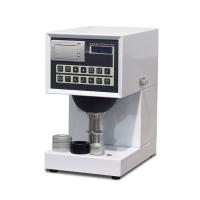
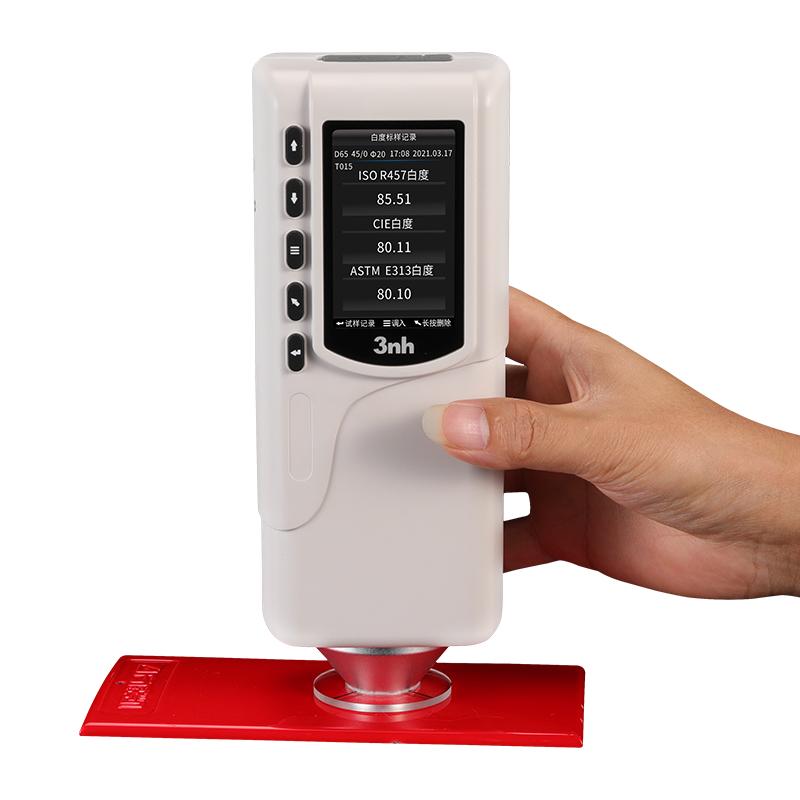
Whiteness measurement requires the use of a color Detector, the light source is D65, the geometric lighting conditions can be d/0 or 45/0, and the wavelength range is usually 380-780nm. In addition, a powder sample press is required to prepare the sample plate.
First, three test plates are prepared to ensure that their surfaces are flat, free of texture, defects, and stains. Then, calibrate, zero, and perform measurement operations using a color Detector. The three test plates are placed on the measuring hole, and their tristimulus values are measured and averaged.
The measurement results are expressed as the arithmetic mean of the measurement results of the three sample plates, usually with one decimal place reserved.
According to the measurement results, the chromaticity coordinates and whiteness of the sample can be calculated.
Section 3: Reference Standards
The measurement method of whiteness usually follows national standards, such as the national standard GB/T 19590-2004 "Ultrafine Calcium Carbonate".
Section 4: application field
Whiteness is an important performance parameter of fillers, especially in the following application fields:
Paint industry: Whiteness is an important parameter in coatings because it directly affects the color and hiding power of the coating.
Plastics industry: Fillers used in plastic products typically require high whiteness to ensure the color and quality of the final product.
Paper manufacturing: In paper production, the whiteness of fillers can affect the color and appearance of paper.
Building materials: The whiteness of fillers is also a key factor in building materials, as it affects the brightness and color of a building's exterior.
summarize
Performance inspection of fillers is a key step to ensure product quality and performance, while whiteness, as an important performance parameter, plays a key role especially in application fields such as coatings, plastics, paper manufacturing and building materials. By using a color meter and a standard whiteboard, the whiteness of fillers can be accurately determined, thus ensuring that the product performs well in high-demand applications. National standards provide detailed measurement methods and guidelines to ensure accuracy and comparability of results.