Density determination: key performance parameters for the powder coatings and pigment industries
Density determination plays an important role in the field of powder coatings, pigments and related product manufacturing. This article will introduce different methods for the determination of density, including those for apparent density and true density. These methods are essential for the control of product quality and the optimization of performance, while also helping to reduce production costs and reduce environmental impact.
The importance of density
Density is the ratio of mass to volume of a substance and is an important physical property parameter. Density plays a key role in the manufacture and application of powder coatings, pigments and related products. Density determination helps to determine the physical properties of a product, including voids between particles, packing density and mass distribution. This information is essential for the control and improvement of product performance.
Determination of apparent density
Apparent density refers to the space occupied by the volume of the solid itself and the interstitial space when a loose solid is deposited. It is usually used to describe the density of particles or powders, and is related to the packaging and storage of products. Apparent density can be determined by different techniques, including liquid and gas methods.
Liquid method: This is an economical and simple method of determination. It involves immersing the measured object in a liquid (such as kerosene or n-hexane) to measure the volume of the liquid being expelled. The apparent density is then calculated by dividing the mass of the object by its actual volume. However, be aware that low densities may result due to the indirectness of measuring the volume.
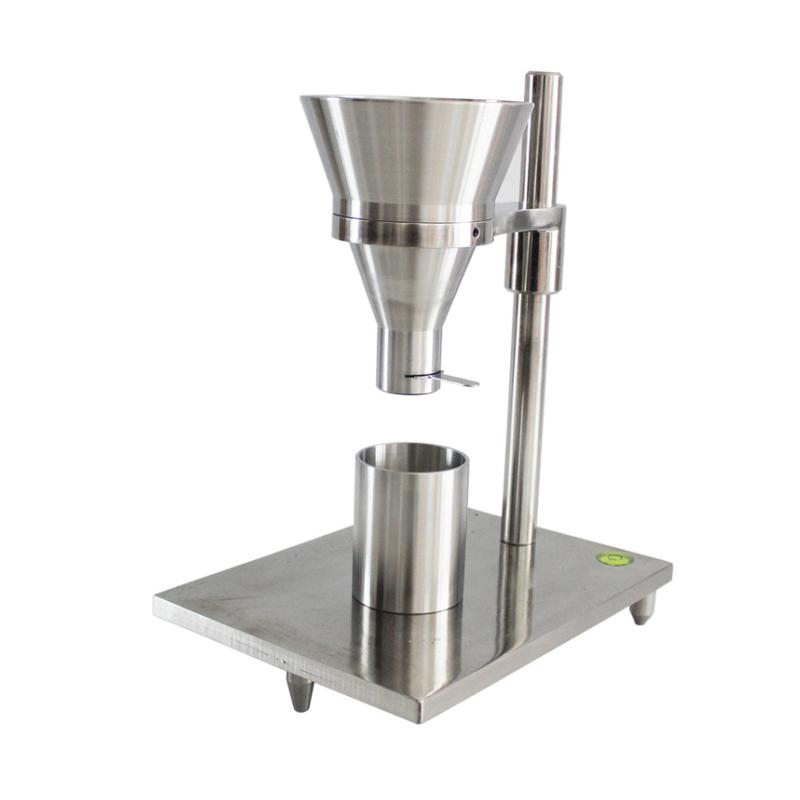
Gas method: This method requires instrumentation but provides higher accuracy. It involves the use of a density meter to determine the volume of an object by measuring the displacement of the gas. This method has higher accuracy and is suitable for more demanding density determination.
Determination of True Density
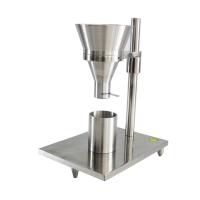
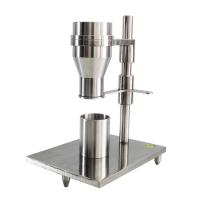
True density refers to the ratio of the mass of a substance to the volume it actually occupies. This is a more accurate density determination method and is commonly used to determine the density of granules, powder coatings, pigments, crosslinkers, and resin powders. The determination of true density requires instruments and materials, including scales, beakers, specific gravity bottles, kerosene or n-hexane, and density meters.
Experimental steps for density determination
Liquid method determination:
Three samples were measured in parallel.
Immerse the test object in the liquid and measure the volume of the discharged liquid.
To calculate the apparent density, divide the mass of an object by its actual volume.
Report test results to one decimal place.
Gas method determination:
Three samples were measured in parallel.
Using a density meter, the volume of an object is determined by measuring the displacement of the gas.
To calculate the true density, divide the mass of an object by the volume it actually occupies.
Report test results to one decimal place.
reference standard
The accuracy of density determination is critical to product quality. Reference to national and international standards ensures consistency and comparability of tests. Some relevant standard documents include ISO 8130-2-1997, ISO 8130-3, ISO 787-10 and GB/T 5211.4-85.
conclusion
Density determination is of great significance in the field of powder coatings, pigments and related product manufacturing. Different measurement methods, including apparent density and true density, can help producers to ensure product quality and optimize the production process. Accurate density determination helps to reduce costs, increase production efficiency and reduce the adverse impact on the environment. Therefore, density determination methods are widely adopted in industrial applications to ensure that the product meets the requirements in all aspects.



- 1Determination of thermal plasticity Resin melt flow rate
- 2Molecular weight and distribution characteristics of polyester resin in thermosetting powder coatings
- 3Density Determination Method and Application
- 4Determination method of cone-plate viscometer and its application
- 5Thermal plasticity polyvinyl chloride (PVC) powder coatings in highway engineering: technical requirements and inspection methods
- 6Determination of compatibility of powder coatings: methods, effects and applications
- 7Evaluation of flowability of powder coatings: key factors and significance
- 8Evaluation and Application of Optical Properties of Powder coatings
- 9Importance of powder coatings curing degree and detection method