Study on electrical performance of powder coatings
With the rapid development of industry, the properties and application scenarios of materials are gradually changing, among which the research and application of the electrical properties of powder coatings are particularly interesting. In this paper, the volume resistance, volume resistivity, surface resistance and surface resistivity of powder coatings are discussed in detail.
Part 1: The importance of coating electrical properties
As a polymer material, the coating material naturally has good insulation, which provides it with unique advantages in a variety of applications. But in some specific scenarios, such as the coal industry, the surface of the material needs to have an antistatic effect to reduce the safety risk caused by the accumulation of static electricity. For these scenarios, how to adjust the surface resistance of the coating to a suitable range becomes the key. For example, in order to make the surface of the material have an antistatic effect, there are strict regulations on the surface resistance of the inner and outer walls of the pipe in some applications.
Part II: Definition of electrical properties
Volume resistance: Determined by measuring the ratio of voltage to steady-state current between electrodes on two opposing surfaces inside the coating. It reflects the conductivity inside the material.
Volume resistivity: Volume resistivity is the ratio of the DC electric field strength inside the powder coating to the steady-state current density, and is used to represent the resistance per unit volume.
Surface resistance: Surface resistance is obtained by measuring the ratio of voltage and steady-state current between two electrodes on the coating surface, which reflects the conductivity of the material surface.
Surface resistivity: is the ratio of the DC electric field strength to the linear current density in the surface layer of the powder coating, representing the resistance per unit area.

Part III: Measurement Methods and Impact Factors
The measurement of the volume and surface resistance of coatings is a complex task involving the combined influence of many factors. For example, the magnitude and time of the applied voltage, the nature and size of the electrode, atmospheric conditions, and the temperature and humidity of the sample may all affect the test results.
The measurement of volume resistivity is often used to check the consistency of insulating material production. In practical applications, it can also help people detect conductive impurities that may affect the quality of the material.
Part IV: application field
The study of electrical properties of powder coatings is not limited to theoretical exploration, it plays an important role in practical applications. In flammable and explosive industries such as coal and oil, antistatic surfaces have become a safety requirement. In microelectronics, semiconductors and other fields, the electrical properties of coatings are also an important factor affecting the performance of components.
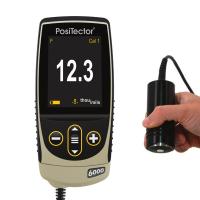
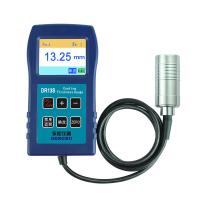
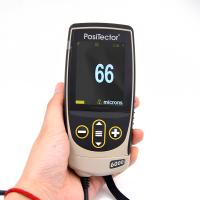
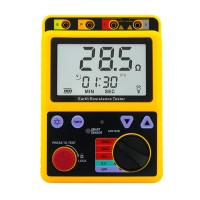
To meet these application requirements, researchers use advanced equipment such as high-resistance meters, micrometers, and coating Thickness Gauges to accurately measure and analyze coating materials to ensure they meet industry standards and application requirements.

Part V: Conclusion
In general, the study of the electrical properties of powder coatings is of great significance to the development of modern industry and science and technology. Through in-depth research and measurement of its electrical properties, high-quality and high-performance coating materials can be provided for a variety of industries to meet various application needs. At the same time, this also promotes the continuous innovation and progress of coating technology, providing broad prospects for future scientific research and application.