Understanding and Addressing Common Challenges in the Use of pH Meters
pH measurement is critical in a variety of scientific and industrial processes, but is often met with misunderstandings and technical challenges. This article deeply discusses common problems in the use of pH meters and analyzes misunderstandings in temperature compensation, slope interpretation, electrode storage and calibration, etc. By elaborating on these areas, we aim to improve the accuracy and reliability of pH measurements in different applications. In fields ranging from beer brewing to chemical manufacturing, pH accuracy is critical. Although technology continues to advance, users often face operational challenges and misunderstandings that can skew results. This article aims to reveal common problems and guide users to achieve more reliable and accurate pH measurements.
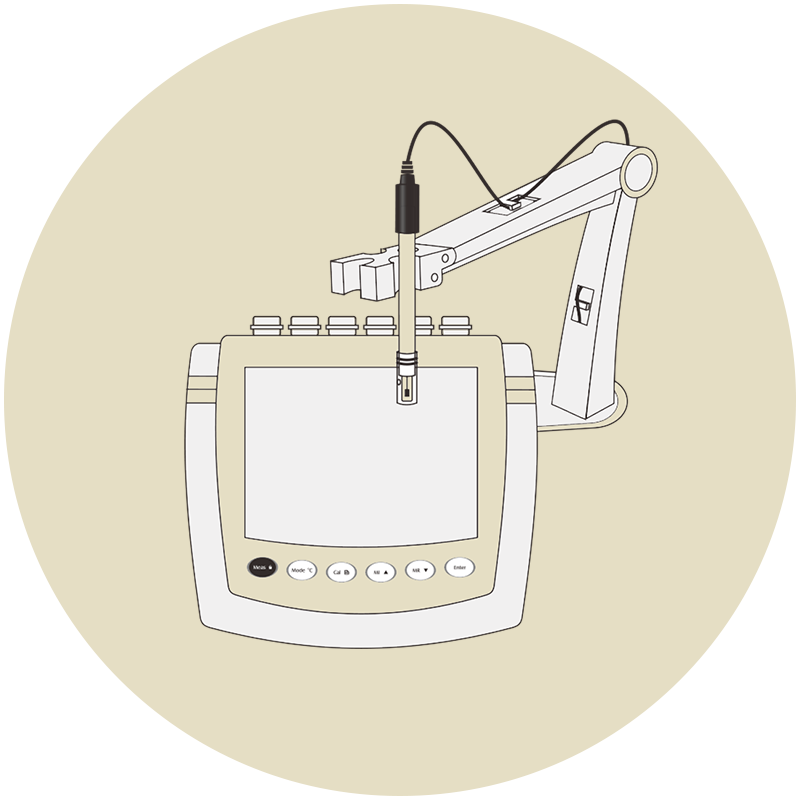
1. Misunderstandings about temperature compensation
A widespread misunderstanding is the role of temperature compensation in pH meters. Users often think of this feature as correcting the pH of a sample based on temperature changes. However, temperature compensation only adjusts the electrode's response to temperature changes, not the pH of the sample. This distinction is critical for accurate measurements, especially if the sample temperature fluctuates significantly.
2. Interpretation of slope values
After calibration, the pH meter will display a slope value that reflects the condition of the electrode. A common mistake is to think that a higher slope is better. In fact, slopes above or below a certain threshold indicate possible problems, such as buffer solution deterioration or electrode degradation. Understanding and correctly interpreting these values ââis critical to maintaining measurement accuracy.
3. Electrode storage and maintenance
Electrode maintenance, often overlooked, has a profound impact on the accuracy of your pH meter. A typical mistake is to store the electrode in distilled water, which can result in slower reaction times and inaccurate readings. Proper storage should use specialized storage solutions to keep the electrode hydrated and functional, thereby extending its life and reliability.
4. Calibration Challenges
Calibration is key to accurate pH measurement. Problems often encountered by users include using expired or contaminated buffer solutions, resulting in erroneous slope values. Additionally, understanding the need for single- or multi-point calibration, based on the accuracy required for a specific application, is critical to achieving reliable results.
5. Solve common problems
Addressing these common issues includes regular maintenance, proper storage, and the use of high-quality calibration solutions. Users should also pay close attention to electrode condition and understand the limitations of the temperature compensation feature. Regular training and following good practices can significantly improve measurement accuracy and equipment longevity.
Recognizing and correcting common errors in pH meter use is key to obtaining accurate and reliable pH measurements. By focusing on proper calibration procedures, understanding temperature compensation, and maintaining electrode integrity, users can significantly improve the quality of their pH measurements, ensuring the integrity of their processes and products.
- 1Principle and Application of Standard pH Meter
- 2Method for determining amino acid pH value
- 3Basic principle and application analysis of anti-fluorine pH meter
- 4Proper use and maintenance of pH meters
- 5How to use pH meter
- 6Differences between three STIP-scans: pH Meter, Conductivity Meter, and Dissolved Oxygen Meter
- 7PH meter conversion of mv and ph value
- 8Common types and application differences of STIP-scan
- 9PH meter and reading rules for universal ph indicator paper