The difference between fluorescent UV Lamp and xenon arc: Two Light sources in artificial accelerated aging
The difference between ultraviolet light and xenon lamp: two light sources in artificial accelerated aging
In materials science and engineering, artificially accelerated aging testing is an important method for evaluating the long-term performance of materials in the natural environment. To conduct these experiments, scientists typically use two different light sources, fluorescent UV lamps and xenon lamps. This article will explore the differences between these two light sources and their use in accelerated weathering testing.
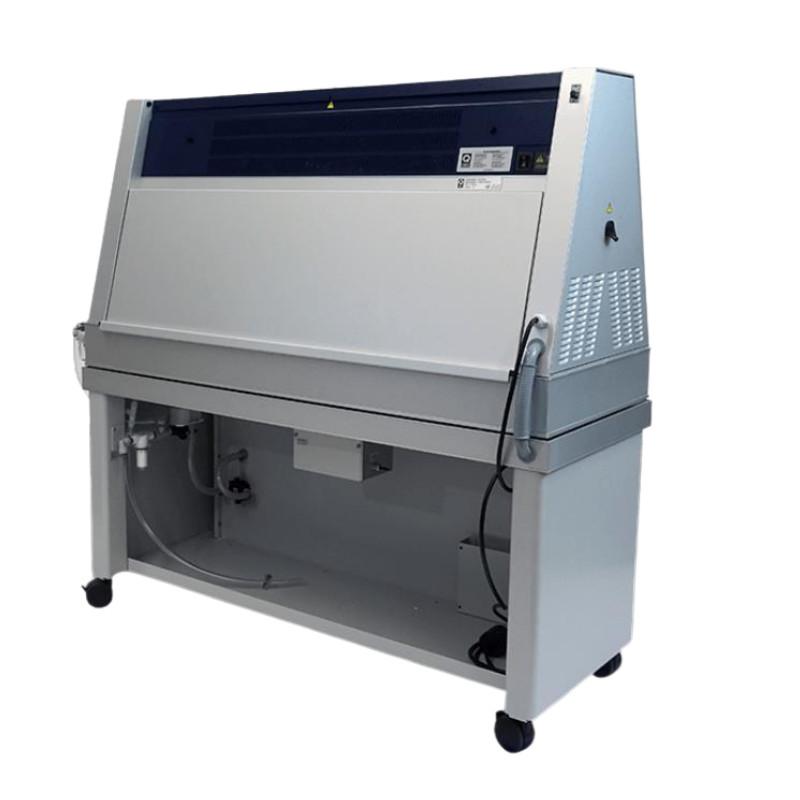
Fluorescent UV lamp :
Fluorescent UV lamps are a common light source used in artificial accelerated aging tests. Its spectral distribution can only simulate the ultraviolet part of sunlight. Although it can provide ultraviolet radiation, its spectral range is limited and cannot fully simulate the spectral distribution of sunlight. Therefore, when testing with fluorescent UV lamps, the material is exposed to only part of the UV spectrum, rather than the entire spectrum.
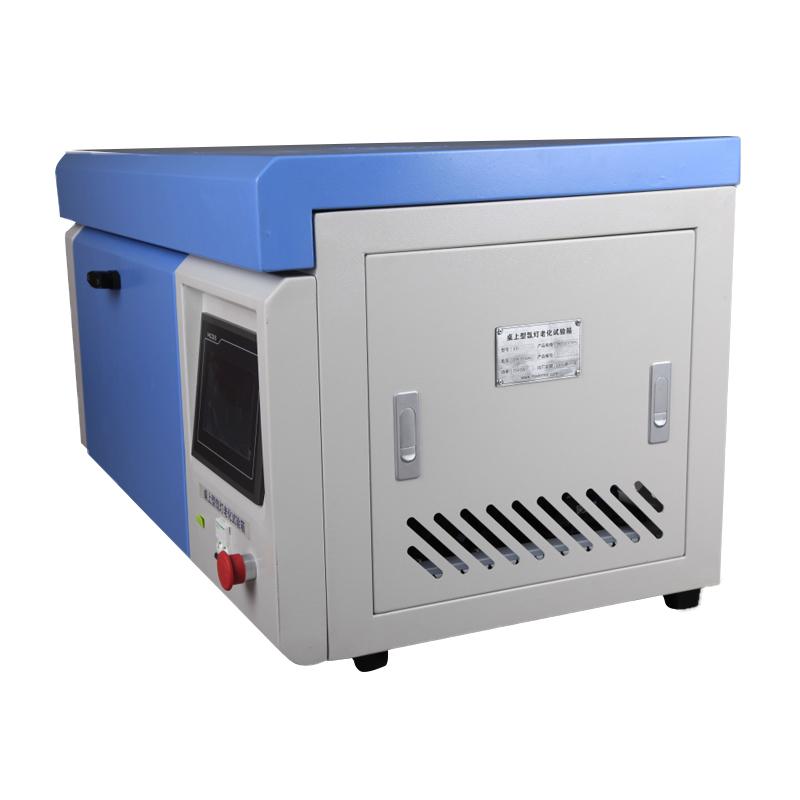
Xenon lamp :
In contrast, a xenon lamp is a light source capable of simulating the entire spectrum of sunlight. Its spectrum covers ultraviolet, visible light and infrared rays, which can more comprehensively simulate natural sunlight. Therefore, when testing with a xenon lamp, the material is exposed to a wider spectral range, closer to actual outdoor exposure conditions.
Applications and differences between the two :
Although xenon lamps have obvious advantages in simulating the sunlight spectrum, they cannot completely replace fluorescent UV lamps. There are differences in Test Chamber performance and experimental results between these two light sources. Fluorescent UV lamps, due to their narrow spectral range, are often used for testing certain types of materials, especially those that are very sensitive to UV exposure. Xenon lamps, on the other hand, are often used for experiments that require a more complete simulation of natural sunlight, such as evaluating the actual service life of polymer materials outdoors.
In summary, both fluorescent UV lamps and xenon lamps play an important role in artificial accelerated aging tests. The choice of light source depends on the specific needs of the experiment and the characteristics of the material. Regardless of the light source used, accelerated aging testing helps scientists understand the properties of materials more quickly so they can better design and improve a variety of products. Fluorescent UV lamps and xenon lamps are important tools in materials scientific research and jointly promote the progress of science and technology.

- 1Basic Principle, Functional Characteristics and Application of xenon arc aging Test Chamber
- 2Introduction of working principle and application scope of water-cooled xenon arc weathering Test Chamber
- 3Xenon arc weathering vs UV weathering: differences in ray of light simulation
- 4Rubber aging talk: xenon arc aging, ultraviolet light aging, ozone aging
- 5Xenon arc aging Test Chamber common faults and solutions, how to maintain?
- 6Application of xenon arc aging Test Chamber in coil coatings
- 7Application of xenon arc weathering Test Chamber in sealing parts
- 8Application of xenon arc weathering box in gluing agent
- 9Xenon arc aging Test Chamber - roof rainproof board durability test equipment