The principle, application and operation points of LOVIBOND Colorimeter
The Lovibond Colorimeter is a color measurement tool widely used in many industries, especially in the field of oil production and trade. This instrument originated from the British company Lovibond. The Lovibond Colorimeter plays an important role in the field of color measurement. Understanding its principles, applications and nuances of color perception can significantly improve its effectiveness in various industrial applications.
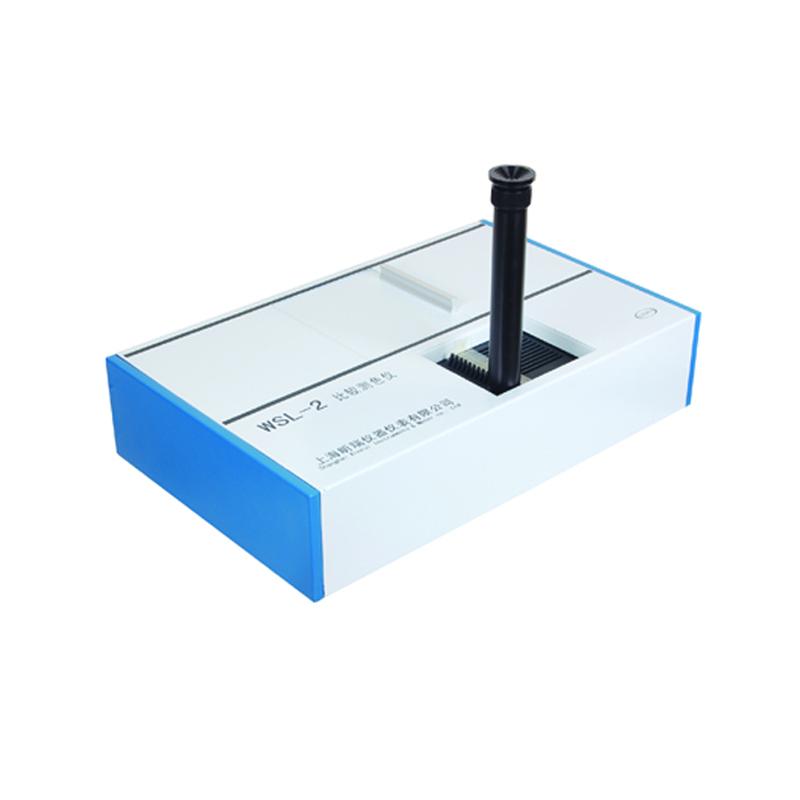
working principle
The core working principle of the Lovibond Colorimeter is color contrast. It uses white light as the light source, covering all visible light wavelengths, unlike Spectrophotometer s which use monochromatic light. This instrument uses red, yellow, and blue disks to generate a composite color that matches the sample being measured. It should be noted that Beer-Lambert's law (that is, the optical density is proportional to the concentration of the solution) only applies to certain conditions, and there are limitations in its direct application to the Lovibond Colorimeter due to its use of white light and the difference in color perception of the human eye. .
Application areas
The versatility of Lovibond Colorimeter makes it play an important role in qualitative and quantitative analysis. It is widely used in color inspection of products such as pigments, textiles, wine, tobacco, candy, jam, pharmaceuticals and oils. This system was adopted by the American Association of Oleochemists for standardization of oil color grading.
Common misunderstandings and clarifications
The color depth cannot be simply converted in direct proportion to the thickness of the liquid sample, and this calculation method has limited reliability. A blue reading when measuring the color of oil does not indicate that the oil contains blue color, but usually indicates that the oil contains impurities such as chlorophyll. The blue value limit in some commercial standards for oils is actually to limit the content of impurities that affect the color and clarity of oils. Lovibond Colorimeter also measures "brightness", using a neutral color wheel to add blur to the sample. The concepts of lightness and darkness are independent of color and reflect the transparency and quality of the oil. This system classifies almost all colors into six primary colors: red, orange, yellow, green, blue, and violet, as well as some additional descriptions. This classification simplifies the unified, quantitative expression of color.
Operation precautions
Due to the reliance on visual assessment, operators need to protect their eyes from fatigue to ensure accurate measurements . Avoid staring into the eyepiece for long periods of time and take appropriate breaks. Replace light bulbs regularly and make sure the power supply is stable to ensure consistent light source. The operator's seat and instrument position should avoid interference from external light to reduce visual errors.
