Types, principles and common faults of Clean Bench
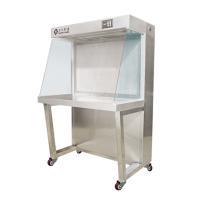
A clean workbench is a special piece of equipment designed to provide a dust-free and sterile local air purification working environment. This kind of workbench has been widely used in laboratories, electronic technology, aerospace, precision instruments, meters, fine chemicals, biopharmaceuticals, medical food and other fields. Its purpose is to improve cleanliness and ensure process conditions, product accuracy, High purity and high reliability.
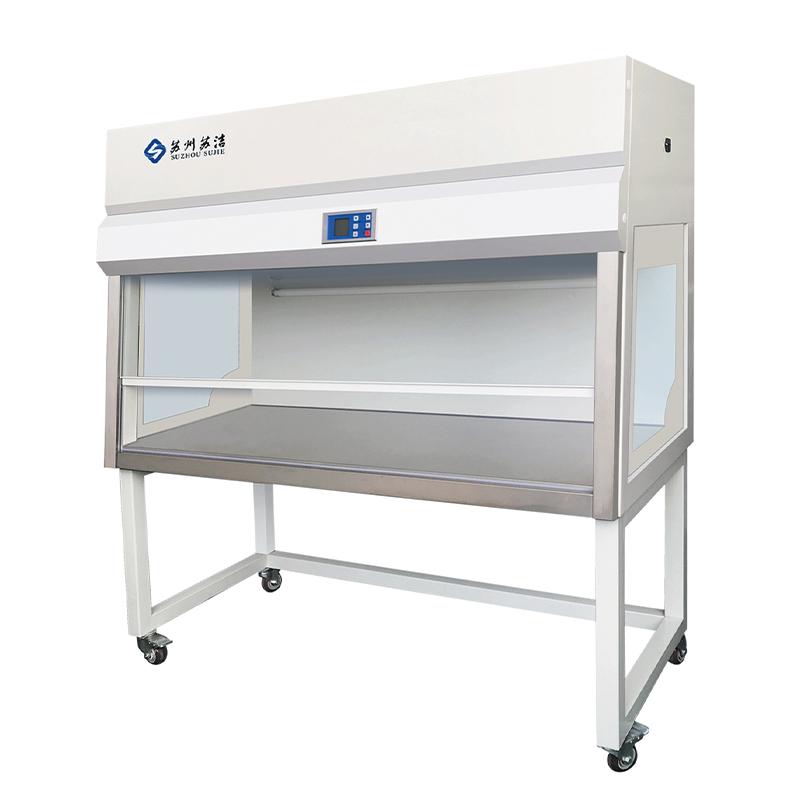
The main types of clean workbench include standard type, medical type and biological type, each of which is suitable for different working environments and needs. In terms of technical parameters, these workbenches have different cleanliness levels, colony count control, wind speed adjustment, noise control, vibration control, illumination, power requirements and maximum power. For example, the cleanliness level can reach level 100@â¥0.5μm, which complies with the US federal standard 209E.
Structurally, the clean workbench adopts an all-steel structure, and the outer surface is treated with electrostatic spraying to increase durability and aesthetics. Its internal structure includes an air supply box and a static pressure box, which are equipped with high-efficiency filters. The countertop of the workbench is usually made of high-quality stainless steel, which is not only beautiful but also durable. In order to ensure a sterile environment, the workbench is also equipped with an ultraviolet germicidal lamp. This lamp can emit strong 2537-A short-wave ultraviolet light, which can not only kill the active cells of microorganisms, but also effectively kill various heat-resistant spores. and mold spores.
The workbench works through horizontal or vertical laminar (unidirectional flow) airflow. The variable-speed centrifugal fan presses the air pre-filtered by the coarse filter into the static pressure box, and then passes through the high-efficiency filter for secondary filtration. In this way, when the clean air blown from the high-efficiency filter passes through the work area, dust particles and microbial particles are taken away at a certain cross-sectional wind speed, forming a sterile working environment.
When using the workbench, you need to pay attention to several key steps, such as starting up and preheating in advance, using ultraviolet germicidal lamps, starting the fan, etc. At the same time, the maintenance of the workbench is also very important, such as regular cleaning or replacement of coarse filter cloth, regular environmental sterilization work, and keeping the surface of the ultraviolet germicidal lamp clean. In addition, when the wind speed in the operating area cannot meet the requirements, the high-efficiency air filter needs to be replaced.
For common faults, such as no power supply, fans not working, lights not working, etc., there are corresponding solutions. For example, a problem with no power may require adjusting the plug-to-receptacle contact or checking the wiring. For problems with the fan not working, you may need to replace the control board or inspect the fan itself.
In general, a clean bench is a highly specialized and technical piece of equipment that is crucial to maintaining cleanliness and sterility in laboratories and production environments. Correct use and maintenance can not only improve work efficiency, but also extend the service life of the equipment.