Synthesis, curing and application of phenolic resin
Phenolic resin usually refers to a high molecular polymer formed by the condensation polymerization of phenol and formaldehyde under the action of a catalyst. This type of resin is the earliest type of thermosetting resin synthesized. Based on their structure and properties, phenolic resins can be divided into different types, including linear phenolic resins, thermosetting phenolic resins and oil-soluble phenolic resins. Phenolic resin has excellent acid resistance, mechanical properties, heat resistance and other characteristics, so it is widely used in the fields of manufacturing varnish, insulation materials, corrosion-resistant coatings and other fields. Among them, one of the most notable features of phenolic resin is its excellent high temperature resistance. Even under extreme high temperature conditions, phenolic resin maintains its structural integrity and dimensional stability. In addition, phenolic resin can be dissolved in solvents such as ethanol and acetone, and is soluble and fusible. Phenolic resins cure (rapidly curing when heated) only when a cross-linking agent such as hexamethylenetetramine or polyformaldehyde is introduced. When cross-linked, phenolic resin is resistant to a wide range of chemicals, including gasoline, petroleum, alcohols, glycols, and various hydrocarbons.
Phenolic resin is an important type of polymer material with a wide range of synthesis and application fields. This article will delve into the synthesis and curing methods, properties and different types of applications of phenolic resin.
Synthesis and Curing of Phenolic Resin
The synthesis and curing process of phenolic resin follows the law of body-type polycondensation reaction. By controlling different synthesis conditions, such as the ratio of phenol and aldehyde, catalyst type, etc., two types of phenolic resins can be obtained: thermosetting phenolic resin and thermoplastic phenolic resin.
Thermosetting phenolic resin
Thermosetting phenolic resins include resins with hydroxymethyl reactive groups that can be further reacted. During the synthesis process, if no special control is carried out, the bulk polycondensation reaction will proceed until an infusible, insoluble solidified resin with a three-dimensional network structure is formed. The film of thermoset phenolic resin is very hard after baking, has excellent moisture resistance, insulating properties, and is suitable for a variety of applications, such as glued laminates.
thermoplastic phenolic resin
Unlike thermosetting phenolic resin, thermoplastic phenolic resin is a linear resin and does not form a three-dimensional network structure during the synthesis process, so a curing agent needs to be added during the further curing process. The synthesis and curing principles of these two types of resins are different, so their molecular structures are also different.
According to the degree of reaction, phenolic resin can be divided into three stages: A-stage resin, B-stage resin and C-stage resin. Class A resin is the primary resin product after synthesis. It can be in liquid, semi-solid or solid state and can melt quickly after being heated. After the B-stage resin is further heated, the intermolecular reaction will lead to cross-linking. Its molecular structure is more complex than that of the resol phenolic resin, and the paint film is relatively hard. C-stage resin is the product of a deeper cross-linking reaction. It has a complex network structure and becomes an infusible resin. Its properties and uses are also different.
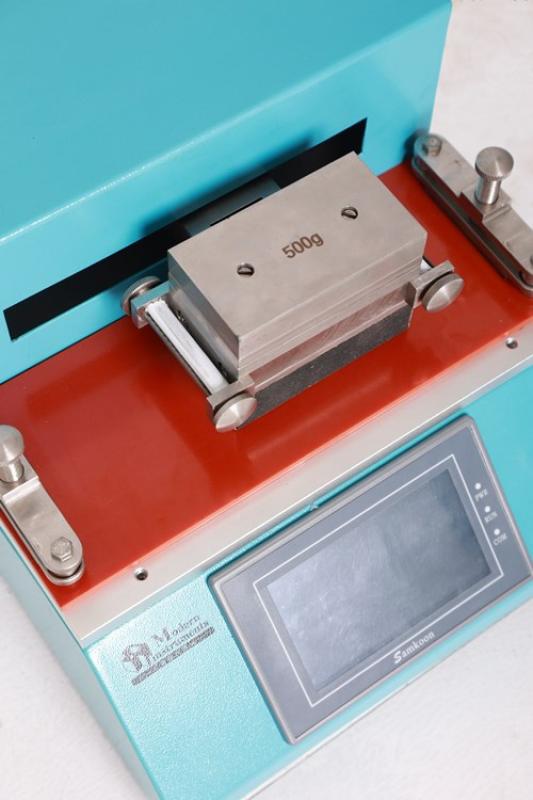
Application of phenolic resin
Phenolic resin is widely used in the coating field, mainly including alcohol-soluble pure phenolic resin paint, rosin-modified phenolic resin paint and oil-soluble pure phenolic resin paint.
Alcohol-soluble phenolic resin paint
This kind of paint is divided into two types: thermoplastic and thermosetting. Thermoplastic alcohol-soluble phenolic resin paint is a volatile self-drying paint that dries quickly. It has excellent resistance to acids, organic solvents and acid gases and has low toxicity. However, its paint film easily becomes brittle, prone to reddening in sunlight, and its heat-resistant temperature is also limited. Compared with thermosetting phenolic resin paint, its application field is narrower.
Modified phenolic resin paint
Among them, rosin-modified phenolic resin paint is one of the most widely used types. The paint film formed by it and tung oil has the characteristics of high hardness, good drying property, good chemical corrosion resistance, and low price, but the paint film is prone to yellowing. This kind of paint is widely used in the fields of wood furniture, construction, ships, insulation materials and fine arts.
Oil-soluble pure phenolic resin paint
It is divided into two types: non-oil reactive type and oil reactive type resin paint. These paint films have better adhesion, excellent durability and abrasion resistance, and are highly moisture-resistant. Phenolic resin paint plays an important role in different fields, providing a variety of options for wood finishes, insulation materials, coatings, etc. By adjusting different types of phenolic resin paints, the needs of various applications can be met, promoting the development of modern industry.
Conclusion
Across the entire phenolic resin field, there are not only rich application prospects, but also extensive research and development opportunities to meet growing market demands and innovation challenges. Continued research on phenolic resins will help us better understand their properties and applications and promote progress in the field of materials science.



- 1Types of Amino resins and Their Applications in Coatings
- 2Amino resin performance detection method
- 3Comparison of key parts configuration list of XD-1JQ-A1 formaldehyde box and XD-1JQ-F1 formaldehyde box
- 4Gas detection Common detection items/detection methods and testing standards
- 5Learn from the policy orientation of European and American countries on VOC emissions from the Coating Industry
- 6Influence of hot pressing process and environment parameters on TVOC and formaldehyde release from particle board
王敬贤;沈隽 - 《生物质材料科学与技术教育部重点实验室》
- 7Amino resin Coatings Overview
- 8Possible causes and countermeasures of formaldehyde content exceeding standard in emulsion paint
- 9Biaozhi GM8801 Formaldehyde Tester Instructions for Use