Density Determination Method and Application
In chemical industry, materials science and industrial manufacturing, density determination is one of the important methods to evaluate the properties and characteristics of materials. This article will detail the methods for determining apparent and true density and their application in measuring granular solids and powder coatings.
Determination of apparent density
Apparent density describes the ratio of space occupied by a loose solid to its mass when packed together. It takes into account the volume of the solid itself as well as the voids within it. This density is relevant to the packaging, storage and transportation of materials, and is suitable for the inspection of powder coatings, granular and finely powdered resins, curing agents, pigments, etc. This determination method can be carried out with reference to the previous method.
Determination of density
This measurement method is used to measure the ratio of the mass of the measured object to its actual occupied volume, that is, the true density. Suitable for measurement of powder coatings, pigments and fillers, cross-linking agents and resin powders. There are two types of measurement of the volume occupied by the tested sample: liquid method and gas method.
Liquid method determination
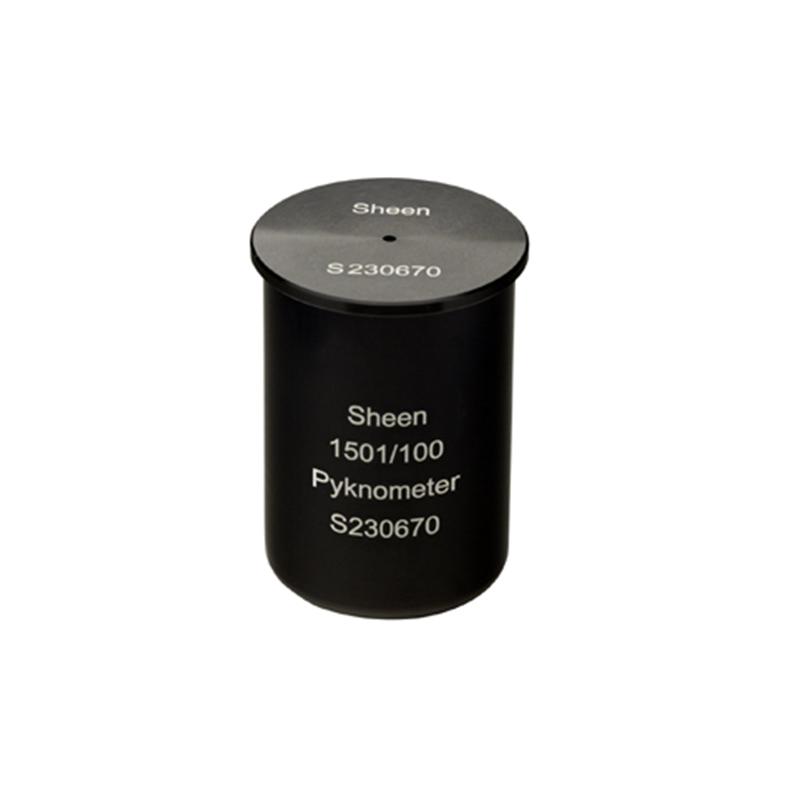
The liquid method is simple and economical, using kerosene or n-hexane as the medium. Measure the mass and volume of the sample through a pycnometer and calculate the true density. Three parallel measurements of samples are required and the average value is calculated.
Gas method determination
The gas method requires equipment such as cylinders, pistons, valves, and differential pressure gauges, and uses air as the medium. By moving the two pistons and measuring the value of the differential pressure gauge, the volume of the sample being measured is calculated and the true density is calculated. It is also necessary to conduct parallel measurements of three samples and calculate the average value.
Results presentation and reference standards
After completing three measurements, take the arithmetic mean as the measurement result of the true density and report it to one decimal place. Standards such as ISO81302, ISO81303, ISO 787-10, GB/T 5211.4 and other standards provide relevant guidance and specifications for density determination.
Density measurement is of great significance in industrial production, especially for the preparation and application of materials such as powder coatings and pigments. By accurately measuring density, the performance and economics of materials can be evaluated, providing strong support for product design and manufacturing.
- 1Determination of thermal plasticity Resin melt flow rate
- 2Molecular weight and distribution characteristics of polyester resin in thermosetting powder coatings
- 3Determination method of cone-plate viscometer and its application
- 4Thermal plasticity polyvinyl chloride (PVC) powder coatings in highway engineering: technical requirements and inspection methods
- 5Determination of compatibility of powder coatings: methods, effects and applications
- 6Evaluation of flowability of powder coatings: key factors and significance
- 7Evaluation and Application of Optical Properties of Powder coatings
- 8Importance of powder coatings curing degree and detection method
- 9Acrylic resin: performance inspection and Application