Melting point determination and its importance in material analysis
Melting point determination is an important experimental method, especially suitable for the analysis of properties of polymers, organic crystals or amorphous substances. This measurement method identifies the purity and composition of a substance by observing the temperature of changes in the state of matter under a microscope. This article will introduce in detail the principle, determination method and application of melting point determination in material analysis.
Principle of melting point determination
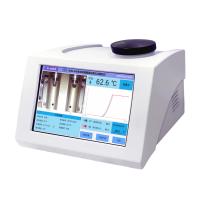
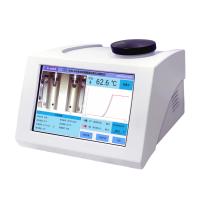
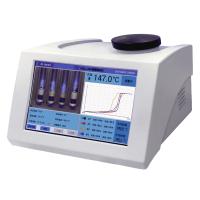
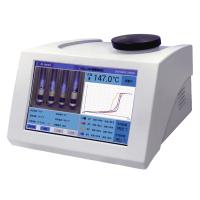
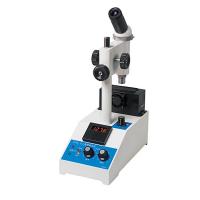
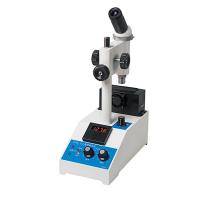
Melting point determination uses a microscopic melting point Tester to determine the corresponding melting point and melting range by observing the phase change of a trace amount of the measured object under a microscope. This method enables observing the transition of a substance's state as its temperature changes, allowing it to accurately determine its melting point.
Instruments and Materials
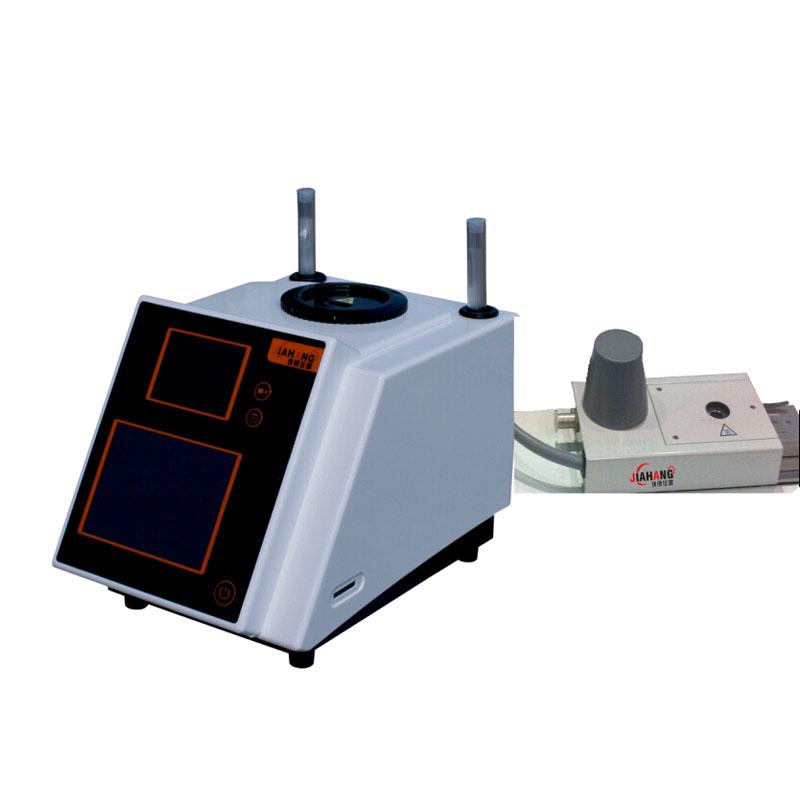
Performing a melting point determination requires the use of an accurate balance, beaker, mortar, and micromelting point analyzer. The instrument includes a binocular zoom stereo microscope, a Heating Plate, a temperature regulator, a temperature measuring device and a sample heating and insulation platform.
test methods
1. Take the sample and grind it into fine powder. Take a small amount (less than 0.1 mg) and evenly distribute it on the test glass slide.
2. Cover another piece of glass, place the sample on the heated and insulated platform, and adjust the microscope to ensure that the sample is clearly imaged.
3. Heat the sample and observe the displayed test temperature. When it is close to the melting point of the test object of 15°C, reduce the heating rate to about 1°C/min.
4. Observe the changes in the sample and determine the transition point between the solid and liquid phases or the mutation point between the glassy state and the highly elastic state. This temperature is the melting point.
Results presentation and reference standards
Carry out three parallel measurements of the sample, take the arithmetic mean as the measurement result of the melting point, and report the result to one decimal place. Reference standards such as "Method for Determination of Melting Point of Chemical Reagents" (CNS 1508-82) provide corresponding measurement specifications and guidance.
Application and significance
Melting point determination can not only be used to judge the purity of a compound, but can also help identify the composition of a polymer. This method is widely used in the fields of materials science and chemistry and is of great significance for evaluating the properties and quality of materials. Accurate determination of melting point can provide reliable data support for scientific research, materials development and quality control. As a basic and effective analytical method, melting point determination plays a key role in materials research and quality control. By accurately measuring the melting point of substances, we can better understand and evaluate the properties of materials, providing an important reference for research and practice in related fields.

- 1Method and significance of determination of melting point of polyester resin
- 2Determination of Initial Melting Point of Anthraquinone (AQ) Dry Products
- 3Determination of Purity of Anthraquinone (AQ)
- 4What are the performance tests of vulcanized rubber?
- 5Testing methods for several important properties of powder coatings
- 6The difference between temperature patch and temperature measuring wax sheet
- 7How to use X-4 series Melting point meter
- 8Uncertainty analysis and evaluation of Melting point meter
芮铭阳 - 《计量与测试技术》
- 9Introduction to coating heat resistance
-
![INESA WQD-360 automatic video softening point meter, room temperature~ 360 ℃]()
-
![INESA WQD-400 automatic video drop point softening point meter, room temperature~ 400 ℃]()
-
![INESA SGW-681 Automatic video Melting point meter Room temperature~ 360 ℃]()
-
![INESA SGW-685 automatic video Melting point meter room temperature~ 400 ℃]()
-
![INESA SGW X-4 Melting point meter]() INESA SGW X-4 Melting point meter$ 605.00
INESA SGW X-4 Melting point meter$ 605.00 -
![INESA SGW X-4A Melting point meter]() INESA SGW X-4A Melting point meter$ 727.00
INESA SGW X-4A Melting point meter$ 727.00