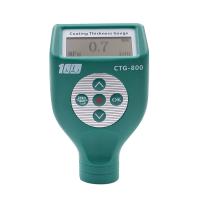
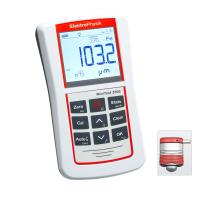
Application of nondestructive testing coating thickness in Coating construction
The quality and performance of coating applications are directly related to the thickness and integrity of the coating. Therefore, it becomes crucial to use non-destructive measurement techniques to measure the thickness of coatings and find defects in coatings. Two important areas in this regard are "Holiday" and "Pinhole" detection. "Holiday" refers to the missed area of ââthe coating film, while "Pinhole" usually refers to the tiny pores in the coating film. To ensure coating quality, we need to be able to detect and fix these issues. To achieve this, "Holiday", "Pinhole" or "Spark" tests can be used to find flaws, scratches and pinholes in the coating film.
Why âPinholeâ and âHolidayâ Tests
In a multi-coat system, the thickness of each layer should be of concern, especially when each layer has different properties. For example, when the coating system contains an inorganic zinc primer/epoxy intermediate paint/urea resin topcoat, the thickness of each layer should be measured to ensure that it meets the requirements. Pinhole testing becomes particularly important when coatings are used in immersion services. The "Holiday" test is usually performed after the penultimate or final layer of coating is applied to ensure the quality of the coating.
Non-destructive testing tools and methods
Low Voltage Wet Sponge Pinhole Detector: Ideal for finding discontinuities in non-conductive coatings on conductive metal surfaces. By moving a soaked sponge electrode over a surface, the flow of electrical current through a pinhole to the substrate can be detected. An audible signal is then heard to indicate the presence of a pinhole or discontinuity. This method is suitable for coating thicknesses up to 0.51 mm (20 mil). For thicker coatings, a non-foaming wetting agent can be added to the water to improve wetting.
High Voltage "Holiday" Detector: Similar to the low voltage method, but does not use a sponge. High voltage Detectors detect pinholes, missed coatings or missing areas by generating a high voltage that creates a spark between the electrode and coating. This method is suitable for coating thicknesses above 0.51 mm (20 mil). High voltage methods are often used in critical applications such as pipelines.
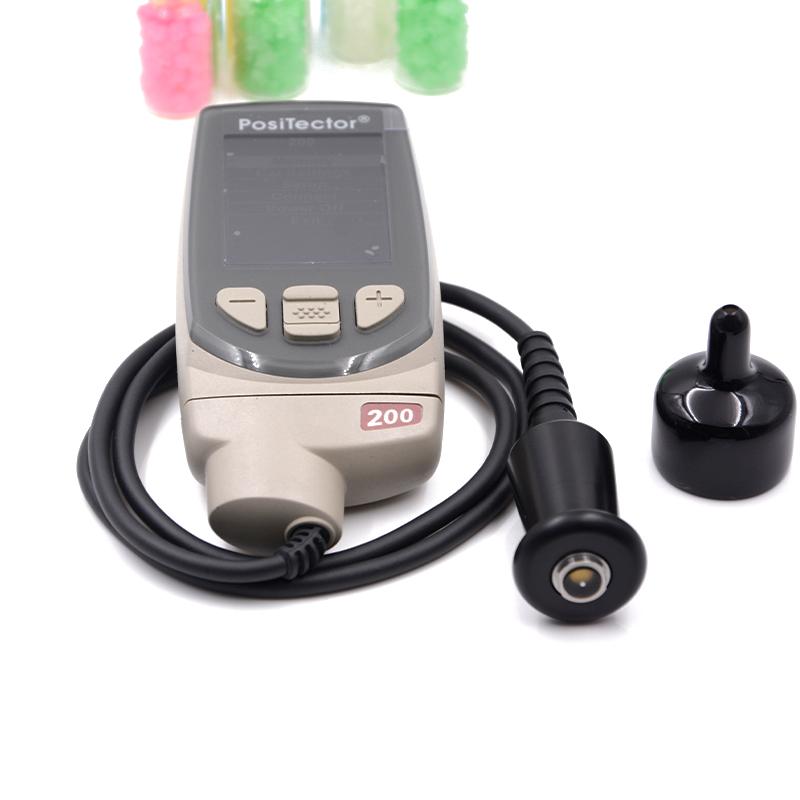
Non-destructive testing considerations and limitations
Although "Pinhole" and "Holiday" tests are effective at finding problems, they have some limitations. For example, in some cases, a pinhole may be visible to the naked eye but may not emit a sound because it does not penetrate the substrate. On the other hand, the Detector may emit a sound indicating the presence of a void, but actually create a false alarm because the coating itself may be conductive.
In the field of coating construction, non-destructive measurement technology plays a key role in measuring coating thickness and discovering coating defects. These technologies help ensure coating consistency and quality, thereby increasing product performance and longevity. By using these methods correctly, manufacturers and applicators can better meet the technical requirements of coatings and ensure that coatings perform well in a variety of environmental conditions.