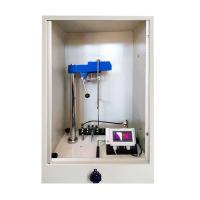
Paints and varnishes Pendulum damping test method under ISO 1522
introduction
In the paint and varnish industry, paint film hardness is a key performance parameter. Knowing the hardness of a paint film helps manufacturers determine the quality and durability of their products, as well as their suitability for different applications. This article will introduce a method for measuring paint film hardness described in the ISO 1522: 1998(E) standard, namely the pendulum damping test, including the testing principle, required materials and equipment, operating points, result expression, precautions, and effects Factors and instrument calibration.
Pendulum Damping Test Method
Test principle
The principle of the pendulum damping test in the ISO 1522 standard is the same as that in the previously mentioned GB/T 1730 standard. It measures the hardness of the paint film by placing a pendulum bar on the surface of the paint film sample and recording the decay time of the swing when the pendulum bar swings at a certain angle. According to the decay time of the swing, the hardness of the paint film can be determined. The longer the swing decay time, the higher the hardness of the paint film.
Materials and Instruments
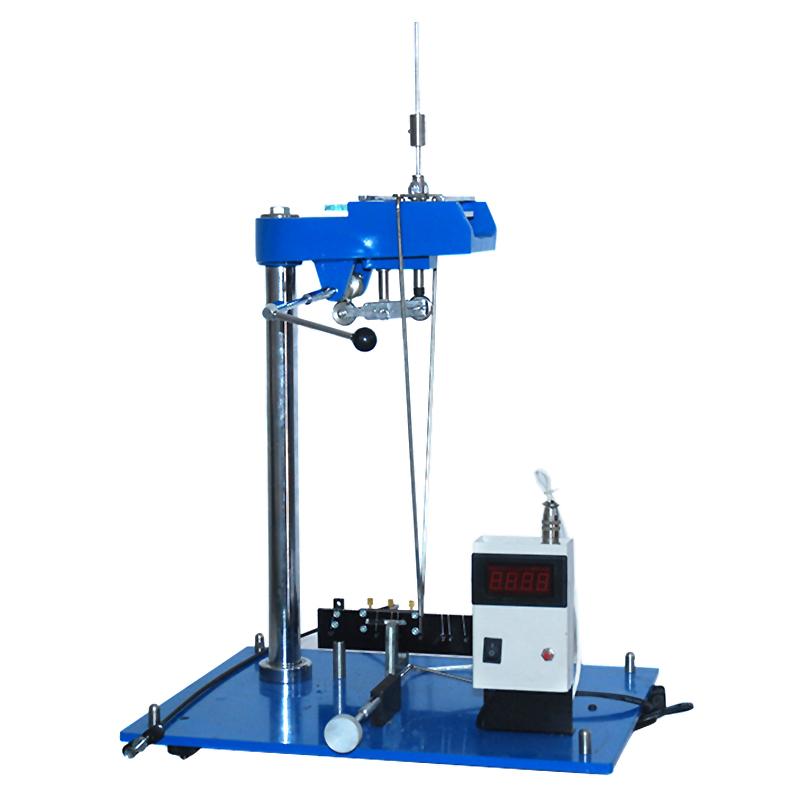
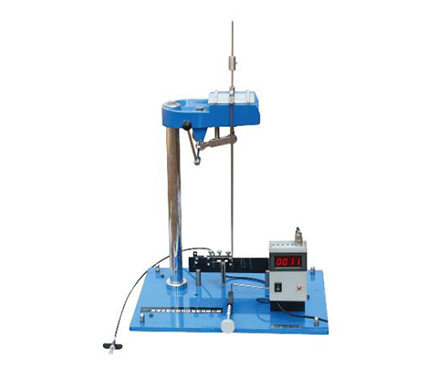
Pendulum Damping Hardness Tester: Different types of pendulum damping Hardness Testers such as Koenig pendulum or Persitz pendulum can be used.
Metal or glass plate: Used as a test plate, with dimensions close to 100mm x 100mm x 5mm.
Operational points
Place the test plate with the coated side facing up on the instrument table.
Gently place the pendulum on the surface of the test plate so that it deflects to the appropriate angle (6° for Koenig's pendulum, 12% for Persaz's pendulum).
Simultaneously start a stopwatch or other timing device and record the time, in seconds, for the swing to go from 6° to 3° (Koenig's pendulum) or from 12° to 4° (Persaz's pendulum).
Result expression
According to the ISO 1522 standard, tests need to be carried out at three different positions on the same test plate, the results of each measurement are recorded, and the average of the three measurements is finally calculated. This average will represent the sway bar damping stiffness of the coating.
Precautions
The precautions in the ISO 1522 standard are similar to those in the previously mentioned GB/T 1730 standard, including:
Regularly check the status of the instrument and the appearance of the material to ensure the accuracy of the test.
The operation process must be meticulous, especially when swinging the pendulum, as slight movement may affect the result.
Influencing factors
Factors that affect paint film hardness test results are also mentioned in the ISO 1522 standard, including factors such as paint film thickness, temperature and humidity, airflow, and material appearance. These factors need to be considered during testing to ensure accurate hardness values ââare obtained.
Instrument calibration
The ISO 1522 standard mentions the importance of instrument calibration to ensure the accuracy of test results. The standard swing times of Koenig's and Persaz's pendulums have specified values, and the instrument can be calibrated by adjusting the position of the weight.
in conclusion
The pendulum damping test is a standardized method for measuring the hardness of paint and varnish films. Its principle, required materials and equipment, operating points, result expression, precautions, influencing factors and instrument calibration are in ISO 1522: 1998(E) Detailed instructions are provided in the standard. Understanding and controlling the hardness of paint films is critical to ensuring the performance and quality of paints and varnishes, so this test method has important applications in the coatings industry.
- 1GB/T1730 Interpretation of Koenig and Persaz pendulum damping test
- 2Swing bar hardness testing: a method for evaluating film hardness
- 3Pendulum damping test method for the determination of film hardness
- 4Film hardness testing method: pendulum hardness, pencil hardness, etc
- 5How much do you know about the difference between Konig pendulum and Persoz pendulum of Pendula Hardness Tester?
- 6Pendula Hardness Tester calibrating steps
- 7Determination method of paint film hardness - swing rod hardness, scratch hardness, indentation hardness
- 8How to calibrate the swing rod Hardness Tester?
- 9Swing rod Hardness Tester The difference between three kinds of swing rods: Koenig pendulum, Posaz pendulum, double pendulum