Some Methods of Moisture Detection
Moisture detection plays a vital role in various fields. Whether in the chemical, agricultural, food production or pharmaceutical industries, accurate measurement of the moisture content of substances is crucial for quality control and production processes. At present, solid material moisture detection methods mainly include direct measurement and indirect measurement.
1. Indirect measurement method
Among indirect measurement methods, infrared absorption method has attracted much attention due to its characteristics such as fast speed, high precision and non-contact. However, it can only measure the moisture content on the surface of a substance, is sensitive to substances and colors, and cannot measure black substances. In addition, the high cost of equipment is also one of the disadvantages of this method.
1. Infrared absorption method - using the principle of substances absorbing infrared wavelength light to measure moisture content. Although it is a fast, high-precision, non-contact measurement, it can only measure surface moisture, is sensitive to substances and hues, and has a high cost.
2. Microwave method - Use high-frequency radio waves to change the dielectric constant and dielectric loss of materials to determine the moisture content. However, the accuracy is poor for materials with uneven particles.
3. Neutron method - determine the moisture content by measuring the number of slow neutrons through the collision of neutrons and water molecules. However, the applicable range is affected by material density and hydrogen-containing substances.
4. Electrical measurement method - including capacitance method and resistance method, suitable for materials with different dielectric constants. The structure is simple and the cost is low, but the measurement accuracy is not high.
2. Direct measurement method-loss on drying method
The weight loss on drying method is one of the most widely used direct measurement methods at present. This method is suitable for solid, liquid, semi-solid and other substances, and has the advantages of simple operation and low cost. However, this method has certain difficulties in measuring samples with high moisture content, because samples with high moisture content are prone to changes in volatile substances during the drying process, resulting in inaccurate weighing results and need to be corrected by methods such as the secondary drying method. .
1. Direct drying method - under normal pressure, the moisture content is calculated by using the weight difference before and after drying at a constant temperature and weighing the sample. Equipment includes electric thermostatic Drying Oven, weighing pan and balance.
2. High temperature timing method - dry at a higher temperature (about 130°C) for a short time and measure the moisture content. Measurements are fast but less accurate.
3. Tunnel oven method - similar to the high temperature timing method, but the measurement process is continuous and the operation is simple.
4. Double drying method - suitable for samples with too high moisture content. The error can be reduced by drying the measurement twice.
5. Reduced pressure drying method - suitable for samples that are not easily decomposed at high temperatures. It reduces the vapor pressure of water so that the water evaporates at a lower temperature.
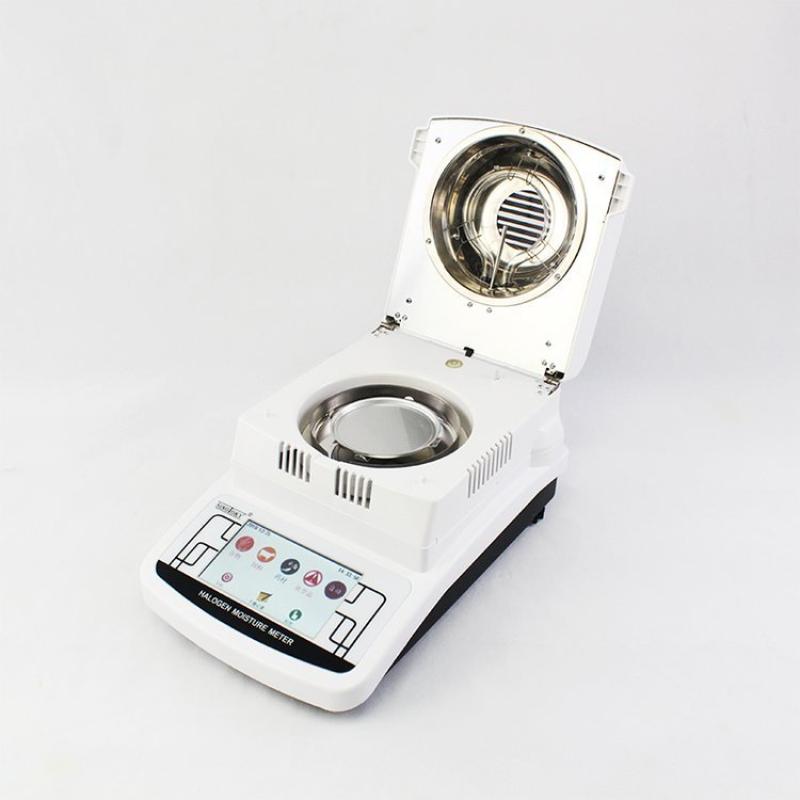
While addressing the limitations of the measurement method, the researchers are also looking to develop more accurate and faster moisture detection technology. This includes the use of advanced data processing, machine learning and artificial intelligence technologies, combined with traditional measurement methods, in order to achieve more accurate and efficient measurement of moisture content. In short, moisture detection is an indispensable part of the production process in various industries. The continuous improvement of its measurement methods and technological innovation are of great significance for improving product quality and reducing production costs.
