Determination of thermal plasticity Resin melt flow rate
The melt flow rate (MFR) and melt volume flow rate (MVR) of thermoplastic resins are widely used to characterize the flow and processing properties of plastic materials. These two indicators are of great significance for the application and performance evaluation of thermoplastic resins. The methods, instruments and procedures for measuring the melt flow rate of thermoplastic resin will be introduced in detail below.
Melt Flow Rate Measurement Range and Instructions
Melt flow rate is a measure of how thermoplastic resin flows when it melts. Generally speaking, the larger the value, the better the fluidity of the melt. However, as flowability increases, the material's properties such as tensile and impact strength may decrease. This indicator does not apply to thermoplastic melts affected by hydrolysis, polycondensation or cross-linking. The melt mass flow rate and melt volume flow rate of thermoplastic resins are widely specified and recognized in standards such as ASTM and JIS, and the ISO standard also provides relevant measurement methods.
Instruments and Materials
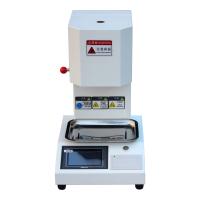
The measurement of melt flow rate requires an extrusion plasticity meter, whose basic structure includes a barrel, piston, temperature control system, etc. The length and inner diameter of the barrel are within a specific range, and the size and load of the piston need to meet standard requirements. In addition, the temperature control system should be able to ensure effective temperature control during the test to ensure the accuracy of the test.

Determination methods and procedures
There are two different methods A and B depending on the measurement needs. Method A requires measuring the mass of the extrudate at specific time intervals and calculating the average mass to derive the melt mass flow rate (MFR). Method B determines the melt volume flow rate (MVR) by measuring the distance and time the piston moves. Before conducting the test, the instrument needs to be cleaned and the temperature must be constant and the sample loaded evenly.
Method A
Preheat the equipment and load the sample (about 3~8g) before loading.
A load is applied and the extrusion is carried out for a set time, the extrudate mass is recorded, and the extrudate is cut off and collected at certain intervals for subsequent measurement.
Calculate the value of the melt mass flow rate (MFR) in g/10min.
Method B
Under specified conditions, measure the distance and time required for the piston to move to calculate the melt volume flow rate (MVR) in cm3/10min.
Both methods emphasize accuracy and standardization of operation, and require precise control of details such as measurement time and distance to ensure the reliability and repeatability of measurement results.
The melt flow rate measurement method of thermoplastic resin is an important means to evaluate the processing performance and fluidity of materials, and has guiding significance for the research and production of materials involving powder coatings, acrylic resins, PE, PP and other materials. The accuracy and standardization of these measurement methods are of great significance to the quality assurance of thermoplastic resins in different application fields.


- 1Molecular weight and distribution characteristics of polyester resin in thermosetting powder coatings
- 2Density Determination Method and Application
- 3Determination method of cone-plate viscometer and its application
- 4Thermal plasticity polyvinyl chloride (PVC) powder coatings in highway engineering: technical requirements and inspection methods
- 5Determination of compatibility of powder coatings: methods, effects and applications
- 6Evaluation of flowability of powder coatings: key factors and significance
- 7Evaluation and Application of Optical Properties of Powder coatings
- 8Importance of powder coatings curing degree and detection method
- 9Acrylic resin: performance inspection and Application