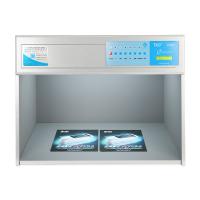
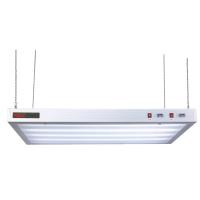
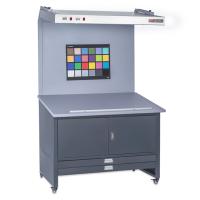
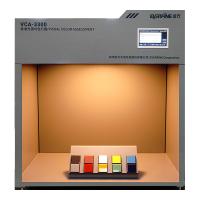
Color mass management by standard light source
introduction
The color of an object is a reflection of the spectrum of light striking its surface. However, the same object appears in different colors when illuminated by different light sources, which is caused by differences in the degree of absorption of light of different wavelengths. Although natural light is considered a common light source for observing the color of objects, due to time and environmental constraints, people cannot observe the color of objects under natural light all the time. Therefore, in practical applications, people usually use artificial light sources to observe the color of objects. In order to improve the accuracy of color observation, a standard light source close to the spectral composition of natural light must be used.
The importance of standard light sources
Typically, two objects of the same color look very similar when illuminated by an artificial light source, but have very different colors when observed under natural light or another artificial light source. This is called metamerism of objects. Metamerism poses a challenge to color quality management because observing the color of an object under different light source conditions may lead to misjudgments and affect the color consistency of the product. In order to solve the impact of metamerism on color management, the International Organization for Standardization (ISO) and the State Administration of Quality, Technical Supervision, Inspection and Quarantine require industries engaged in color reproduction and preparation to use standard light sources to observe environmental conditions to ensure color consistency and accuracy. .
Types and characteristics of standard light sources
In order to simulate the spectral composition of natural light, various artificial standard light sources have been developed, including fluorescent lamps, incandescent lamps, LEDs, etc. These light sources can provide a spectrum close to natural light for observing the color of objects. The color temperature and spectral distribution of a standard light source are its important characteristics. Color temperature is usually measured in Kelvin (K) and identifies the hue of a light source. Spectral distribution describes the relative intensity of light of different wavelengths, which affects the color performance of objects. Standard light sources are usually classified according to the D series, such as D65 which represents daylight light source. Different D series light sources are suitable for different application scenarios to ensure the color accuracy of objects observed in specific environments.
Color management applications
The color reproduction and formulation industry refers to the field of product manufacturing and design involving color, such as printing, textiles, paints, etc. In these industries, standard light sources are used to ensure that the color of the product remains consistent under different light source conditions. According to the requirements of ISO and national standards, the color reproduction and preparation industry should create environmental conditions close to natural light when using standard light sources to observe the color of objects, so as to reduce the impact of metamerism on color quality. To ensure the accuracy of the standard light source, regular calibration is essential. The calibration process includes the measurement of illuminance and color temperature to ensure that the spectrum provided by the standard light source meets the standard requirements.
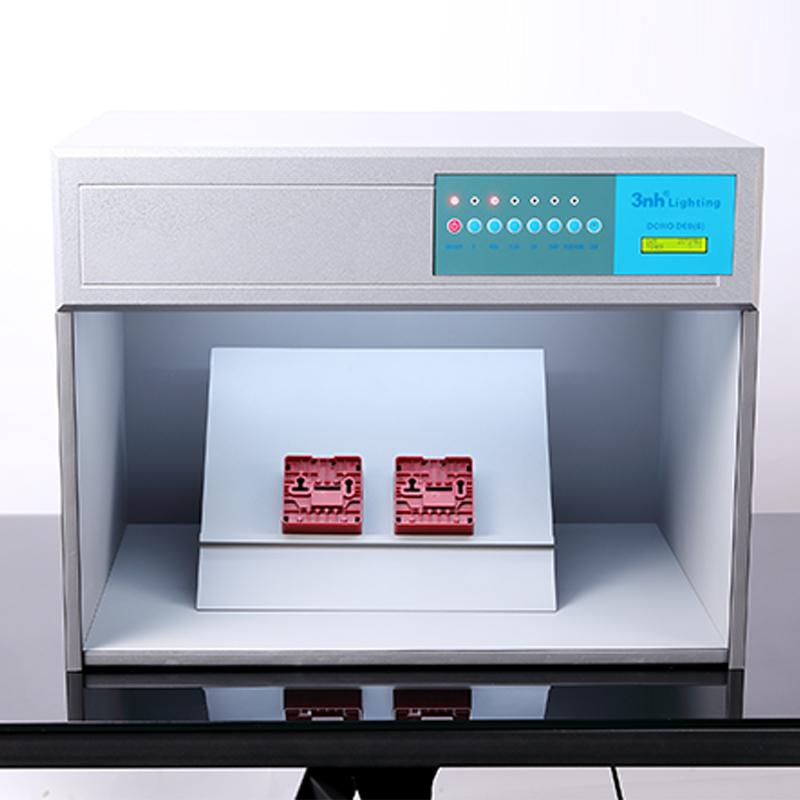
Future trends
With the continuous advancement of science and technology, the research and development of new light source technology will bring more choices for standard light sources. Possible development directions include more efficient LED technology and artificial light sources that are closer to natural light. In the future, color management systems may be more intelligent, with automatic calibration and real-time monitoring functions to adapt to changes in the production environment. As society pays attention to environmental protection, the research and application of green environmental protection standard light sources will become a future trend to reduce energy consumption and environmental impact.
Conclusion
The observation of object color depends largely on the choice of light source. The introduction of standard light sources plays a key role in solving the impact of metamerism on color quality management. As the color reproduction and formulation industry continues to develop, the types and characteristics of standard light sources will continue to be improved, providing more accurate and consistent color observation conditions for various fields. In the future, with the continuous innovation of science and technology, new light source technology and intelligent color management systems will promote the field of color management to a higher level and achieve more accurate and green color management. Enterprises and research institutions should pay close attention to these trends, continuously improve the scientific and technological level of color management, and provide a more reliable guarantee for the color quality of products.


- 16 Light source Color Assessment Cabinet Principle and Application Detailed Explanation
- 2Application of Standard light source Color Assessment Cabinet in Color Detection
- 3Color measuring instrument printing requirements
- 4How to solve homochromatic spectrum?
- 5Measuring Color Uniformity of Fabrics with Standard Light Box
- 6Identify monochromatic spectrum using an efficient color scheme
- 7Standard light source color light box lighting calibration
- 8What is a standard light source color light box and why use it?
- 9Avoid product color inconsistency by using a standard light source on the color box