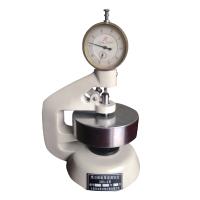
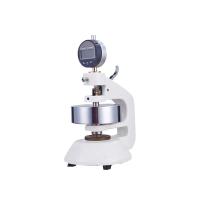
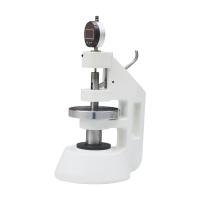
Paper and Cardboard Thickness Gauge
The thickness of paper and cardboard is one of the important indicators of its quality, and the thickness meter, as a special testing instrument, plays an important role in paper production and quality control. Thickness gauges can be divided into two types: electric and manual. Their use needs to be carried out under standard conditions, including ambient temperature, smoothness and stability of the workbench, etc.
Thickness gauge usage standards
When using a Thickness Gauge, you need to ensure that the instrument is operating under standard conditions. This includes requirements for a stable ambient temperature and a flat and stable work surface. The indicator meter of the instrument is a key part of displaying the detection value, so the indicator meter should be installed firmly and the pointer should be flexible and stable. In order to verify its zero position stability, a block gauge can be used instead of a paper sample to verify the indicated value. The zero return error should not exceed half of the indexing value of the indicator table. In addition, gravity calibration and measurement parallelism calibration are also required to comply with standard regulations. The calibration cycle of the instrument is recommended to be no more than half a year to ensure its long-term accuracy and reliability.
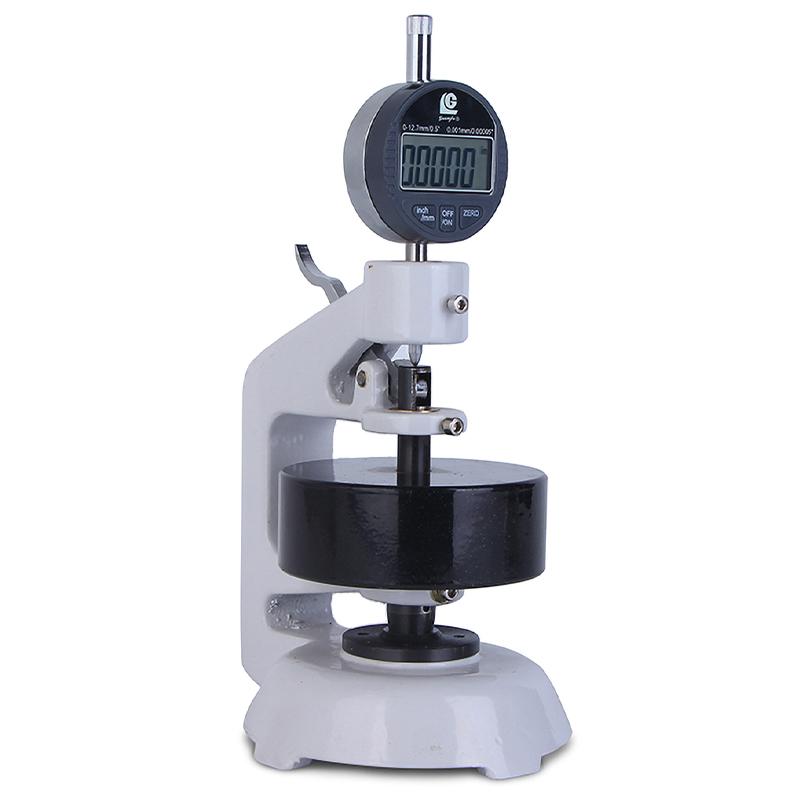
Calculation of tightness and bulk
Tightness refers to the weight per unit volume of a paper product, usually calculated from basis weight and thickness values. Bulk is an indicator of the density of paper, especially in light offset printing paper, which plays a key role. Improving the accuracy of tightness and bulk values ââneeds to be achieved by improving the detection accuracy of quantitative and thickness values.
Paper quality revealed
A Thickness Gauge is more than just a measuring instrument, it is a precision tool that reveals the texture of paper. By accurately measuring thickness, we can better understand the density and thickness of paper, thereby guiding the production process and improving paper quality. Therefore, in the paper industry, the role of Thickness Gauge cannot be ignored. Its precise measurement provides a scientific and reliable basis for improving paper quality.
As an important tool in paper production, Thickness Gauges provide important support for the control and improvement of paper quality through precise measurement. During the use of the instrument, following standard operating procedures and regular maintenance are key to ensuring its accuracy and reliability. By accurately measuring the thickness of paper, we can gain a more comprehensive understanding of the physical properties of paper, provide more scientific guidance for production, and improve the market competitiveness of paper products.
-
![CHINA BLD-01C paper Thickness Gauge]() CHINA BLD-01C paper Thickness Gauge$ 425.00
CHINA BLD-01C paper Thickness Gauge$ 425.00 -
![CCYONGXIN ZHD-4 Paper and Cardboard Electric Thickness Gauge]()
-
![Yongxin ZHS-4 Paper and Cardboard thickness Tester]()
-
![ZHS-4 Paper and Cardboard thickness Tester]()
-
![PY-H606A Paper Film thickness Tester 4mm/0.001mm]()
-
![JINGWEN JW105-3 Automatic paper Thickness Gauge]()
-
![CHINA NBC-5634 paper Cardboard Thickness Gauge Graduation 0.001mm]()
-
![CHINA NBC-5634 Cardboard Thickness Gauge, percentile 0.01mm]()
-
![CHINA NBC-5633 Paper thickness Tester, thousand Graduation 0.001mm]()