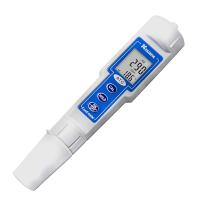
Detection Principle and Application Analysis of Conductivity Meter
The conductivity meter is a precision instrument used to measure the conductivity of various liquid media. It is widely used in scientific research, teaching, industry, agriculture, environmental protection and other fields. By measuring the electrical conductivity of a liquid, the composition and concentration of the solute contained in the liquid being detected can be determined. This article will discuss the calibration principle of the conductivity meter and an optimization method in use, which is to use a "standard resistance box" instead of a certain standard solution to calibrate the conductivity meter.
Detection principle of conductivity meter
During the conductivity measurement process, a constant amplitude voltage signal is applied between the two electrodes to cause the current to flow through the measured medium. The magnitude of the current depends on the number of ions contained in the solution, and the conductivity of the measured medium is proportional to the output voltage of the operational amplifier.
When using a conductivity meter, first set the instrument's function switch to the calibration position, set the temperature compensation to 25°C, and adjust the constant correction knob so that the instrument displays the actual constant value of the conductivity cell. Then set the function switch to the "Measurement" position, insert the conductivity electrode into the socket, connect it to the standard resistance box, and judge the accuracy of the measured conductivity meter through the measurement indication value of the conductivity meter.
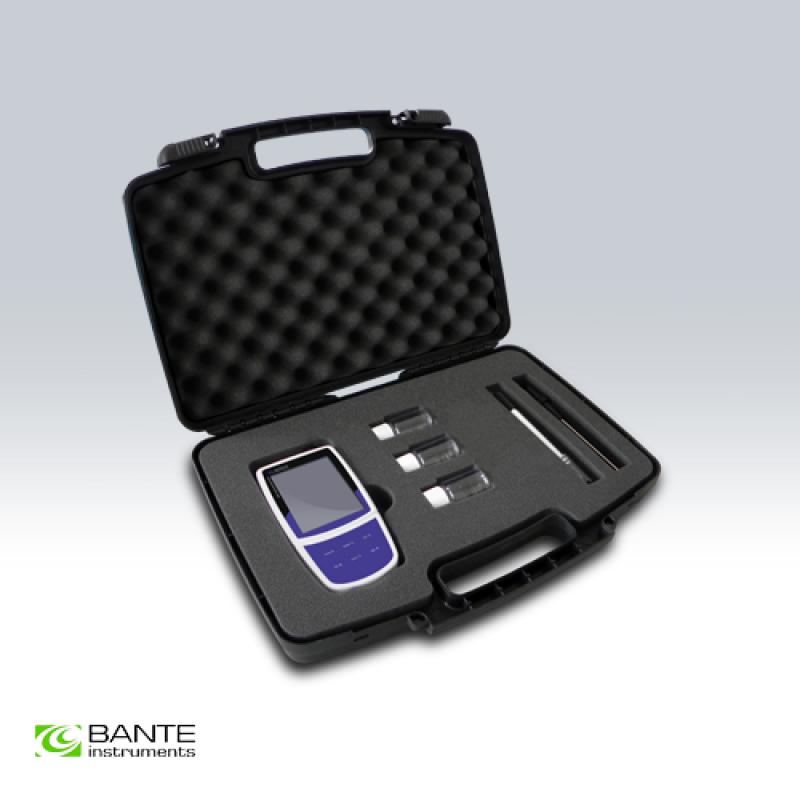
Connection and numerical conversion of conductivity meter and resistance box
In the conductivity meter calibration, you can use the standard solution method or the "standard resistance box" for calibration. Compared with standard solutions, standard resistance boxes have more stable reliability and accuracy. By connecting the resistance box and using its standard resistance value, the standard solution can be simulated to check whether the indicated value of the conductivity meter is accurate. By connecting the scrapped electrode wire of the conductivity meter to the current terminal of the resistance box, use the standard resistance value instead of the measured solution, and judge its accuracy through the actual measured indicated value of the conductivity meter.
Conclusion
By using a standard resistance box to calibrate the conductivity meter, compared to the standard solution method, standard conditions can be simulated more stably and the reliability and accuracy of the calibration can be improved. However, it is still necessary to pay attention to the details in the actual connection and numerical conversion process to ensure the accuracy of the calibration results.
In the future, with the continuous advancement of science and technology, the calibration methods and technologies of conductivity meters will continue to be optimized to adapt to a wider range of application fields. The application of conductivity meters in scientific research, industry, environmental protection and other fields will become more popular, and the requirements for their accuracy and stability will also be further increased. By continuously improving calibration methods and technologies, we can better ensure the reliability and accuracy of conductivity meters in various fields.


- 1The Working Principle of Gel Conductivity Meter Has Been Detailed
- 2Principle of Conductivity Analyzer
- 3Several common electrode types for Conductivity Meters
- 4Differences between three STIP-scans: pH Meter, Conductivity Meter, and Dissolved Oxygen Meter
- 5Conductivity Meter and Ion Meter specific differences
- 6Common types and application differences of STIP-scan
- 7How to detect the conductivity of lithium battery coating slurry?
- 8How to choose a high-precision conductivity meter?
- 9How to choose a microcomputer conductivity meter?