Principle and Application of Ultrasonic Thickness Gauge
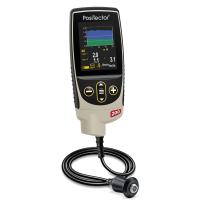
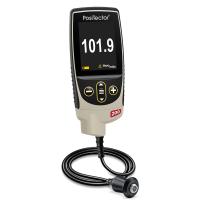
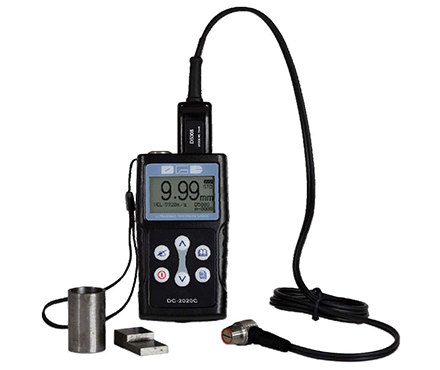
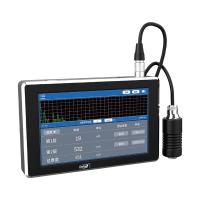
With the continuous development of science and technology, various advanced testing instruments have been widely used in the industrial field. Among them, ultrasonic Thickness Gauges, as a non-destructive testing tool, have unique advantages. This article will deeply explore the principles, application fields, and progress of related technologies of ultrasonic Thickness Gauges.
Fundamental
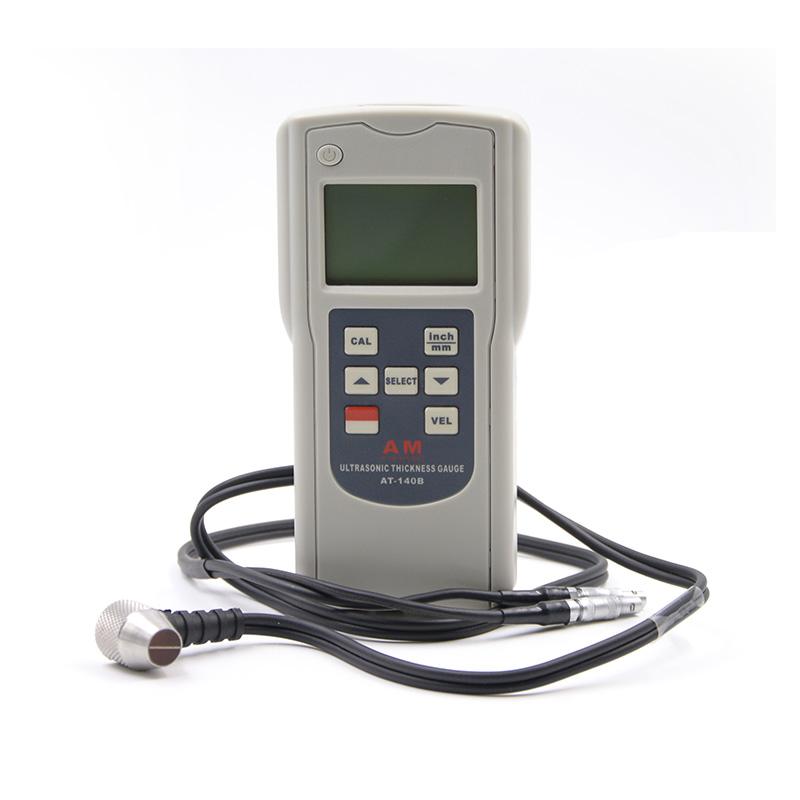
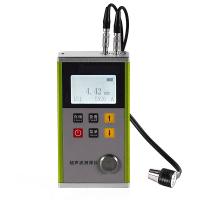
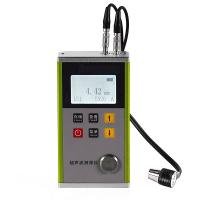
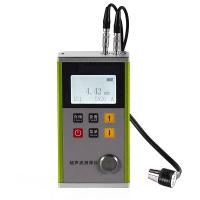
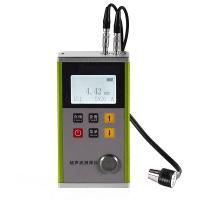
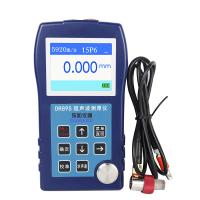
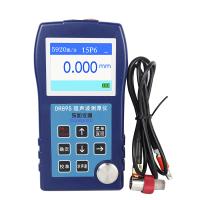
Ultrasonic Thickness Gauge is a device that uses ultrasonic technology to measure. It is mainly used to measure the thickness of materials. The basic principle is to use changes in the propagation speed of ultrasonic waves in different media to infer the thickness of the material. Ultrasound is a mechanical wave, and its propagation speed in materials is related to the physical properties such as density and elastic modulus of the material. When ultrasonic waves pass through a material, their propagation speed changes, and the thickness of the material can be calculated by measuring the propagation time of the ultrasonic waves.
Application areas
Ultrasonic Thickness Gauges are widely used in industrial manufacturing, especially in the metal processing industry. It can be used to measure the thickness of metal pipes, containers, plates, etc., providing important data for quality control during the production process. In processes such as welding and casting, ultrasonic Thickness Gauges can also be used to detect the uniformity and defects of materials. In the aerospace field, the requirements for lightweight and strength of materials are extremely high. Ultrasonic Thickness Gauges can be used to detect aircraft structural parts to ensure that they meet the design requirements for thickness and quality standards. At the same time, it can also be used for aircraft maintenance and repair to detect whether there are corrosion, cracks and other problems on the aircraft surface. Ultrasonic Thickness Gauges are also increasingly used in the medical field. It can be used to measure the thickness of human tissue and plays an important auxiliary role in diagnosing some diseases. In ultrasound medical imaging, Thickness Gauges can be used to ensure the depth of ultrasound penetration into tissue and accurate imaging.
Conclusion
With the continuous advancement of science and technology, ultrasonic Thickness Gauges will usher in greater development in both application fields and technical levels. In the future, we can expect ultrasonic Thickness Gauges to play a more important role in medicine, industry, scientific research and other fields. At the same time, with the continuous emergence of new materials and new processes, ultrasonic Thickness Gauges will better adapt to the measurement needs of different materials and complex structures.
In general, as an important detection tool, ultrasonic Thickness Gauge has a simple and efficient principle and a wide range of applications. Through continuous optimization of technology, ultrasonic Thickness Gauges will continue to provide accurate and reliable measurement data for all walks of life and promote the progress of industry and scientific research.
- 1Principle, Function, Application and Selection of Multifunctional Ultrasonic Thickness Gauge
- 2Principle, Application and Type Selection of Ultrasonic Thickness Gauge
- 3Principle, Application and Type Selection of Ultrasonic Thickness Gauge
- 4Principle, Application and Selection of Ceramic Ultrasonic Thickness Gauge
- 5The Principle, Application and Precautions of Copper Plate Ultrasonic Thickness Gauge
- 6Measurement principle and influencing factors of high temperature ultrasonic Thickness Gauge
- 7Principle of Portable Ultrasonic Thickness Gauge
- 8How does an ultrasonic Thickness Gauge work?
- 9How to use an ultrasonic Thickness Gauge?