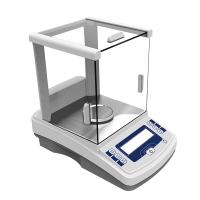
Structure, Principle and Application of Three-Level Analytical Balance
introduction
In fields such as scientific experiments, industrial production, and quality control, accurate quality measurement is crucial. In order to meet the high-precision measurement needs, the three-level analytical balance emerged as an advanced quality Measurement Instrument. It not only has a high degree of accuracy and sensitivity, but also achieves accurate measurement of trace substances through a three-level analysis system. This article will deeply explore the principles, structures, application fields and future development directions of three-level analytical balances to provide readers with a comprehensive and in-depth understanding.
The structure and principle of the three-level analytical balance
The working principle of a tertiary analytical balance is based on mass analysis and comparison. It mainly consists of three parts: balance instrument, sampling system and analysis system. The balance instrument is used to measure the mass of the object to be measured, the sampling system is used to obtain the sample, and the analytical system is used to accurately analyze and measure the mass. The uniqueness of this system is that it uses a three-level analysis method that divides quality measurement into three steps, thereby improving the accuracy of the measurement.
The first level of analysis involves mass measurement of the entire sample using a high-precision electronic balance. This level of measurement provides overall quality information. The second-level analysis selects a small portion of the sample for secondary measurement based on the first-level measurement. This level of measurement is more precise and allows for a more detailed analysis of the overall quality by increasing the resolution of the measurement. The third level of analysis, based on the first two levels, further selects very small samples for the third measurement. Measurements at this level are precise and accurate, resulting in precise quality measurements by eliminating errors. Through this three-level analysis system, the three-level analytical balance can effectively reduce system errors and improve the accuracy and reliability of measurements.
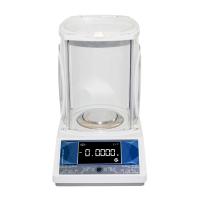
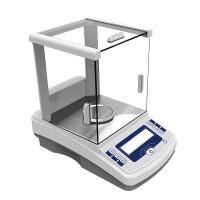
The structure of a tertiary analytical balance is complex and sophisticated, consisting of many key components to ensure a high degree of accuracy and sensitivity. Balance instruments usually consist of high-precision sensors, measurement systems and electronic control units. The sensor is responsible for sensing changes in mass, the measurement system records and processes the measurement data, and the electronic control unit provides precise control of the balance. Sampling systems are used to obtain samples to be tested. It includes sample tray, sample compartment and automatic sampling mechanism. The sample tray is the platform on which the sample is placed, the sample cabin is used to stabilize and support the object to be measured, and the automatic sampling mechanism is responsible for accurately obtaining the sample. The analytical system is the core of the three-level analytical balance. It includes precision measuring instruments, microscales and sample transfer mechanisms. The microscale is a key component to ensure third-level analysis, which must have extremely high accuracy and resolution. The control system achieves precise control of the entire system through the electronic control unit. This includes functions such as calibration, data logging, error compensation and more to ensure accuracy and repeatability of measurements.
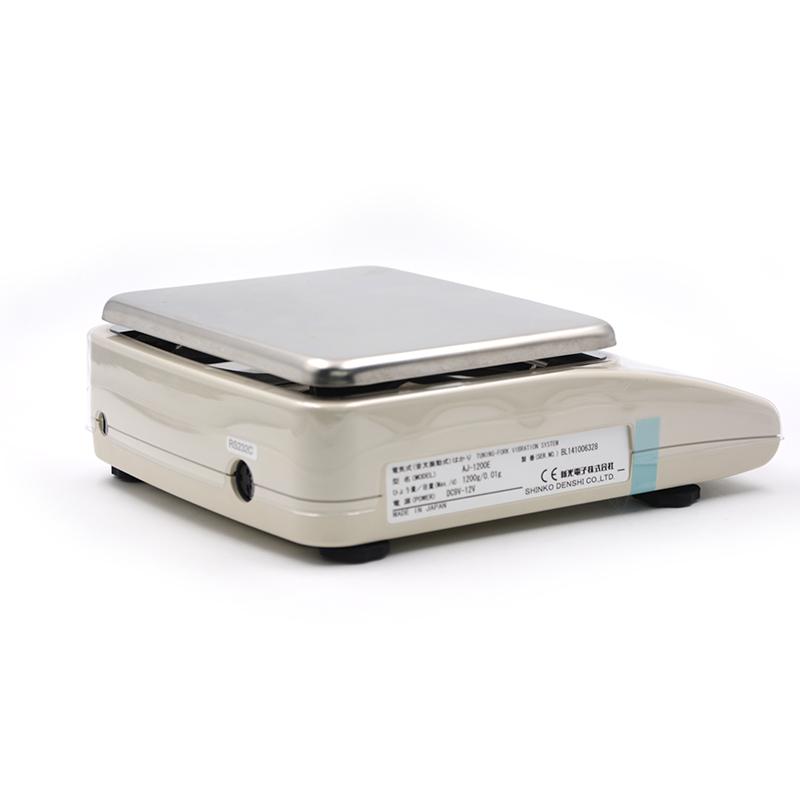
Application fields of tertiary analytical balances
In scientific fields such as chemistry and biology, three-level analytical balances are widely used for the measurement of trace substances, such as biological samples. In R&D and production, quality needs to be accurately measured to ensure safety and effectiveness. In materials research and production, three-level analytical balances are used to measure the quality of trace materials to ensure the performance and stability of the materials. It is used to analyze trace pollutants in the atmosphere and water, provide environmental monitoring data, and provide scientific basis for environmental protection and governance. Used for analysis and testing of food ingredients to ensure food quality and safety.
With the continuous development of artificial intelligence and big data technology, the three-level analytical balance will become more intelligent. Improve measurement efficiency and accuracy through automated control and data analysis. The application of nanotechnology will further improve the sensitivity and resolution of three-level analytical balances, allowing them to play a greater role in measuring substances at the nanometer level. Future three-level analytical balances may have more functions, such as multi-parameter measurement, multi-sample processing, etc., to adapt to a wider range of application needs. Pay more attention to environmental protection in material selection and production technology, reduce the impact on the environment, and meet the requirements of sustainable development.
Conclusion
As an advanced measuring instrument in modern science and industry, the three-level analytical balance achieves high-precision measurement of trace substances through its unique three-level analysis system. In the future, with the continuous advancement of science and technology, three-level analytical balances will be widely used in more fields, providing more accurate quality measurement tools for scientific research and industrial production.