Principle and Application Analysis of ANKE Desktop Centrifuge
introduction
In biomedical research, biochemical experiments and pharmaceutical industry, centrifuge is an indispensable instrument and is widely used for centrifugal separation of samples. As a professional manufacturer in the field of centrifuges, Anting Scientific's desktop centrifuge series is favored by users for its high precision, reliability and convenience. This article will conduct an in-depth study of the principles, structure, performance characteristics, application scenarios and future development trends of Anting Scientific desktop centrifuges, providing readers with a comprehensive understanding of this scientific research assistant.
The principle of Anting scientific desktop centrifuge
The working principle of Anting Scientific desktop centrifuge is based on the basic physical process of centrifugal force generation and sample separation. When the centrifuge is started, the centrifuge rotor rotates at a high speed, and the centrifugal force is generated so that the particles or molecules in the liquid sample are subjected to outward centrifugal force and settle. The sample experiences centrifugal force in the high-speed rotating centrifuge rotor. Depending on the density, size and shape of the sample, it will be deposited in layers in the centrifuge tube or centrifuge plate. Anting Scientific desktop centrifuge enables effective separation of samples during the centrifugation process through rationally designed rotors and high-speed rotation operations, thereby achieving stratification of different components.
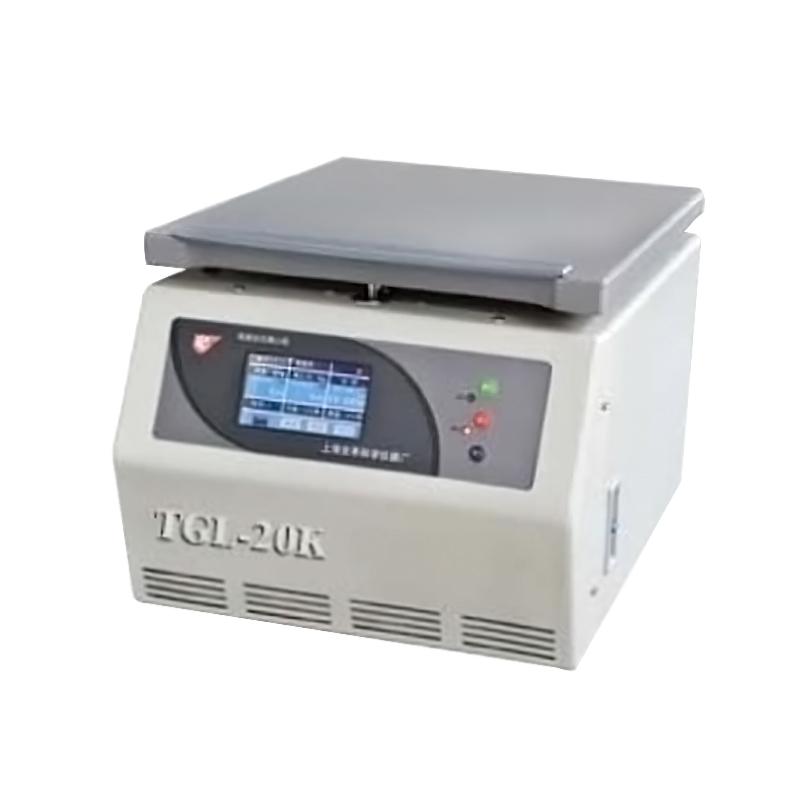
The main body of Anting Scientific desktop centrifuge usually consists of shell, control panel, motor, rotor base and other parts. The shell is generally made of metal or plastic, which has good structural strength and corrosion resistance. The rotor is the core component of a centrifuge. Anting Scientific desktop centrifuges provide a variety of specifications and types of rotors to adapt to different experimental needs. Common rotor types include angle rotors, centrifugal disks, etc. The motor system provides the power for the high-speed rotation of the rotor. Anting Scientific desktop centrifuges are usually equipped with high-efficiency, low-noise motors to ensure the stability of the centrifugation process. The control system includes an operation panel, display screen, control buttons, etc., which are used to set and monitor the operating parameters of the centrifuge, such as rotation speed, centrifugation time, etc. Anting Scientific desktop centrifuges are usually equipped with safety systems, such as door lock devices, emergency stop buttons, etc., to ensure user safety during use.
Performance characteristics of Anting Scientific desktop centrifuge
Anting Scientific desktop centrifuge has high-precision speed control and centrifugal force control, which can meet the requirements of different experiments for separation accuracy. Anting scientific centrifuges adopt high-quality materials and manufacturing processes, have excellent reliability and durability, and are stable and reliable in long-term operation. The control panel has an intuitive design and clear operation buttons, allowing users to easily set and monitor the centrifuge's operating parameters. Anting Scientific desktop centrifuges provide a variety of specifications and types of rotors to adapt to different experimental needs and have strong experimental flexibility. Anting Scientific desktop centrifuges focus on energy conservation and environmental protection in their design, using high-efficiency motors and intelligent control systems to reduce energy consumption.
Application scenarios of Anting Scientific desktop centrifuge
In biomedical experiments such as cell separation and DNA extraction, Anting Scientific desktop centrifuges are used to provide efficient and precise separation processes. In biochemical experiments such as protein separation and solution concentration, Anting Scientific centrifuges take advantage of their high precision and efficiency. In the pharmaceutical industry, Anting Scientific desktop centrifuges are used to prepare and separate drugs, ensuring product quality and purity. In environmental scientific research, Anting scientific centrifuges can be used for the separation and extraction of samples for environmental analysis and detection. In the food industry, Anting Scientific desktop centrifuges can be used to detect microorganisms, contaminants, etc. in food to ensure food safety.
Future Anting scientific centrifuges may introduce more advanced intelligent technology to realize automated operation, remote monitoring and data recording. With the development of science and technology, future centrifuges may achieve higher speeds and larger sample capacities to meet the needs of larger-scale experiments. Future centrifuges may integrate more functions, such as cooling functions, constant temperature functions, etc., to adapt to a wider range of experimental scenarios. Future designs may pay more attention to environmental protection, using more environmentally friendly materials and energy-saving designs to reduce environmental impact. The operating interface of the device may be more user-friendly to improve the user experience and reduce the difficulty of operation.
Conclusion
As a scientific research tool for precision separation, Anting Scientific desktop centrifuge plays an important role in the fields of biomedicine, biochemical experiments and pharmaceutical industry with its high precision, reliability and convenience. In the future, with the continuous development of science and technology, Anting Scientific desktop centrifuges will continue to innovate, provide scientific researchers with more advanced and efficient experimental tools, and promote the continuous progress of scientific research and industrial development.