Technical analysis of continuous coater and comparison of formed coater
introduction
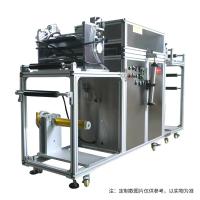
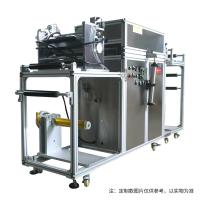
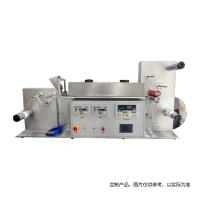
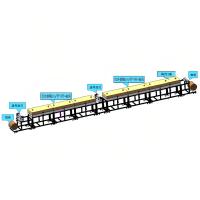
Coating technology occupies an important position in various industrial fields. As one of the key equipment in the coating process, the performance of the coating machine directly affects the quality and efficiency of the coated products. In the development process of coating machines, continuous coating machines have gradually emerged. Compared with traditional extrusion coating machines, their technical features and advantages have gradually become more prominent. This article will provide an in-depth analysis of the continuous coater and a detailed comparison with the extrusion coater to discuss its application, advantages and disadvantages in the coating process.
1. Basic principles of continuous coating machine
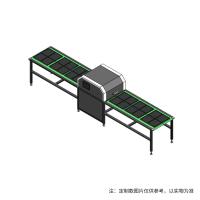
A continuous coater is a device that continuously delivers the substrate to the coating work area and performs continuous coating. The basic principle is that during the transfer process of the substrate, the coating is evenly coated on the surface of the substrate through a coating roller or nozzle to achieve a continuous and efficient coating process.
1.1 Coating roller: Coating rollers commonly used in continuous coating machines can be divided into pressure type and pressureless type. The pressure coating roller controls the coating amount by adjusting the pressure of the coating roller. The pressure-free coating roller distributes the paint evenly on the substrate by designing a special coating roller surface.
1.2 Nozzle technology: In addition to coating rollers, continuous coating machines often use nozzle technology. The nozzle sprays paint with high pressure to achieve precise spraying of the substrate. The nozzle technology has the characteristics of high speed and high precision, and is suitable for some fields that require high coating quality, such as electronic device manufacturing.

2. Advantages of continuous coater
2.1 High efficiency
Due to the working principle of the continuous coater, it is characterized by high efficiency. As the substrate is continuously transferred, the coating work continues. Compared with the extrusion coater, the coating task can be completed faster and the production efficiency is improved.
2.2 Uniformity and consistency
Continuous coaters use coating roller or nozzle technology to achieve even distribution of coating on the substrate. This uniformity and consistency is critical to the quality of coated products, especially in industries that require high-precision coating, such as semiconductor manufacturing.
2.3 Strong adaptability
The continuous coater can adapt to different types of coatings and substrates, and has strong process adaptability. This makes it widely used in a variety of industries, such as textiles, printing, electronics, medical and other fields.
2.4 High degree of automation
With the development of automation technology, continuous coating machines have gradually achieved a high degree of automation. Through the automatic control system, precise control and monitoring of the coating process can be achieved, reducing the need for manual intervention and improving the stability of the production line.
3. Comparison between continuous coating machine and extrusion coating machine
3.1 Comparison of working principles
The extrusion coater mainly squeezes the coating onto the substrate through an extrusion roller and is an intermittent coating. The continuous coater achieves continuous coating by coating the continuously conveyed substrate during movement.
3.2 Production efficiency
Due to different working principles, continuous coaters have greater advantages in production efficiency. The extrusion coater needs to pause after each extrusion coating, while the continuous coater can continuously coat, so more coating tasks can be completed in the same time.
3.3 Coating quality
Continuous coaters have better uniformity and consistency in coating quality. Extrusion coaters are prone to uneven coating due to pauses during coating. Especially in scenarios requiring high-speed coating, the coating quality is relatively low.
3.4 Adaptability
The extrusion coater has relatively low adaptability and has strict requirements on coatings and substrates. The continuous coater has greater choice in coating materials and substrates, and is more adaptable.
3.5 Degree of automation
The continuous coating machine has a relatively higher degree of automation due to its advanced automatic control system. The extrusion coating machine is relatively simple in control and has a low degree of automation.
in conclusion
Taken together, the continuous coater has many advantages in coating technology, especially in terms of high efficiency, coating quality and adaptability. However, in some special scenarios, the extrusion coater still has certain advantages, such as situations where the coating speed is not high and the coating quality is not strict. When selecting a coating machine, it is necessary to comprehensively consider the specific production needs and process requirements to select the most suitable coating equipment.
- 1Application and selection of laboratory coater in PDMS thin film prepative
- 2Application of doctor blade coater in electrode and solid electrolysis preparation
- 3Application case of Bar Coater coating slurry on small workpiece ceramic substrate [Experimental video demonstration]
- 4Laboratory Technology and Application of Polyvinyl Alcohol Film Coating on Ultrafiltration Membrane
- 5Several Common Experimental Spreader Methods and Their Applications
- 6Application of laboratory coater coating aluminum oxide paste on PET film
- 7Experimental test of performance of epoxy resin film coated on metal iron plate by small coater
- 8Method and application of experimental coater coating water-based slurry on aluminum foil
- 9Application of wire rod coater in hydrogen battery separator prepative