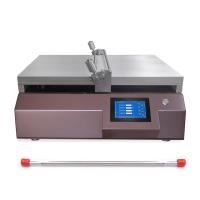
Comparison of Different Spreader Methods of Small Coating coater
introduction
With the rapid development of the manufacturing and building decoration industries, small paint coating machines, as a key coating equipment, are widely used in various fields. The choice of coating method has an important impact on coating quality, efficiency and cost. This article will conduct an in-depth study of the differences and comparisons of different coating methods in small paint coating machines, with a view to helping users make more informed choices in practical applications.
Small paint coating machines have attracted more and more attention from the industry due to their portability and flexibility. Its application fields involve furniture manufacturing, automobile repair, architectural decoration and other fields. In terms of the choice of coating method, paint coating machines are divided into two categories: spray coating and roller coating, each with unique advantages and applicable scenarios.
This article will first introduce an overview of small paint coating machines, and then delve into the working principles, advantages, disadvantages and performance of different coating methods in different application fields. Finally, through case studies and technology development trends, the future small paint coating machine technology is prospected.
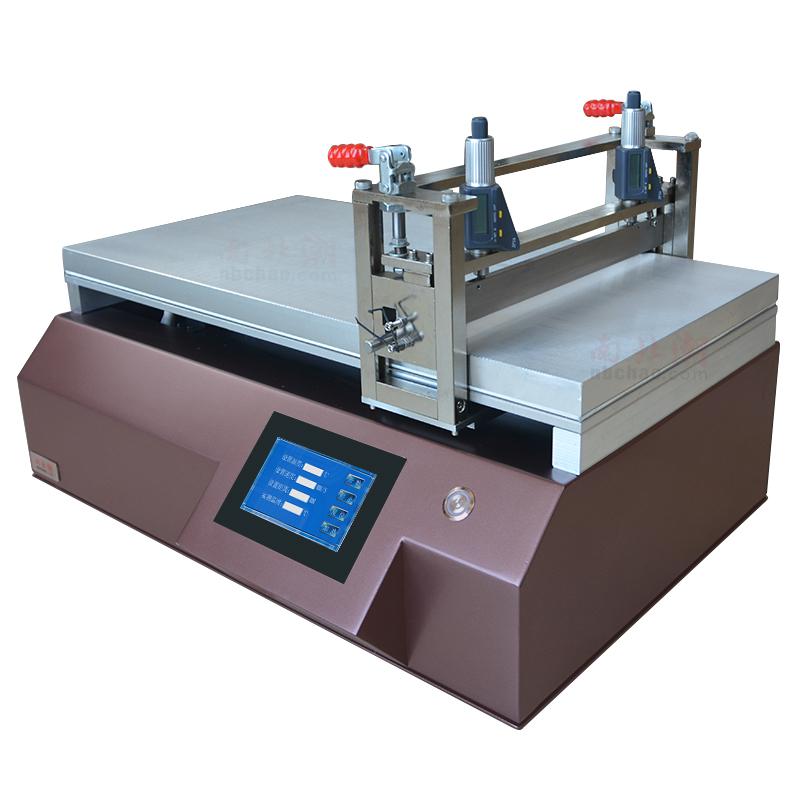
Overview of small paint coating machine
A. Definition and Classification
A small paint coater is a device used for surface coating. According to different coating methods, it is mainly divided into spray coaters and roller coaters. The sprayer sprays paint onto the surface through high or low pressure, while the roller coater spreads the paint evenly on the surface of the object through the rolling of the roller.
B. Spray coating system vs roller coating system
1. Spraying system
High-pressure spraying: Uses high-pressure gas to spray paint onto the surface, suitable for large-area coating and complex shapes.
Low-pressure spraying: Uses a low-pressure system, suitable for fine work and small area coating.
Advantages: Efficient, fast, suitable for a variety of surfaces.
Disadvantages: The spray scatters and the spraying environment needs to be controlled.
2. Roller coating system
Single roller coating: Coating is achieved by a single roller, suitable for flat surfaces.
Double-roller coating: Using two rollers improves coating uniformity and is suitable for uneven surfaces.
Advantages: Uniform, stable, suitable for large areas.
Disadvantages: Limited scope of application, not suitable for complex surfaces.
Combined spray and roller coating technology
Utilize the advantages of spray coaters and roller coaters to achieve a wider range of applications.
C. Size and power range
The size and power range of small paint coaters are more flexible and can be selected according to the needs of different application scenarios. This makes the small paint coating machine suitable for many fields such as furniture manufacturing, car restoration, architectural decoration, etc.
How different coating methods work
A. How the spray system works
1. High-pressure spraying:
The paint is pushed to the high-pressure nozzle by compressed air, forming a high-speed air flow.
Paint particles are mixed in the airflow and sprayed onto the surface through a nozzle to form a thin film.
It is suitable for rapid coating of large areas, but the degree of atomization is high and the spraying environment needs to be controlled.
2. Low pressure spraying:
Paint flows through a low-pressure system and is sprayed evenly onto the surface through nozzles.
Suitable for small areas and fine work, the spraying effect is more refined.
Compared with high-pressure spraying, the degree of atomization is lower and the accuracy is higher.
B. How the roller coating system works
1. Single roller coating:
The paint is applied to a single roller, and then the roller rolls to spread the paint evenly over the surface.
It is suitable for flat surfaces and even coating, but has poor adaptability to irregular surfaces.
2. Double roller coating:
The paint is evenly spread by the first roller, and then further flattened by the second roller to improve coating uniformity.
Suitable for irregular surfaces, improving adaptability and coating uniformity.
C. Differences and commonalities
1. Coating effect:
Spray coating systems are more suitable for complex surfaces and can achieve finer coating.
Roller coating systems are suitable for large flat surfaces and provide uniform coating.
2. Speed ââand efficiency:
Spray coating systems are generally faster and suitable for large-scale coating tasks.
Roller coating systems are suitable for smaller scale jobs and are slower but more stable.
3. Scope of application:
Spray systems are more flexible and suitable for a variety of coatings and media.
The roller coating system is more stable within a specific range, but its applicability is limited.
Performance of different coating methods in application fields
A. Furniture manufacturing
1. Spraying system:
Suitable for details and curved parts of furniture to achieve fine painting effects.
It can quickly coat a large number of furniture surfaces and improve production efficiency.
2. Roller coating system:
Suitable for large flat areas of furniture surfaces to provide even coating.
It may not be suitable for some special shapes of furniture.
B. Car restoration
1. Spraying system:
Able to coat the entire car body, including curves and details.
Efficient and allows for multi-layer coating, but requires specialist skills.
2. Roller coating system:
Suitable for some car parts, such as doors, hoods and other flat parts.
It is relatively rarely used in automobile repairs, mainly because of its limited applicability.
C. Architectural decoration
1. Spraying system:
Able to coat building surfaces of various shapes and structures.
It is fast and suitable for large-area walls, improving the efficiency of building painting.
2. Roller coating system:
Suitable for flat building surfaces, such as ceilings, flat walls, etc.
May not be suitable for complex structural building surfaces.
D. Handicraft manufacturing
1. Spraying system:
It can achieve fine and personalized painting effects and is suitable for the details of handicrafts.
The production efficiency is higher for small handicrafts.
2. Roller coating system:
Suitable for flat surfaces of some crafts, providing uniform coating effect.
It has relatively few applications in handicraft manufacturing, mainly because of its limited applicability.


- 1Application and selection of laboratory coater in PDMS thin film prepative
- 2Experimental Study on High Viscosity Ultraviolet Resin Coating on Glass Substrate by Small Coater
- 3Application of doctor blade coater in electrode and solid electrolysis preparation
- 4Application case of Bar Coater coating slurry on small workpiece ceramic substrate [Experimental video demonstration]
- 5Experimental application of water-based paints on film laminating paper by laboratory coater
- 6Laboratory small coater coated with polyester film on ultra-thin PET film [video demonstration]
- 7Technical Requirements and Application of Lithium Battery Slurry Coated on Copper Foil for Small Coater
- 8Application of small coater in gel coating
- 9Laboratory Technology and Application of Polyvinyl Alcohol Film Coating on Ultrafiltration Membrane