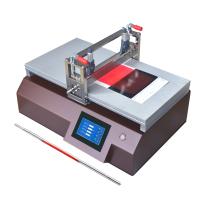
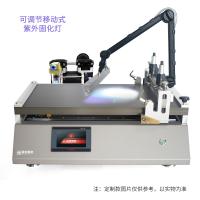
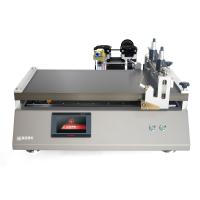
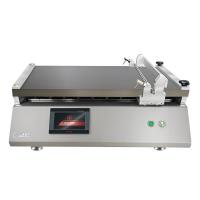
Vacuum Film Applicator Technology Analysis: Breaking the Boundary of Surface Coating
Summary
Vacuum coating technology is an advanced surface coating method that is widely used in electronics, optics, medical and other fields. This article will delve into the core technology of vacuum coating machines, including working principles, key components and core technical parameters, to provide readers with a comprehensive understanding.
1 Introduction
As an efficient and precise surface treatment method, vacuum coating technology has achieved great success in various fields. One of the reasons for its wide application lies in the core technology of the vacuum coating machine. This article will conduct an in-depth study of the key technologies of vacuum coating machines in order to reveal the mysteries of this field to readers.
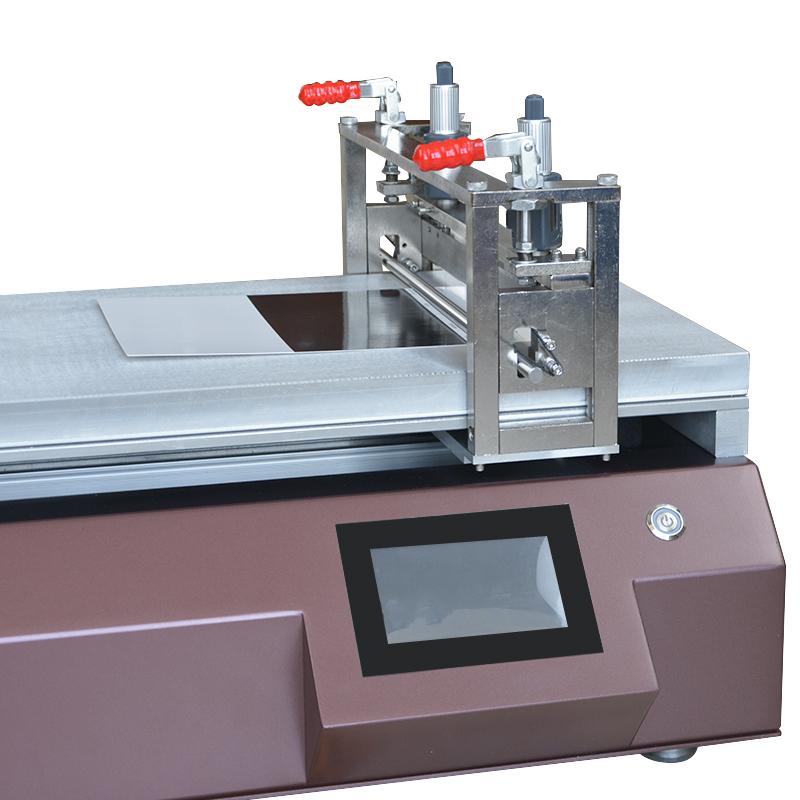
2. Working principle
The vacuum coating machine controls the surface properties of the material by coating the target object with a thin film in a vacuum environment. Its working principle mainly includes evaporation, sputtering and ion-assisted processes.
2.1 Evaporation
Evaporation is one of the main processes in vacuum coating. In the vacuum chamber, electron beams, resistance heating, etc. are used to heat the target substance to its evaporation temperature, causing it to change from a solid state to a gaseous state. The purpose of evaporation is to generate steam to form a thin film.
2.2 Sputtering
Sputtering is another common coating method. In the vacuum chamber, the target substance is formed into ions by introducing inert gas or argon gas, and then these ions are sputtered to the surface of the substrate through the action of an electric field to form a uniform thin film.
2.3 Ion assistance
Ion-assisted technology is an important means to improve film adhesion and density. By introducing ion beams, the crystal structure during film growth can be controlled and the quality and performance of the film can be improved.
3. Key components
Vacuum coating machines contain several key components that together ensure efficient machine operation and coating quality.
3.1 Vacuum chamber
The vacuum chamber is the main working area for coating, and its internal vacuum degree directly affects the coating effect. A high-quality vacuum chamber can effectively reduce gas residue and improve the uniformity and adhesion of the coating film.
3.2 Evaporation source
The evaporation source is the core component to realize the evaporation process. Different evaporation sources include electron beam evaporation sources, resistance heating evaporation sources, etc., and their selection will directly affect the formation process and performance of the film.
3.3 Sputtering source
The sputtering source is the key component to achieve sputtering coating. Its design and stability are critical to forming uniform, dense films.
3.4 Control system
The control system has an important impact on the operation of the vacuum coating machine and the quality of the film. The automatic control system can accurately control parameters such as temperature, air pressure and ion beam to improve production efficiency and film consistency.
4. Core technical parameters
4.1 Substrate rotation speed
The rotation speed of the substrate is an important parameter affecting the uniformity of the film. A reasonable rotation speed can ensure that the film is evenly distributed on the surface of the substrate and improve the consistency of the coating film.
4.2 Vacuum degree
The degree of vacuum is directly related to the residual gas during the film formation process. High vacuum helps reduce gas effects and improve the purity and density of the film.
4.3 Coating speed
Coating speed is an important factor affecting production efficiency. Too high or too low coating speed will affect the quality of the film, so it needs to be reasonably adjusted according to the specific materials and coating requirements.
4.4 Gas atmosphere
The types of gases and atmosphere introduced during the coating process also have a significant impact on the formation and performance of the film. Different atmospheres can achieve different film effects, which need to be selected according to specific needs.
5. Application areas
Vacuum coating technology has achieved important applications in many fields.
5.1 Electronic field
In electronic device manufacturing, vacuum coating technology is widely used to prepare thin film electrodes, optical films, conductive films, etc.
5.2 Optical field
In the preparation of optical elements, vacuum coating technology can achieve high transparency and low reflection optical films and improve the performance of optical elements.
5.3 Medical field
In the surface coating of medical devices, vacuum coating technology can improve the biocompatibility and corrosion resistance of the device and ensure its safety in medical applications.
6 Conclusion
As an advanced surface coating method, vacuum coating technology has become an important support in the field of materials science through continuous innovation and improvement of core technology. With the development of technology, vacuum coating machines will play a key role in more fields and provide strong support for the development of various industries.


- 1How Flat Film Applicators Can Build a New Generation of Functional Materials on Fabrics
- 2NVP anode film FAQ and solution
- 3Application Technology of Laboratory Film Applicator in Dielectric Thin Film
- 4Comparison of Advantages and Disadvantages of Three Heating modes for Laboratory Film Applicators
- 5Application and selection of laboratory coater in PDMS thin film prepative
- 6Scraping machine selection case: film substrate large size high accuracy scraping solution
- 7Application of Film Applicator in PEM Research and Preparation
- 8Application of Film Applicator in PVDF-HFP Material Research
- 9Application of Film Applicator in Cosmetic Base Body