Determination of Film Gloss (glossiness)
The paint film can not only be used to protect the painted utensils from corrosion, but also to make the utensils have a certain appearance.
The appearance of the paint film depends on its color and brightness (or degree of extinction). Most paint films should be glossy - "glossy" when dry on the finished surface (varnishes and enamel are more glossy, oil-based paints are less sheen).
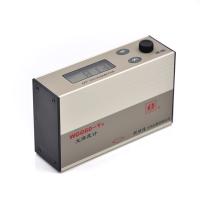
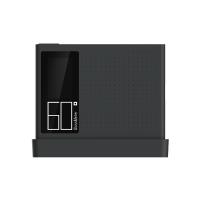
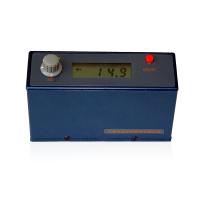
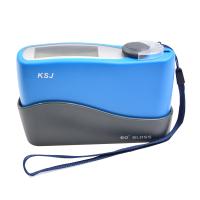
Gloss does more than just enhance the beautiful appearance of a coating film. For example, we know that a film with a higher gloss will resist the action of the atmosphere better than a film made of the same material with a less gloss. The gloss of the coating film will gradually disappear with time. Loss of gloss is the first sign that the paint film is beginning to fail and is therefore a harbinger of corrosion. However, tarnished coatings can also provide corrosion resistance over a long period of time. (Related instrument: gloss meter)
The so-called gloss (brightness) is the performance of the surface to reflect the sunlight projected on it in one direction. The greater the amount of light reflected from a surface in one direction, the more lustrous it is.
Light incident parallel to the mirror surface is reflected according to the incident angle. However, on rough surfaces that are not smooth enough, the incident light is not only reflected as parallel light, but also diffused. The more parallel reflected light in the reflected light, the greater the gloss of the surface, and vice versa.
When measuring gloss, the amount of light reflected by a shiny surface must be compared with the amount of light reflected by a satin-matte surface.
In the absence of a special instrument, the gloss of the paint film can be measured quantitatively by simple observation. The following symbols can be used for identification: 1) High gloss paint film; 2.) Medium gloss Paint film; 3) Niu Guang paint film; 4) Flat paint film.
In order to measure gloss, various scales consisting of standard paint samples have been proposed. The standard paint sample is made of oil-based varnish or lacquer with flatting agent in different proportions. The standard paint sample applied to the glass plate can form a sequence (grade, scale, etc.) of the tested paint samples for comparison. ). The disadvantage of this scale is that the gloss of the standard paint sample changes over time. So this broad test of gloss is relative. (Related instrument: gloss meter)
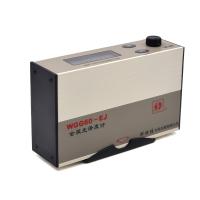
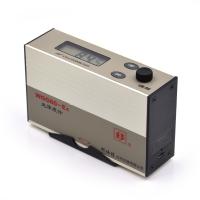
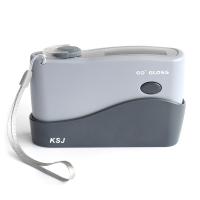
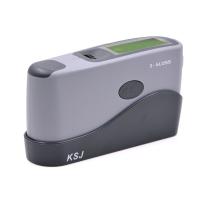
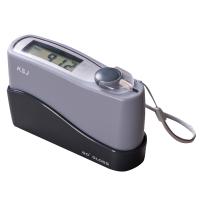
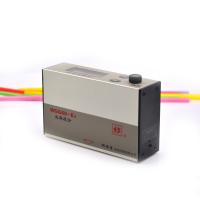
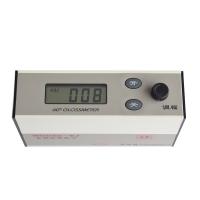
In order to measure gloss quantitatively, various methods and various optical instruments (gloss meters) and photoelectric instruments can be used.


- 1Principle and Application of Glossiness Tester
- 2Working Principle and Application of Metal Gloss Meter
- 3Basic principle and application analysis of insulating paint gloss Detector
- 4Working principle and application analysis of film Glossmeter
- 5Principle and application analysis of microporous gloss meter
- 6 FZ/T 01097 Analysis of fabric gloss test method
- 7Evaluation and Application of Optical Properties of Powder coatings
- 8Coating coatings - Determination of surface gloss and Gloss meter
- 9The Importance and Method of Gloss Measurement of Paint Film