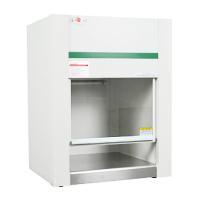
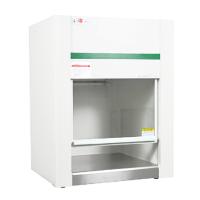
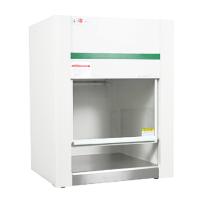
Principle and application of single person vertical laminar flow cabinet
introduction
In laboratories and production environments, airborne particles and microorganisms need to be effectively controlled to ensure the accuracy, reliability and safety of experiments and production processes. The single-person vertical purification workbench is a common clean equipment that can provide operators with a clean and sterile working environment while protecting experimental samples or production materials from external contamination. This article will deeply explore the principle, structure, usage, application scenarios and future development trends of the single-person vertical purification workbench to help readers better understand and apply this key equipment.
Structural principles
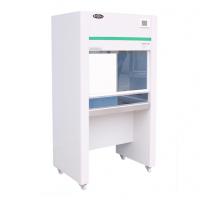
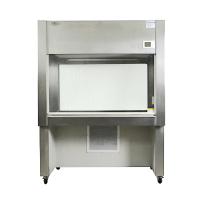
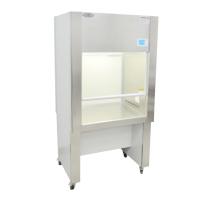
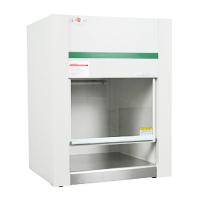
The single-person vertical purification workbench adopts vertical flow cleaning technology. The air is drawn into the interior of the workbench through the high-efficiency filter at the top, forming a downward vertical flow, and the clean air is discharged through the exhaust port at the bottom. Inside the workbench, the clean air is purified by a high-efficiency filter to remove particles and microorganisms in the air, providing a clean and sterile working environment for operators.
The workbench is usually made of stainless steel or aluminum alloy, with a smooth and easy-to-clean surface, suitable for experimental operations or production work. The high-efficiency filter is the core component of the single-person vertical purification workbench. It is used to filter particles and microorganisms in the air to ensure the cleanliness of the working environment. The fan is responsible for drawing air into the workbench and discharging the clean air through the exhaust port to form a vertical downward clean airflow. The control panel is used to adjust the operating speed of the fan, monitor the cleanliness of the working environment, and provide an alarm function to alert the operator.

Application scenarios
The single-person vertical purification workbench can be used for cell culture, bacterial culture and other biological experimental operations to protect cells and microorganisms from external contamination. It is used for preparation, filling and other operations in the pharmaceutical production process to ensure the aseptic production and stable quality of drugs. Used in the assembly and testing of electronic products to protect electronic components from dust and particle contamination. Used for sample testing, microbial culture and other operations during food processing to ensure food safety and quality.
In the future, single-person vertical purification workstations may incorporate intelligent technologies, such as automatic fan speed adjustment, remote monitoring and other functions, to improve work efficiency and convenience. The single-person vertical purification workbench may adopt an energy-saving and environmentally friendly design concept to reduce energy consumption and impact on the environment.
3. **Multi-function integration:** Future single-person vertical purification workbench may integrate more functions, such as ultraviolet disinfection, negative pressure exhaust, etc., to meet the needs of different scenarios.
Conclusion
As an important piece of equipment in laboratories and production environments, the single-person vertical purification workbench provides operators with a clean and sterile working environment and protects experimental samples or production materials from external contamination. By having an in-depth understanding of its principles, structure, usage, application scenarios and future development trends, we can better apply the single-person vertical purification workbench, improve laboratory cleanliness and work efficiency, and promote the smooth progress of experiments and production work.