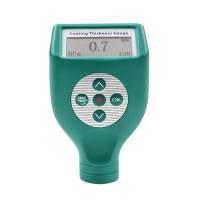
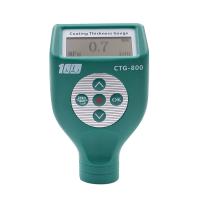
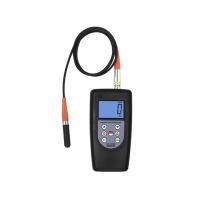
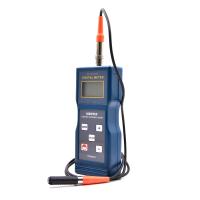
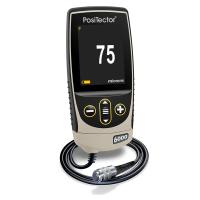
Principle, Characteristics and Application of FISCHER Coating Thickness Gauge
In many industrial fields, such as painting, plating, chemical industry and other industries, the thickness of coating is a crucial parameter. Appropriate coating thickness can protect the substrate, improve surface quality, and extend product service life, while coating that is too thick or too thin may cause quality problems and adverse effects. Therefore, measuring the cladding thickness becomes an important task in the production process. As a commonly used non-destructive testing equipment, Fischer Coating Thickness Gauge plays an important role in measuring coating thickness. This article will introduce the principle, technical characteristics and application scope of Fischer coating Thickness Gauge.
working principle
Fischer coating Thickness Gauge uses two principles: magnetic induction (magnetic induction) and induced current (eddycurrent) to measure coating thickness. When the probe head of the Fischer coating Thickness Gauge is placed on the surface of the coating being measured, magnetic induction is generated through the magnetic field in the probe head, and the magnetic induction penetrates the coating and enters the substrate. The magnetic permeability of the coating layer is different from the magnetic permeability of the base material, so different magnetic induction will occur. At the same time, Fischer coating Thickness Gauge also measures based on the principle of induced current. When the induced current passes through the surface of the coating being measured, eddy current (eddycurrent) will be generated. The greater the thickness of the coating, the smaller the intensity of the eddy current. Fischer cladding Thickness Gauge calculates the thickness of the cladding through the magnetic induction and induced current signals detected by the probe, and after signal processing and analysis.
Fischer coating Thickness Gauge has the following significant technical features:
High-precision, Fischer coating Thickness Gauge uses advanced sensors and signal processing technology, has high measurement accuracy, and can meet application scenarios that require high coating thickness accuracy.
Versatility, Fischer coating Thickness Gauge can measure various types of coatings, including metal coatings, paint films, plating, etc., with strong applicability.
Fast measurement, the equipment is easy to operate and the measurement speed is fast. It can measure the coating thickness quickly and accurately, which improves work efficiency.
Non-destructive, the Fischer coating Thickness Gauge adopts a non-contact measurement method, which will not cause any damage to the material being measured, ensuring the integrity and safety of the material being measured.
Data recording and analysis: The equipment has data recording and analysis functions, which can record measurement data and perform data analysis to provide a basis for quality control and quality management.
Application areas
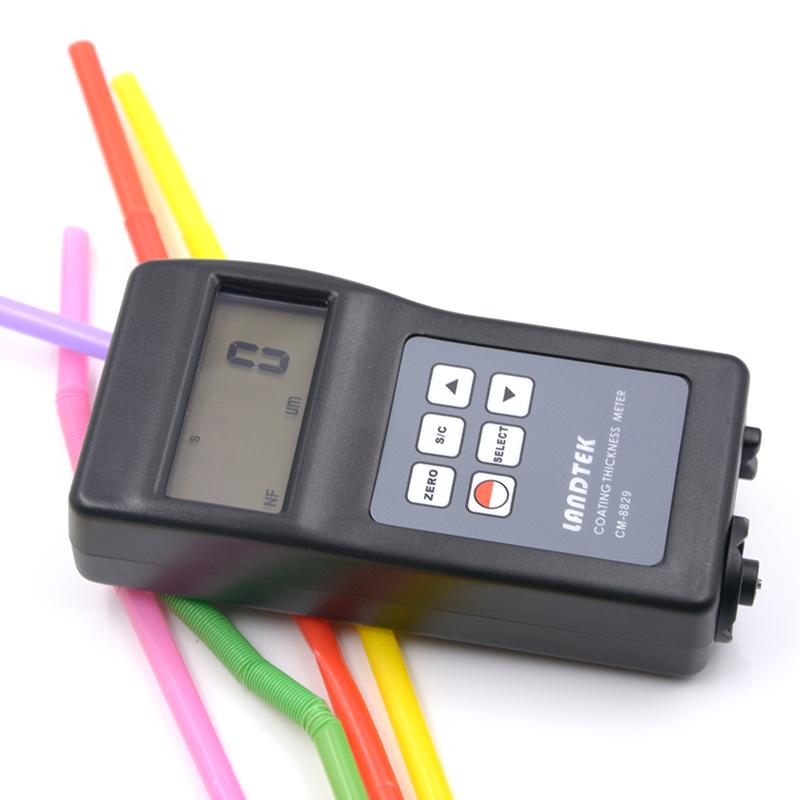
Fischer coating Thickness Gauges are widely used in the following fields. In the automobile manufacturing industry, it is used to measure the thickness of automobile shells, body coatings, anti-corrosion layers and other coatings to ensure automobile quality and safety. In the aerospace field, it is used to measure the coating thickness on the surface of the aircraft, detect whether the surface coating meets the requirements, and ensure the flight safety of the aircraft. In construction engineering, it is used to measure the thickness of the coating layer on the surface of the building to ensure the weather resistance and aesthetics of the building. In the electronic product manufacturing industry, it is used to measure the coating thickness on the surface of electronic products to ensure the protective performance and appearance quality of the product.
In the future, Fischer coating Thickness Gauge will further improve the measurement accuracy and stability of the equipment and develop more advanced sensors and signal processing technologies. The equipment will be more intelligent, with automatic identification and calibration functions, reducing manual intervention and improving operational convenience and work efficiency. It will have more measurement modes and functions, such as multi-point measurement, multi-layer cladding measurement, etc., to meet the needs of different application scenarios.
Conclusion
As a professional equipment for accurately measuring coating thickness, Fischer coating Thickness Gauge plays an important role in painting, plating, chemical industry and other fields. It has the advantages of high precision, versatility, fast measurement, non-destructiveness, etc., and is suitable for various application scenarios. With the continuous advancement of science and technology and the continuous development of industrial manufacturing technology, Fischer coating Thickness Gauge will continue to innovate and improve, providing more reliable technical support for the development of various industries.




- 1Application, Principle Introduction and Precautions for Selection of Pipeline Thickness Gauges
- 2Basic Principle, Characteristics and Application of Rubber Coating Thickness Gauge
- 3Application of Film Thickness Gauge in automobile paint thickness measurement
- 4Paint layer Thickness Gauge unknown selection skills
- 5Several Selection Points of Split Coating Thickness Gauge
- 6Selection points that cannot be ignored for coating Thickness Gauges
- 7What should I do if there is a negative number when the customer reports the Thickness Gauge measurement?
- 8Frequently Asked Questions for Thickness Gauges in 2022
- 9Definition and Applicable Criteria for Dry Film Thickness