Basic Principle and Application of Ceramic Viscometer
Ceramic manufacturing is an ancient and exquisite craft, and its products are widely used in construction, handicrafts, utensils, electronic devices and other fields. In the ceramic manufacturing process, viscosity is a crucial parameter, which directly affects the fluidity, formability and quality of the final product of ceramic materials. In order to accurately control the viscosity of ceramic materials, ceramic viscometers came into being. This article will delve into the principle, structure, application of ceramic viscometer and its importance in ceramic technology.
Fundamental
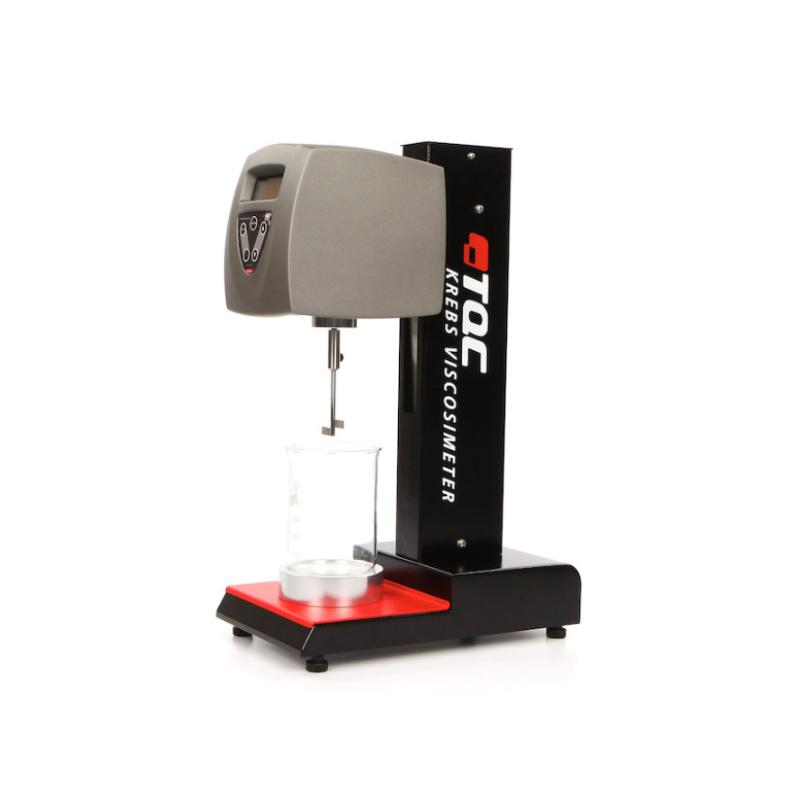
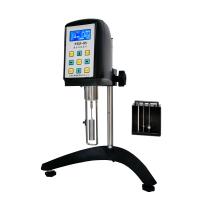
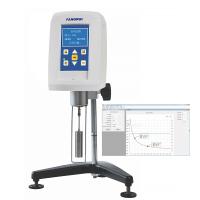
Ceramic viscometer is an instrument specially used to measure the viscosity of ceramic materials. Its basic principle is mainly based on physical or rheological principles. Common ceramic viscometers include Rotational Viscometers and oscillating viscometers. Rotary viscometer, this type of viscometer determines the viscosity of a material by rotating a slender rod or disc probe, inserting it into the ceramic material, and measuring the torque or resistance that needs to be applied. Based on the force applied and the rotational speed of the probe, the viscosity value of the material can be calculated. Oscillatory viscometer, this type of viscometer determines the viscosity of a material by introducing oscillations in the ceramic material and measuring the frequency, or damping, of the vibrations. The frequency of oscillation is proportional to the viscosity of the material, so the viscosity value can be calculated by measuring the change in frequency.
Application in process
Ceramic viscometer plays a vital role in ceramic technology. First of all, ceramic viscometer can help in raw material screening and formula optimization. By measuring the viscosity of different raw materials or formulas, the appropriate material combination can be selected and the formula optimized to obtain Required ceramic product properties. In the ceramic molding process, viscosity directly affects the fluidity and formability of ceramic materials. By measuring the viscosity value with a viscometer, the molding process parameters can be controlled to ensure the quality and stability of the molded products. During kiln firing, the viscosity of ceramic materials changes with temperature. The viscometer can help monitor the viscosity changes of the material during the kiln firing process, optimize the kiln firing process, and improve the sintering quality and yield of the product. Ceramic viscometer can be used to test and evaluate the quality of finished ceramic products to ensure that the product's performance meets standard requirements.
With the continuous development of science and technology and the continuous improvement of ceramic technology, ceramic viscometers will continue to develop and improve in the following aspects. The measurement accuracy and sensitivity of ceramic viscometers will continue to improve, enabling a wider range of ceramic materials to be measured. Take precise measurements. It will be more intelligent and automated, using advanced control systems and data processing technology to achieve automation and intelligence in the measurement process. As an important instrument in ceramic technology, ceramic viscometer is of great significance for exploring ceramic technology, improving product quality and developing the ceramic industry. With the continuous advancement of science and technology and the continuous expansion of application fields, ceramic viscometers will play an increasingly important role in the field of ceramic technology and promote the continuous development and progress of the ceramic industry.
- 1Viscosity of polypropylene (PP) amide measured by NDJ Viscometer
- 2Which Viscometer to Choose for Licorice Extract Viscosity Testing? How to Test?
- 3Application of Rotational Viscometer in juice viscosity test
- 4Working Principle, Classification and Application of Capillary Viscometer
- 5Principle, Characteristics and Application of Dial Viscometer
- 6Principle, Characteristics and Application of QND Viscometer
- 7Determination of epoxy resin viscosity by Rotational Viscometer
- 8Rotational viscometer selection suggestions
- 9Application of Rotational viscometer in Determination of Adhesive Viscosity


